

Heat-pump hot water systems are quickly becoming one of the most common hot water systems in Australia. But what are they, why are they so popular, and how do you know if they’re right for you?
WHAT ARE THEY AND HOW DO THEY WORK
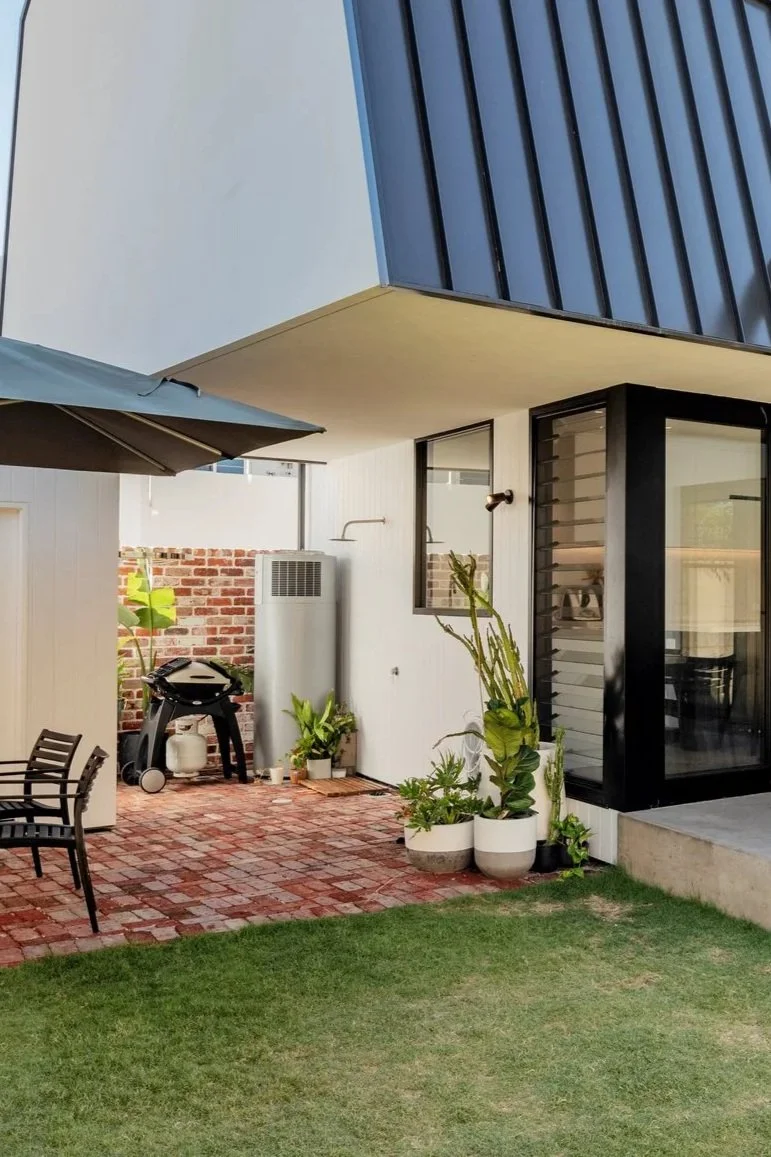
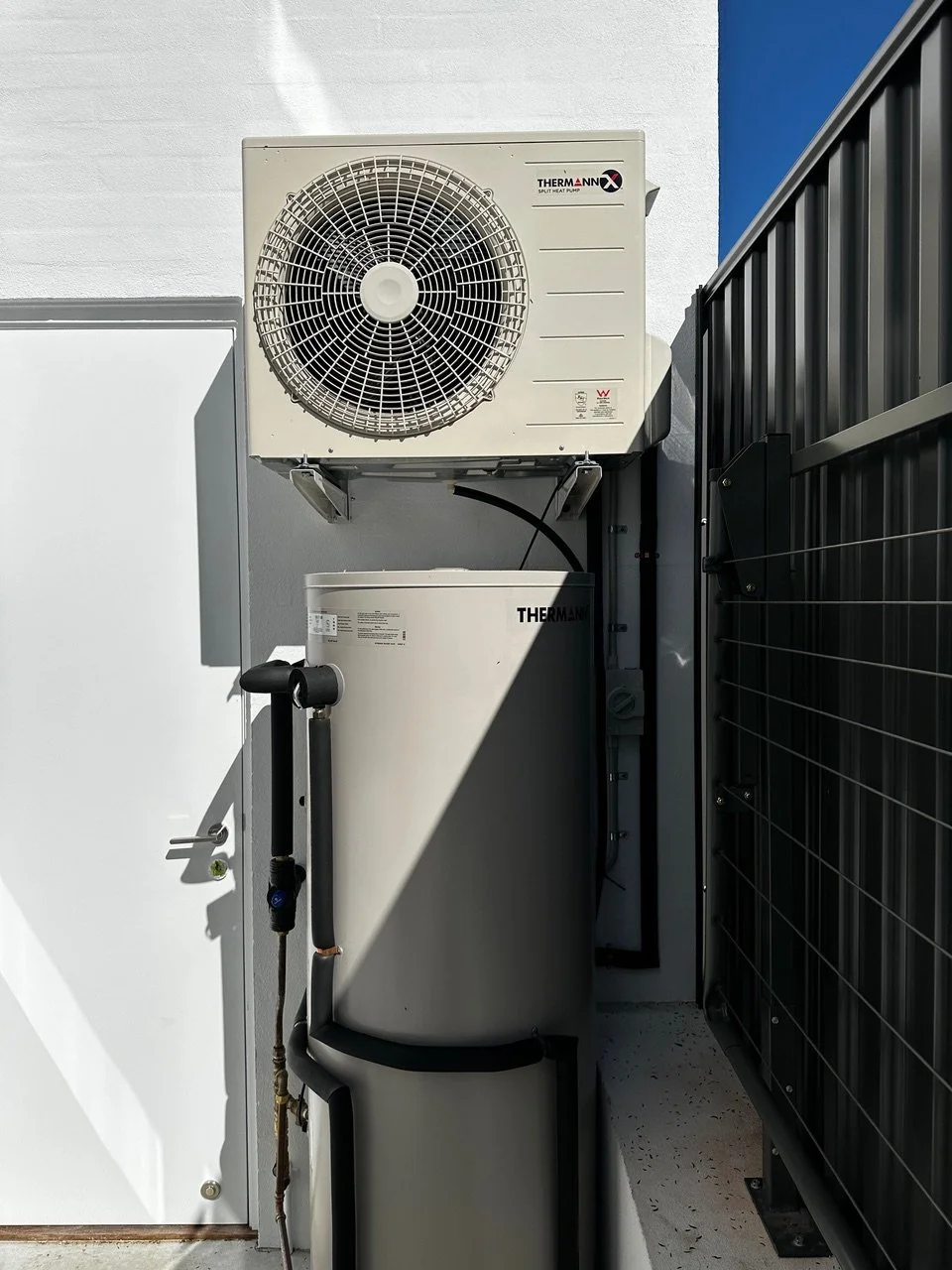
In the simplest terms, a heat-pump hot water system supplies your home with hot water by extracting heat from the surrounding air and transferring it into a storage tank of water. Unlike gas systems, heat pumps don’t heat the water themselves, but rather transfer heat from one place to another.
There are two main parts to a heat-pump hot water system: the water storage unit and the compressor. These can either be combined into a single integrated system or separated into a split system. Integrated systems take up less space and are usually cheaper. Split systems offer more flexibility of placement, can heat water to higher temperatures, and are often more efficient.
THE PROS
The rising popularity of heat-pump systems can be explained by their many benefits:
Energy efficiency: As heat-pumps transfer heat instead of generating it, they’re much more energy efficient than alternatives—especially in warm climates where air temperatures are higher.
Low running costs: This efficiency translates into lower running costs, making them the most cost-effective option in the long term.
Solar connection: The little electricity that they do require can be supplied by solar PV systems, making them more sustainable and almost free to run.
Timers: Built-in timers can be used to schedule water heating, to avoid peak electricity times or ensure heating occurs during the day for solar PV use.
Variable heating: Rather than simply switching on or off, most systems can ramp up or slow down heating depending on water usage.
Large storage tanks: Heat pump hot water tanks can now reach up to 400L, to ensure plenty of hot water is available throughout the day.
Government rebates: To help reduce upfront costs, the federal and some state governments are offering rebates to eligible customers.
THE CONS
Despite these benefits, there are a few disadvantages that are important to be aware of.
Upfront costs: Heat-pump hot water systems generally cost more upfront than electric or gas alternatives, although rebates can help significantly.
Cumbersome: Usually quite large, they require a decent amount of space (usually 1mx2m) and good ventilation to run efficiently.
Dedicated electrical feed: These systems need a dedicated circuit and can’t run on a general 10A outlet. If converting from gas, this can increase installation costs.
Inactivity: While they can be turned off for short periods of time, prolonged inactivity can cause issues if not managed properly.
ALTERNATIVES
Heat-pump hot water systems may be popular right now, but it’s still worth taking a quick look at some of the alternatives.
Gas hot water system
Gas hot water systems burn liquefied petroleum gas (LPG) or natural gas to heat water. Some systems heat water and store it for later, while others heat water on-demand. They’re cheaper upfront but are typically more expensive to run, especially with rising gas prices. Importantly, gas systems must be installed away from windows to prevent carbon monoxide from entering the home.
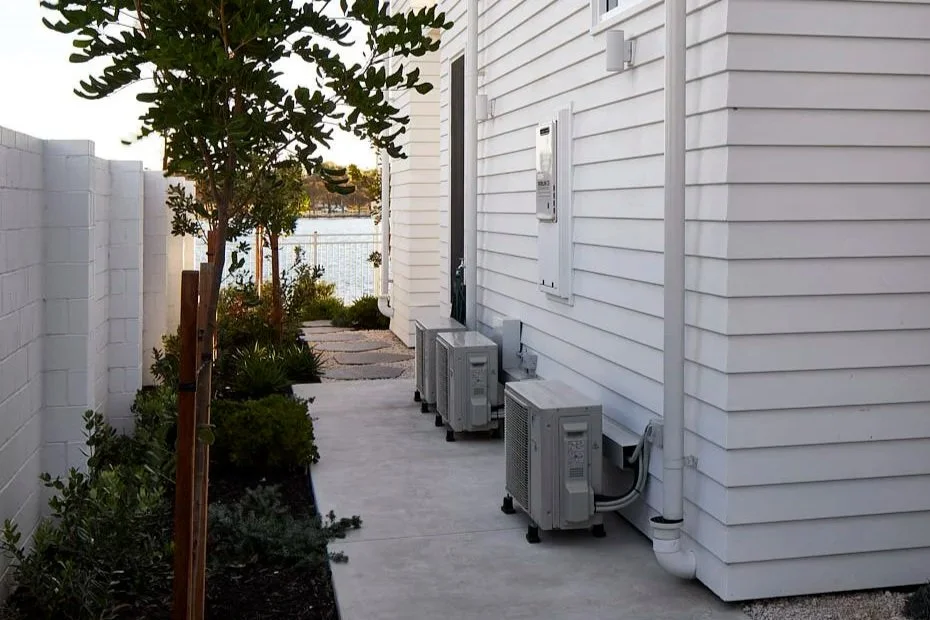
A gas hot water system at our Mandurah project, with the instant gas unit recessed into the wall.
Electric element hot water system
Electric element hot water systems heat water with a submerged electric element, like those you’d find in a kettle. Like gas, water can be heated and stored or heated on demand. They’re the cheapest option upfront but have a very high energy demand. For this reason, they can be the most expensive to run and often won’t be compliant unless paired with a large solar PV system and increased performance elsewhere in the home.
Solar hot water system
With solar hot water systems, water is heated by the sun in solar collector panels that are located on the roof. The hot water is then stored on the roof in a close-coupled system or circulated to a ground tank in a pumped system. If there’s not enough sunlight, a gas or electric booster will kick in to heat the water instead. Upfront costs can be quite high, but running costs can be very low in sunny regions. They may, however, struggle to supply enough hot water for households with more than two people.
CHOOSING THE RIGHT SYSTEM
In most households, hot water is one of the largest sources of energy consumption, so choosing the right system should involve significant consideration. To do this, it’s important to remember that it’s more than just a water tank and heat pump; it’s a system that will be impacted by your lifestyle and other aspects of your design.
Your other utilities, for example, should impact your choice of hot water system. If you already have or plan to install solar PV, a heat-pump or electric system can use excess solar energy to reduce running costs. Alternatively, if gas isn’t needed elsewhere in the home, installing a connection and meter can significantly increase the cost of a gas system. So far, we’ve completed seven no-gas projects, where heat-pump systems were chosen.

At our Mandurah holiday house project, however, a gas system was the best option as water is only heated when it’s used, and the system can be turned off with no issues when no one’s home for long periods of time.

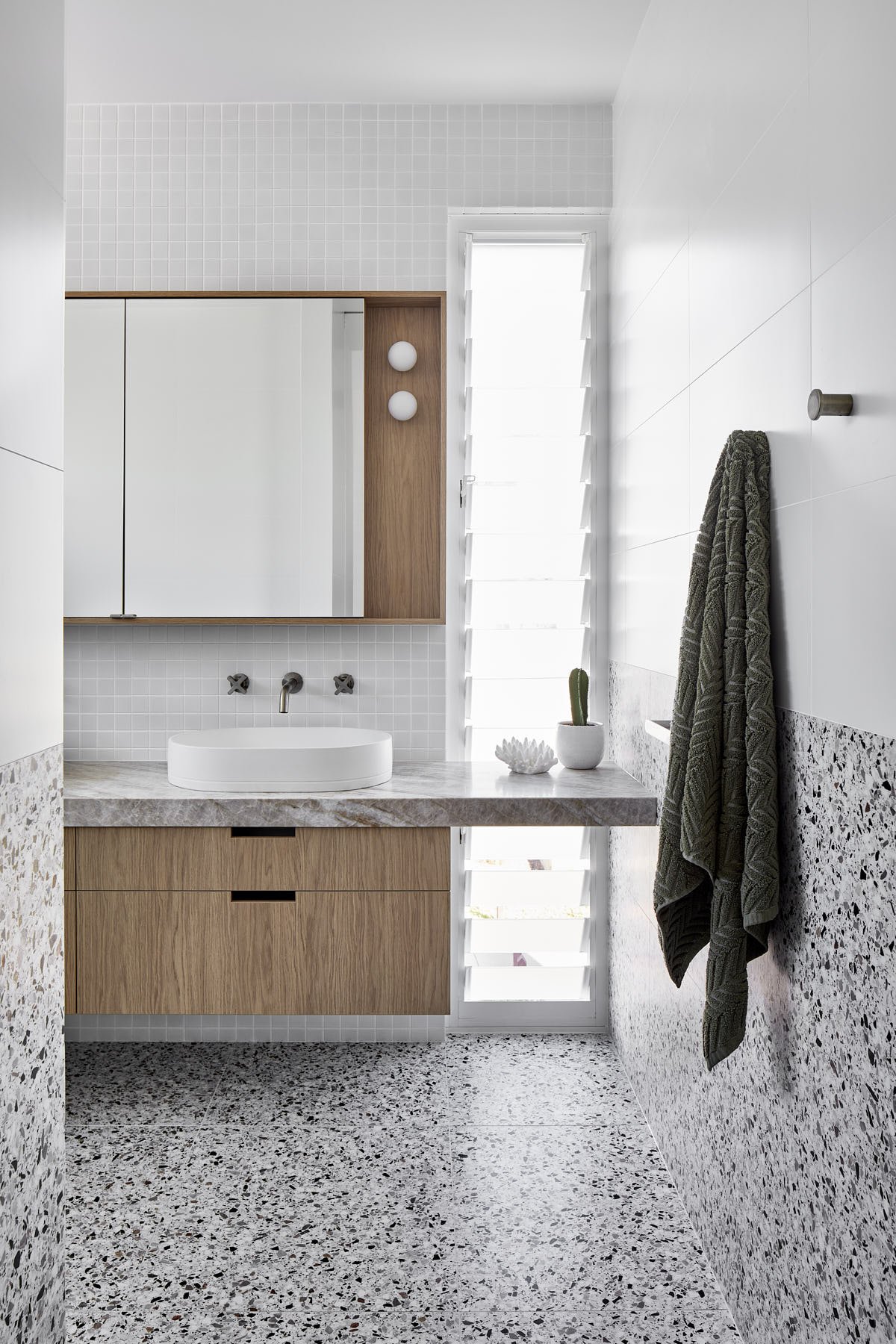
There are also ways to make the entire system more efficient. Systems can be stacked, with multiple in one house to reduce the wait time as hot water travels from one end of the house to the other. Ring-main systems, a plumbing setup in which hot water is continuously circulated to the taps, will also provide near-instant hot water and reduce wastage. They’re very cheap to run and can save significant amounts of water.
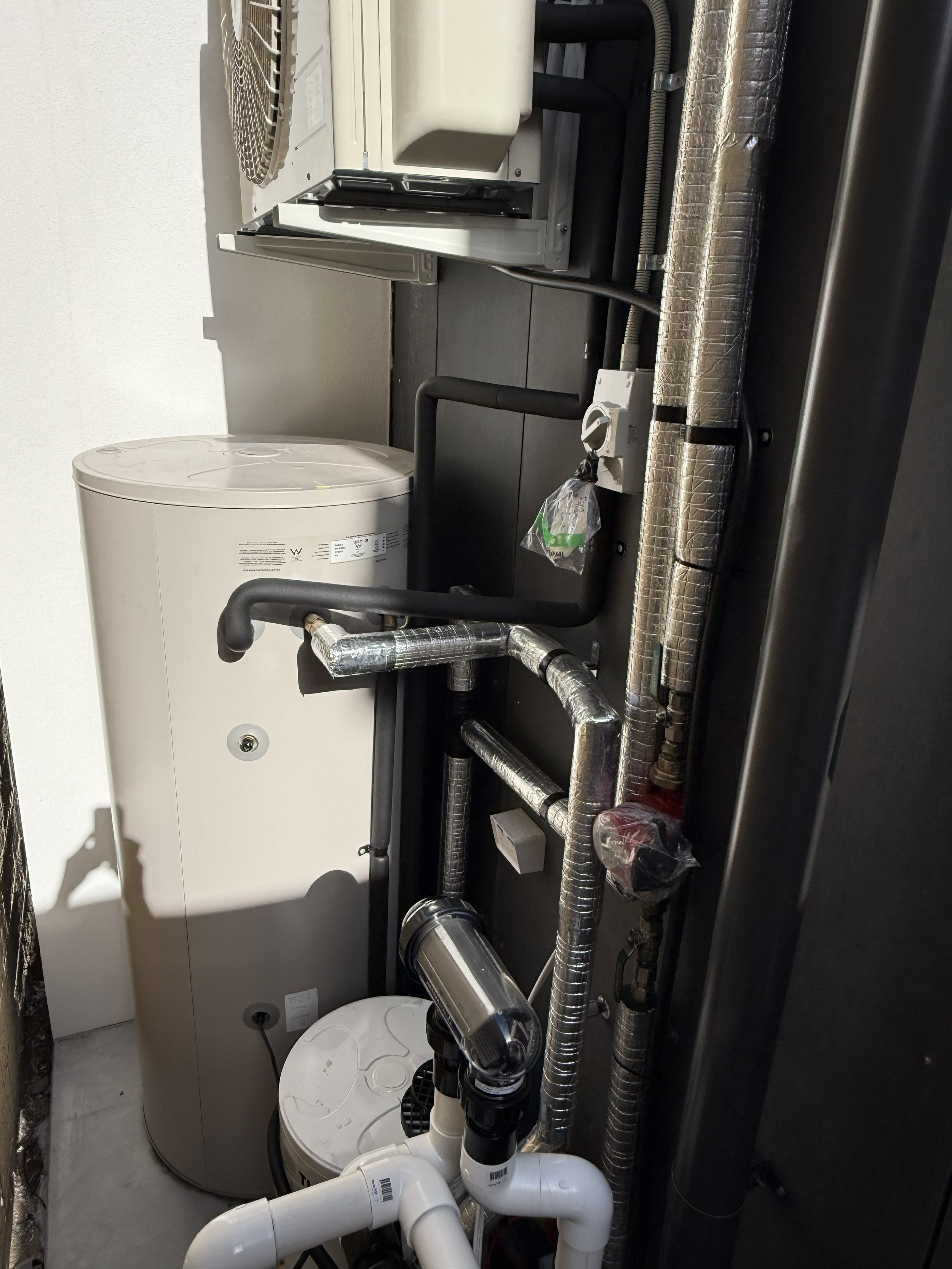

Ultimately, while there’s a very good chance that a heat-pump hot water system will be your best bet in the long term, every project is different. Decisions should be made early in the design process and in consultation with your architect or builder, as your choice will likely impact other aspects of your design and build.