

Cladding refers to any material that makes up the exterior shell of a building. It provides the first layer of protection against the weather and will be the first introduction to the design of your home. In Australia, there are countless options to choose from. In this blog, we’ll take a look at some of the most common.
TIMBER
Timber cladding is the timeless option that can adapt to virtually any design style. There are countless species to choose from, each available in a wide range of lengths, thicknesses and profiles—making timber ideal for unique, custom designs. It can be ordered pre-treated or raw, with various treatment options including oil, stain, paint or factory treatments like thermal modification. Sustainability-wise, timber can be one of the most environmentally friendly options, although this is highly dependent on whether it’s been sourced from a certified sustainable forest and how it’s been treated and finished.
The biggest downside to timber, however, is its cost. This will vary depending on the chosen species, but timber is generally quite expensive upfront. It also requires the most maintenance, with regular retreatment needed to protect it from the elements. For both these reasons, most people will use timber as a feature material rather than their primary cladding solution. It’s also important to consider where it’s installed as difficult-to-reach timber will be much more challenging to re-treat.

Pacific Teak timber at our Beaconsfield project.
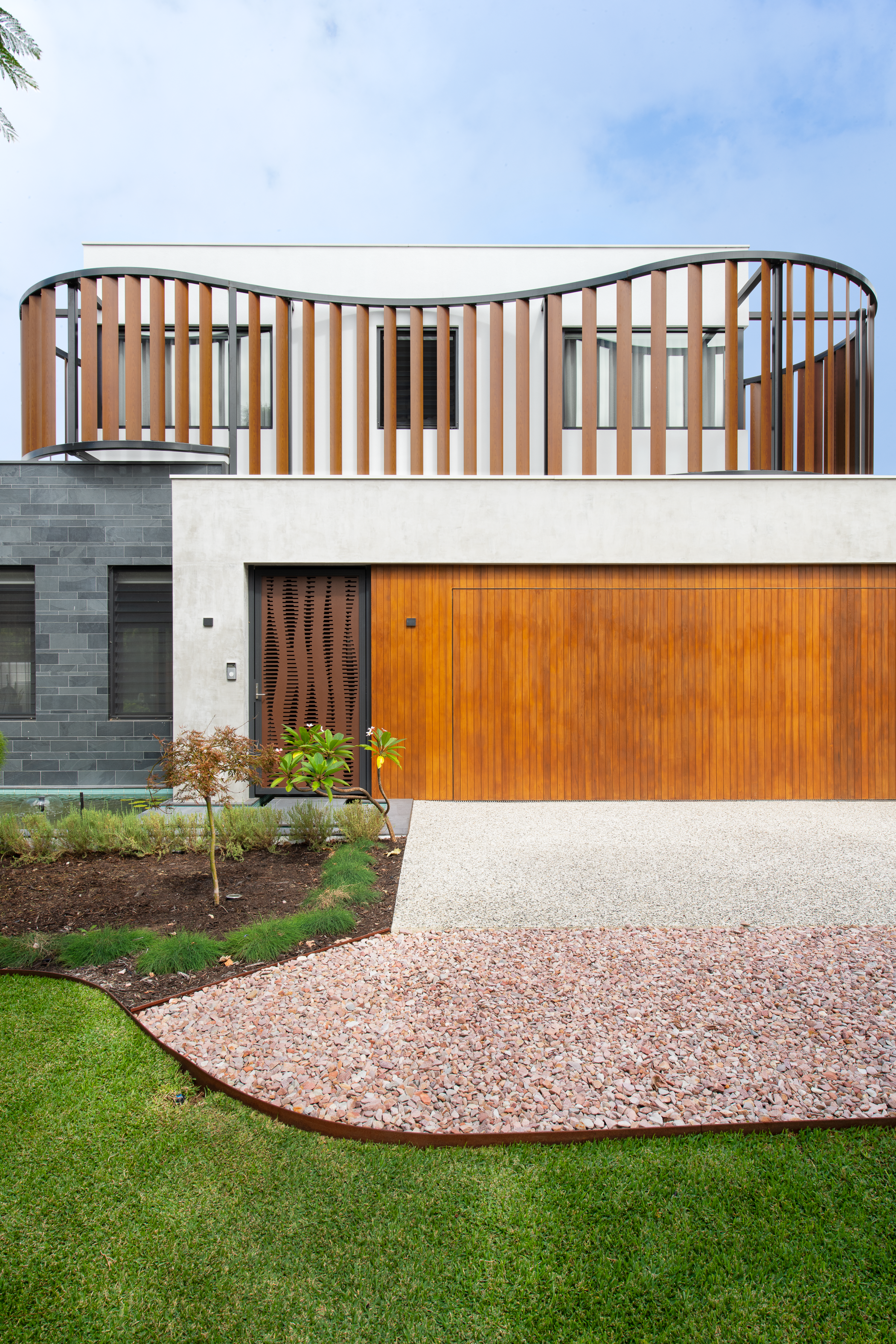
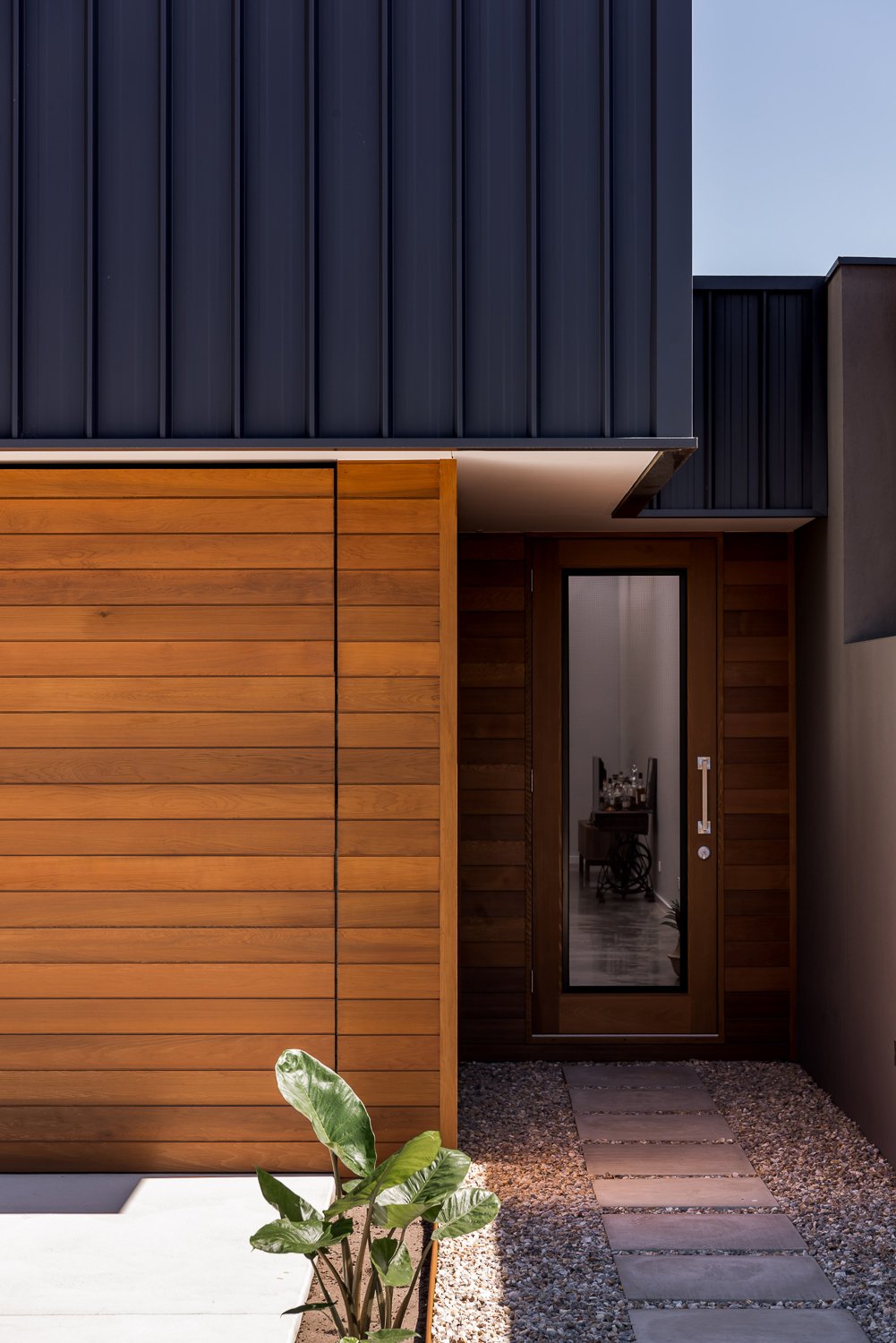
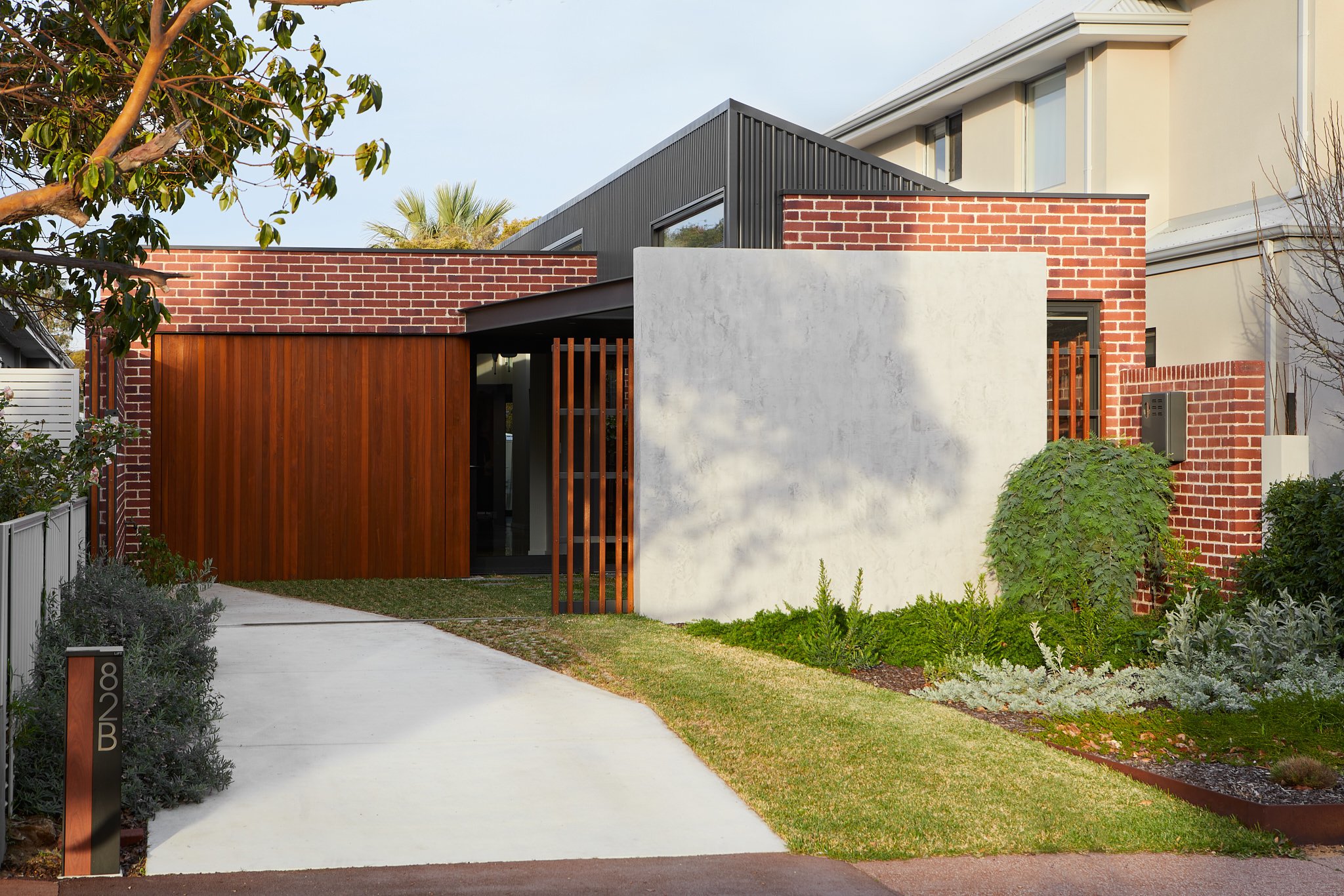
Feature Jarrah at one of our East Fremantle projects. While usually a relatively unstable timber, this is less of a concern here as it experiences little sun.
METAL
Metal cladding is a highly durable option that provides a sleek, contemporary finish. There are a few different types to choose from, but the most popular in Australia is, by far, Colorbond Steel. This is made using BlueScope’s ZINCALUME® steel, which is lightweight, corrosion resistant, long-lasting and requires little to no maintenance. It’s available in a wide range of colours and finishes, most of which use additional technology to reflect more of the sun’s heat—although light colours will still be more reflective than dark colours. If you live in a more extreme environment, their Colorbond Ultra steel offers additional durability. Depending on the manufacturer, Colorbond steel can be shaped into many different profiles, from the corrugated or ribbed profiles popular for roofing to a weatherboard style finish. It’s also available in continuous lengths (up to 13m), and some profiles allow for concealed fixings, should you want a seamless finish.
Like timber, one of the key downsides to metal cladding is cost. While ZINCALUME® itself can be quite affordable, the different profiles can get expensive as prep and install often requires a lot of labour. Metal can also be challenging to work with around windows and junctions due to the corrugated ribs, so we highly recommend working with an experienced installer.

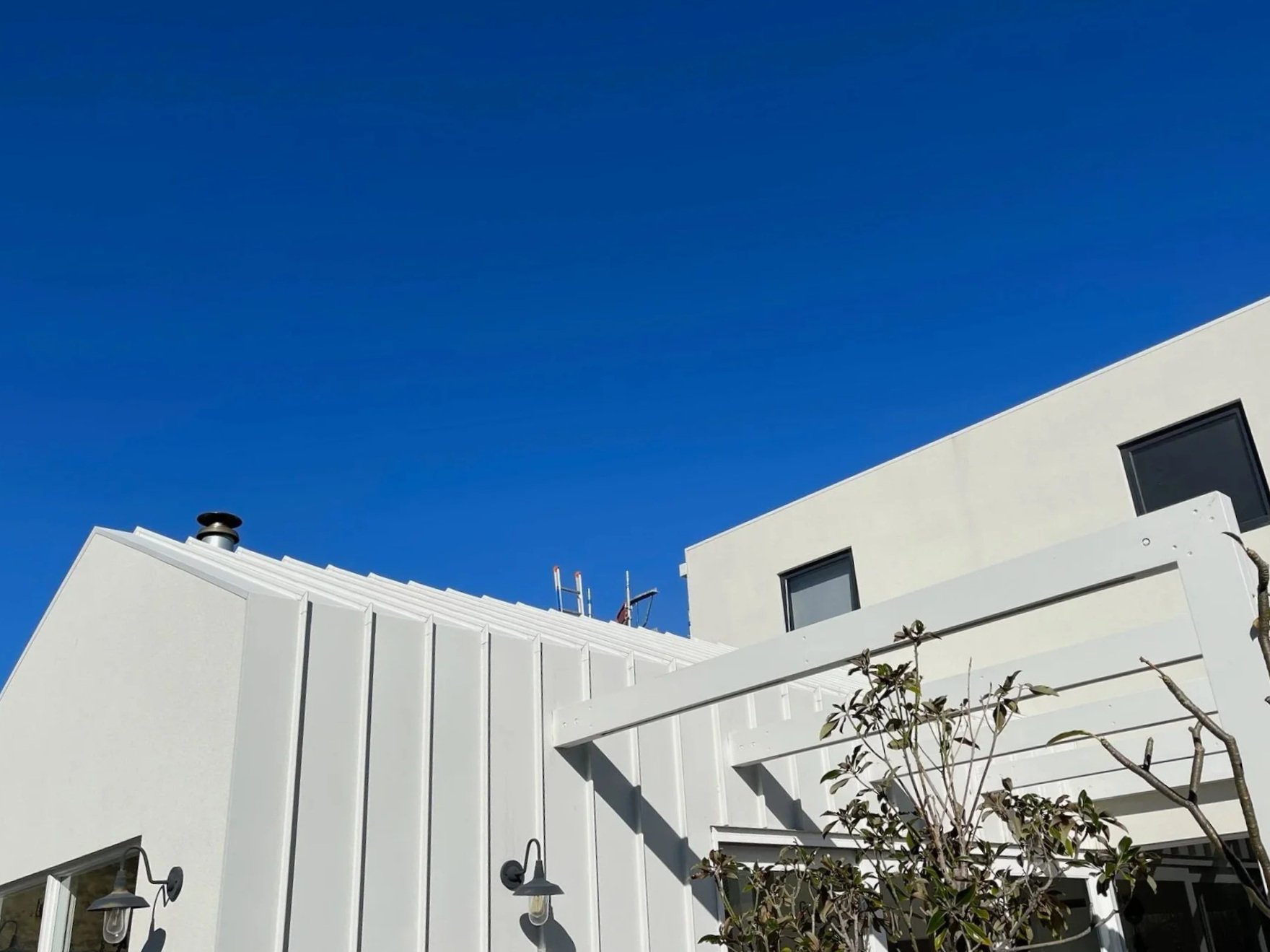
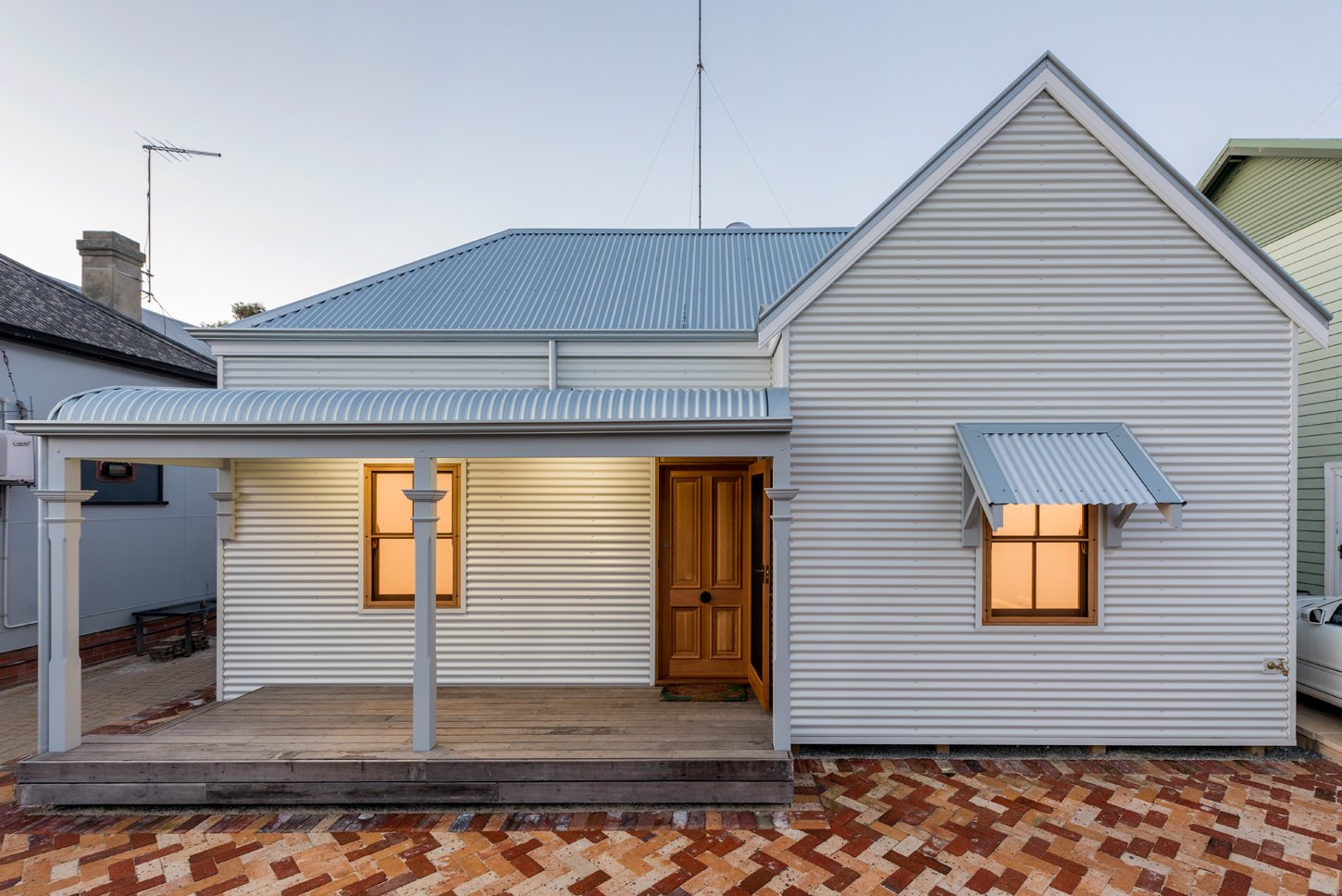
Corrugated custom orb at South Fremantle.
FIBRE CEMENT SHEETS
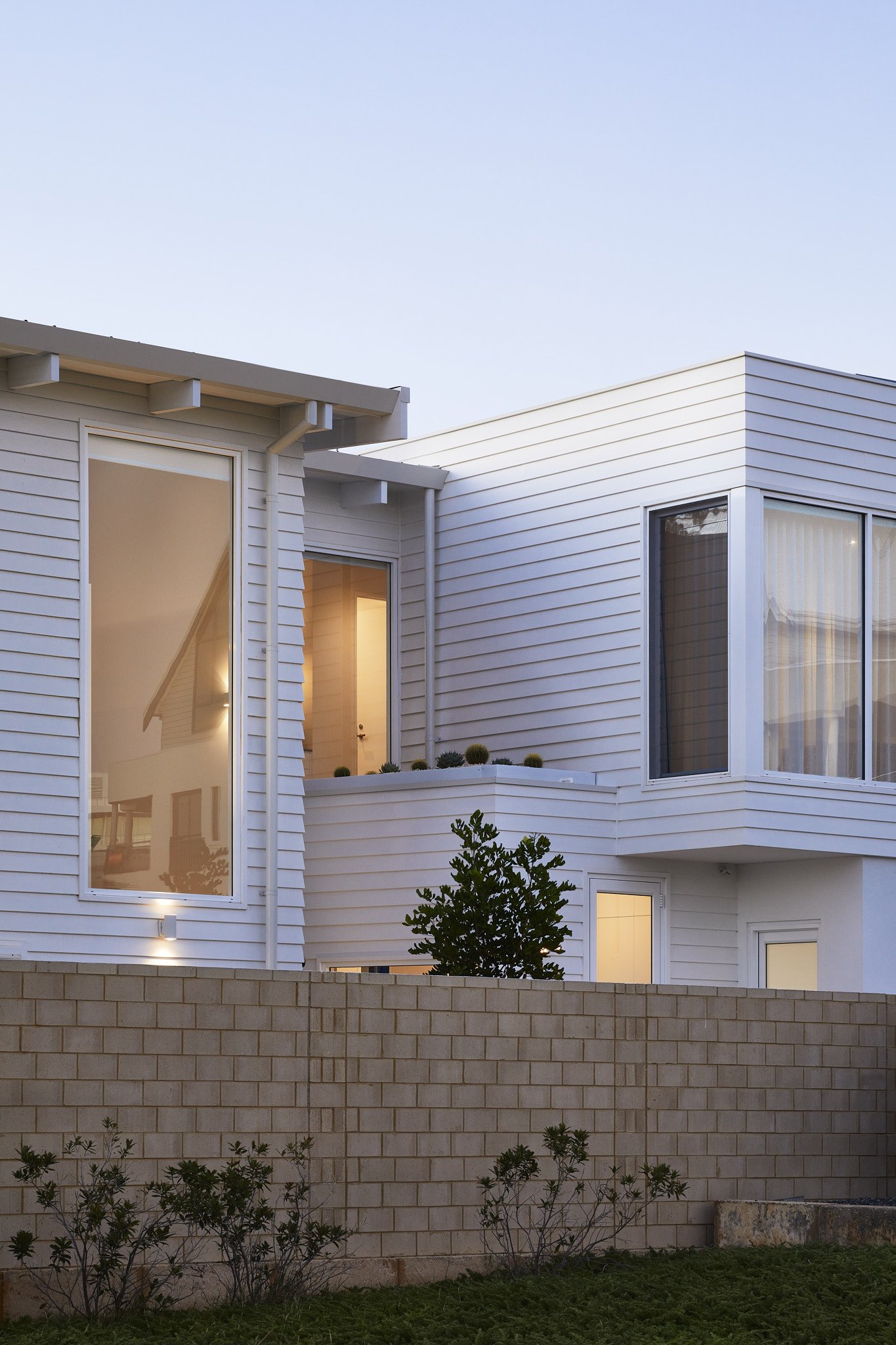
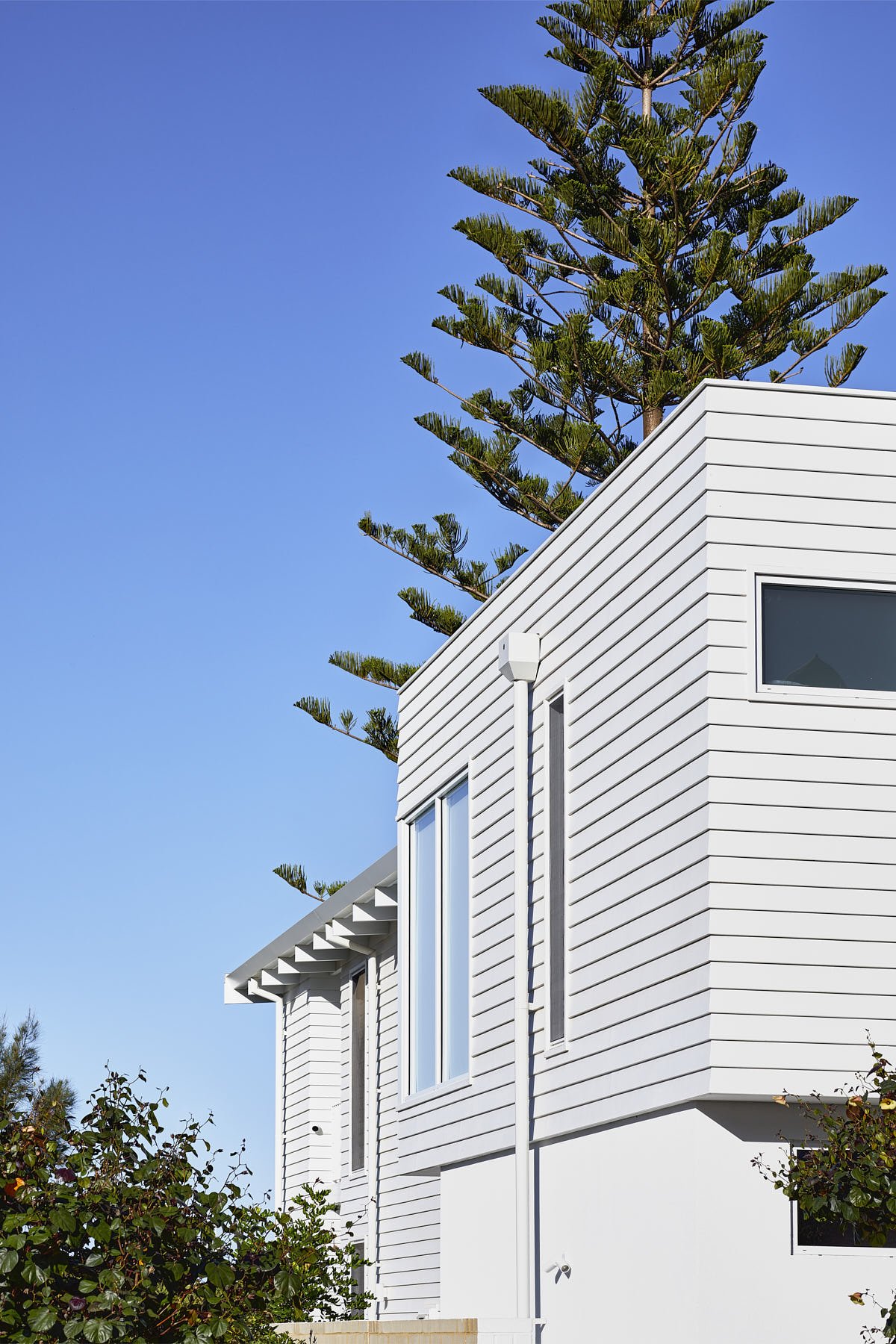
Fibre cement is a concrete lookalike wall panel system made from a mix of sand, cement and cellulose fibres. It’s very durable, can withstand harsh climates and high UV exposure, and has a long lifespan of 40-50 years. It’s water resistant and can be waterproof with the addition of a sealant or waterproofing membrane. It’s also non-combustible, making it a good option for bushfire-prone areas. Depending on your chosen supplier, fibre cement is also relatively low maintenance. Barestone, a pre-finished panel, offers a raw cement look that requires very little maintenance other than cleaning. Scyon, however, is a more affordable version that needs to be painted and, thus, needs to be repainted somewhat regularly—although it still requires less maintenance than timber.
Notably, fibre cement is a relatively heavy, brittle material that can make it difficult to work with and requires an experienced team. Fibre cement sheets also come in standard, pre-cut lengths which are not suitable for seamless designs—when framed well, though, these seams can become a deliberate feature.
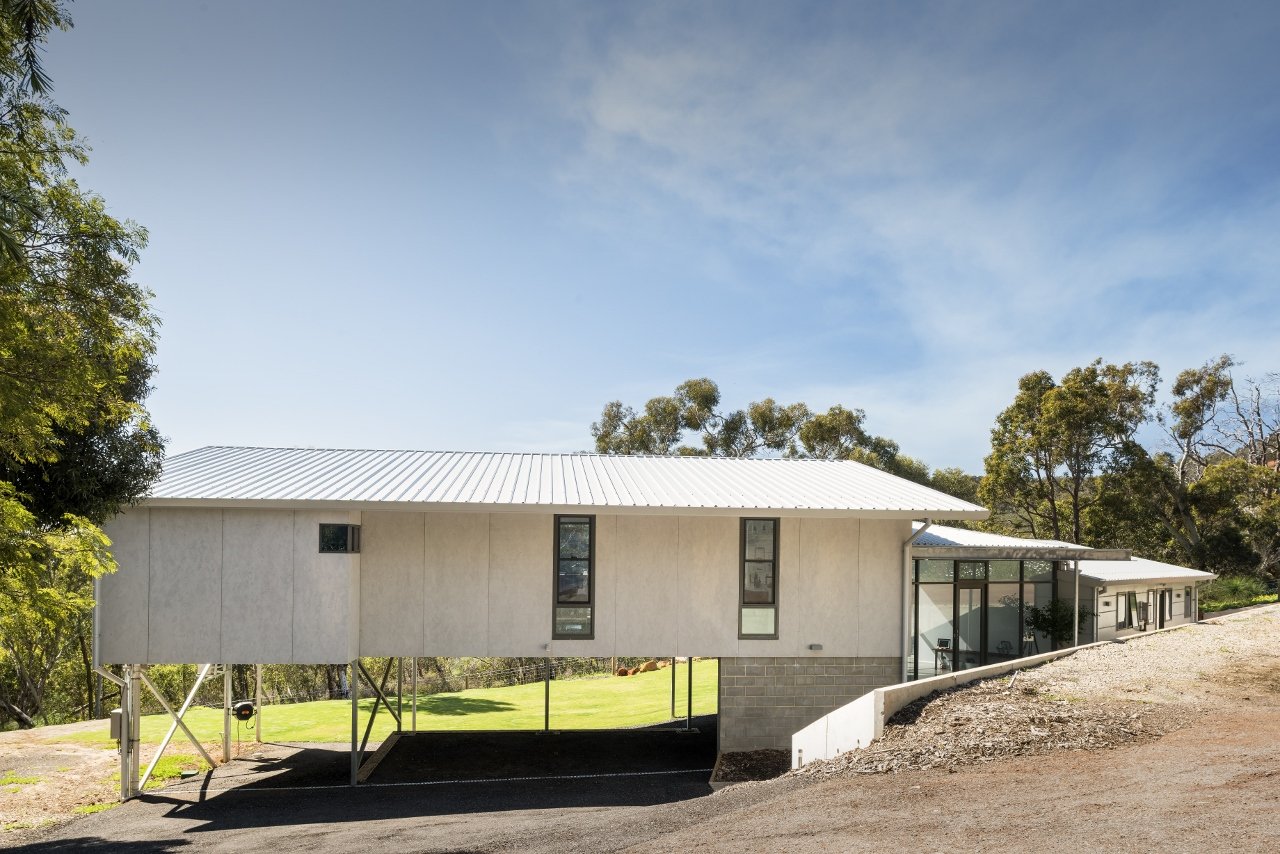
Barestone fibre cement at our Gooseberry Hill project in 2015.
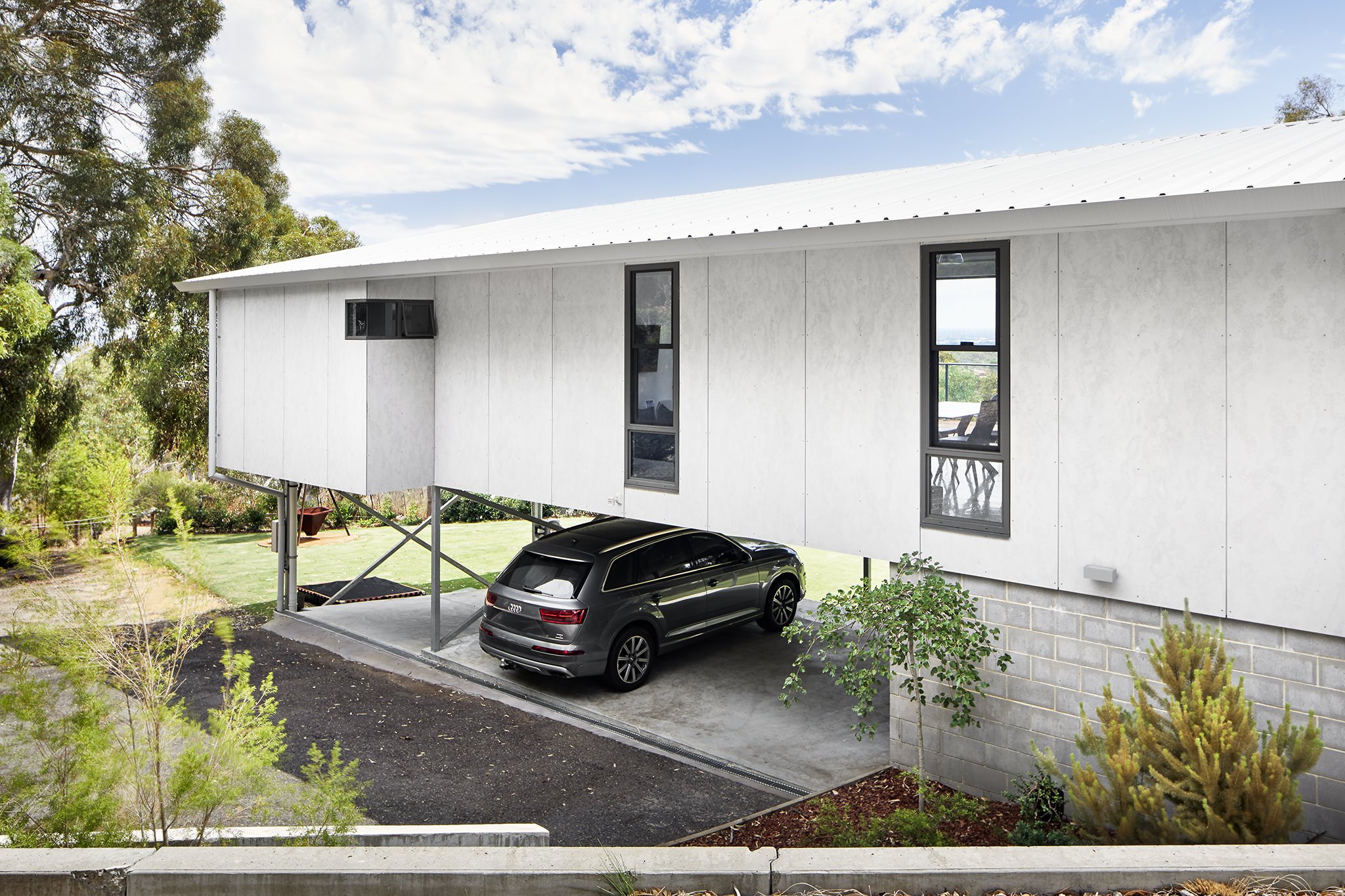
And 5 years later in 2020, still looking good as new.
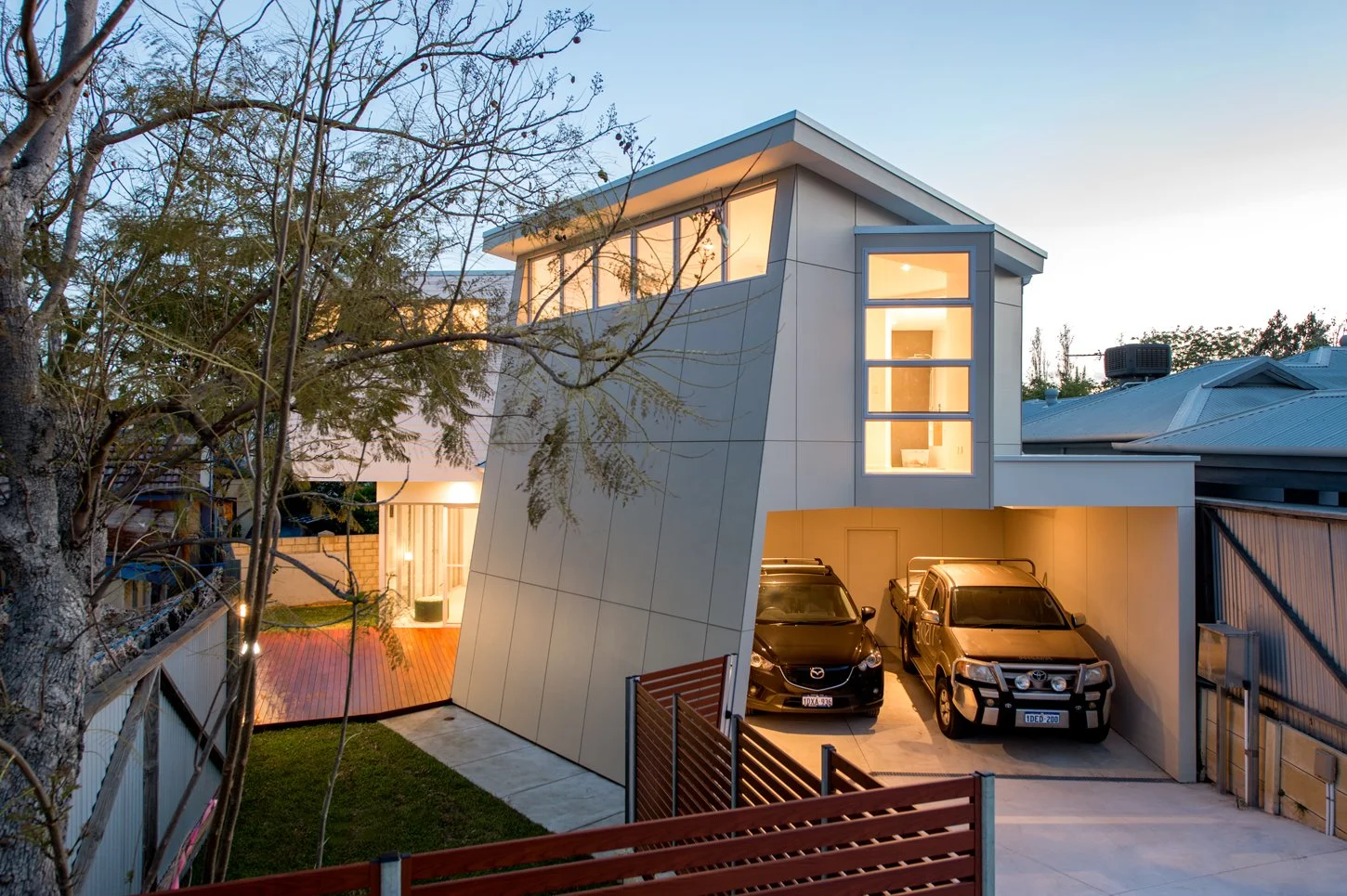
Scyon compressed fibre cement in a matrix profile at our Claremont project.
EPS (EXPANDED POLYURETHANE)
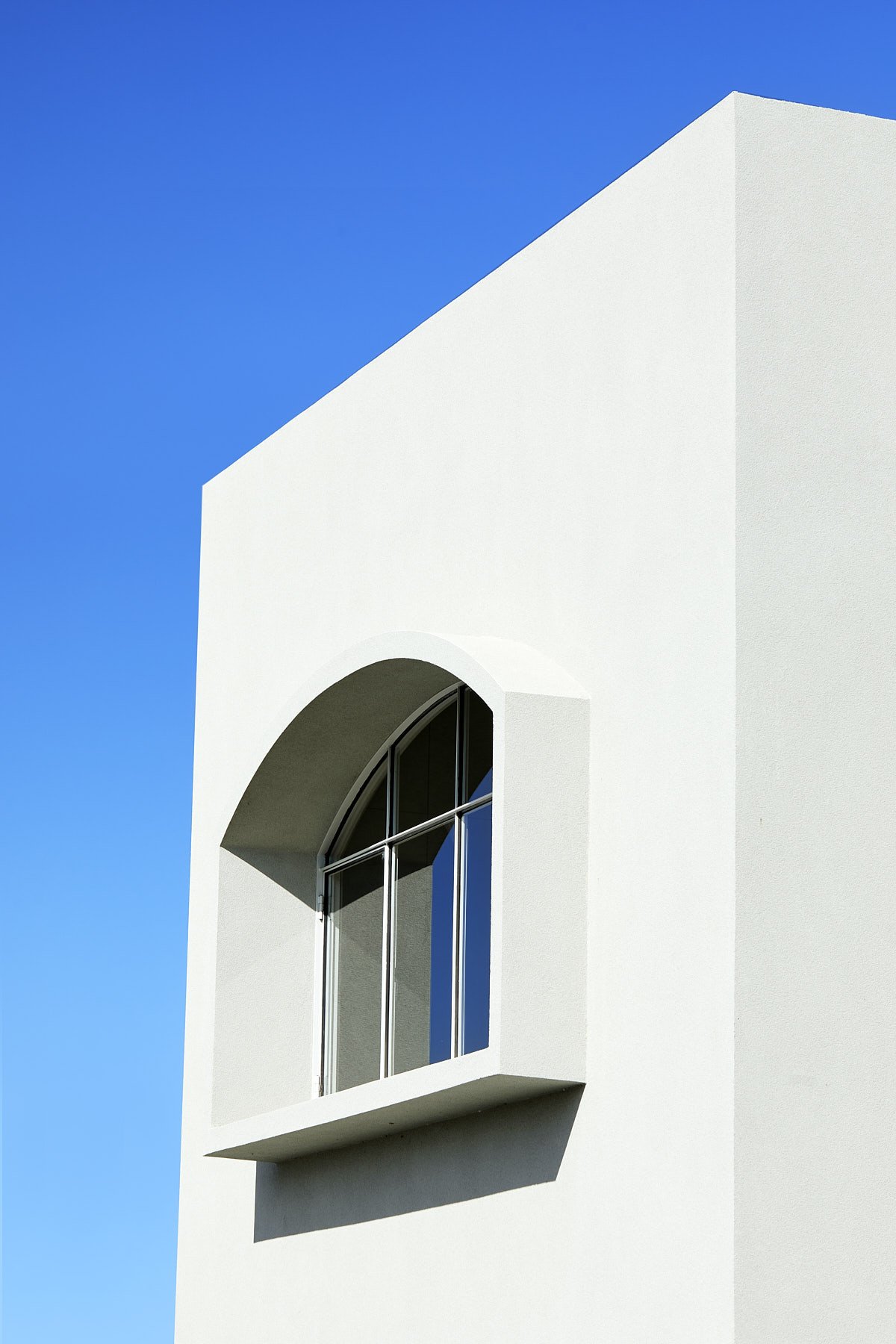
EPS, or expanded polyurethane, is a wall panel system of lightweight rigid foam that’s finished in a render to give the appearance of rendered brick. It’s significantly cheaper than masonry or brick and is very light and easy to install. It can also be moulded and shaped for curved walls or more creative design features. Comprising of over 90% air, EPS also has a high thermal performance that can significantly reduce the need for electric heating and cooling.
While EPS often contains some recycled content, it’s essentially a plastic product that’s not considered sustainable. And to add to this, EPS is supplied as rectangular panels that need to be cut to size, resulting in significant waste. This waste can be recycled, but only at select locations. Additionally, despite being a relatively thick product, EPS does not have the structural capability to support fixings (such as a clothesline). As such, it’s critical to plan fixings early so your builder can install trimmers into the wall behind it.
COMPOSITE
Composite cladding is made with a blend of wood fibres and polyethylene (plastic) to create a cladding that looks much like natural timber. The key selling point, though, is that it needs much less maintenance than timber, requiring no more than the occasional soap and water washdown. It’s also very durable, long-lasting, resistant to stains and scratches, and won’t rot, swell, crack or splinter like real wood. Depending on the supplier, it’s often made by upcycling scrap wood fibres and plastic, making it relatively sustainable to produce, although at the end of its life it’s not biodegradable and is difficult to recycle.
Despite having real wood content, however, composite cladding is not real timber. It’s a good imitation but typically has a more uniform appearance that loses timber’s organic appeal. On top of this, it also tends to be more expensive upfront, although without the need for long-term maintenance and treatment this usually evens out over time.

Keen to explore how these or other cladding solutions can be used in your project? Get in touch!