

Timber is easily one of the oldest flooring materials around, and with its warmth and character, it’s no surprise that it’s still one of the most popular options today. But over time, the range of types and species has become so extensive that choosing just one can seem impossible. So, below, we’ll run you through the key information you need to feel comfortable choosing the right one for your project.
CHOOSING A SPECIES
For many of you, choosing a species will be the most important flooring decision you make. This will define the colour and style of your flooring and can completely change the aesthetics of your entire house. For that reason, your choice here will largely be influenced by your personal aesthetic preferences and budget. We do, however, recommend choosing a hardwood timber species, like Jarrah or Blackbutt, as these are denser and more durable than softwood timbers.
THE DIFFERENT TYPES OF TIMBER FLOORING
The less exciting, but equally important decision, will be between the different types of timber flooring. These can be separated into three categories: solid, engineered and recycled.
Solid timber
Solid timber is the traditional option that’s been used for centuries. Each plank is cut from a single piece of wood and, as such, plank lengths vary significantly and fewer joins are needed. The timber is very dense, durable and can be sanded multiple times to refresh its appearance. As a result, it can last decades, if not centuries, and builds character over time. Installed with a more traditional method that can be done on joists, it’s ideal for renovations and matching existing floors. It also marries well with custom designs as it can be ordered raw and carried through various design elements like feature walls and furniture.

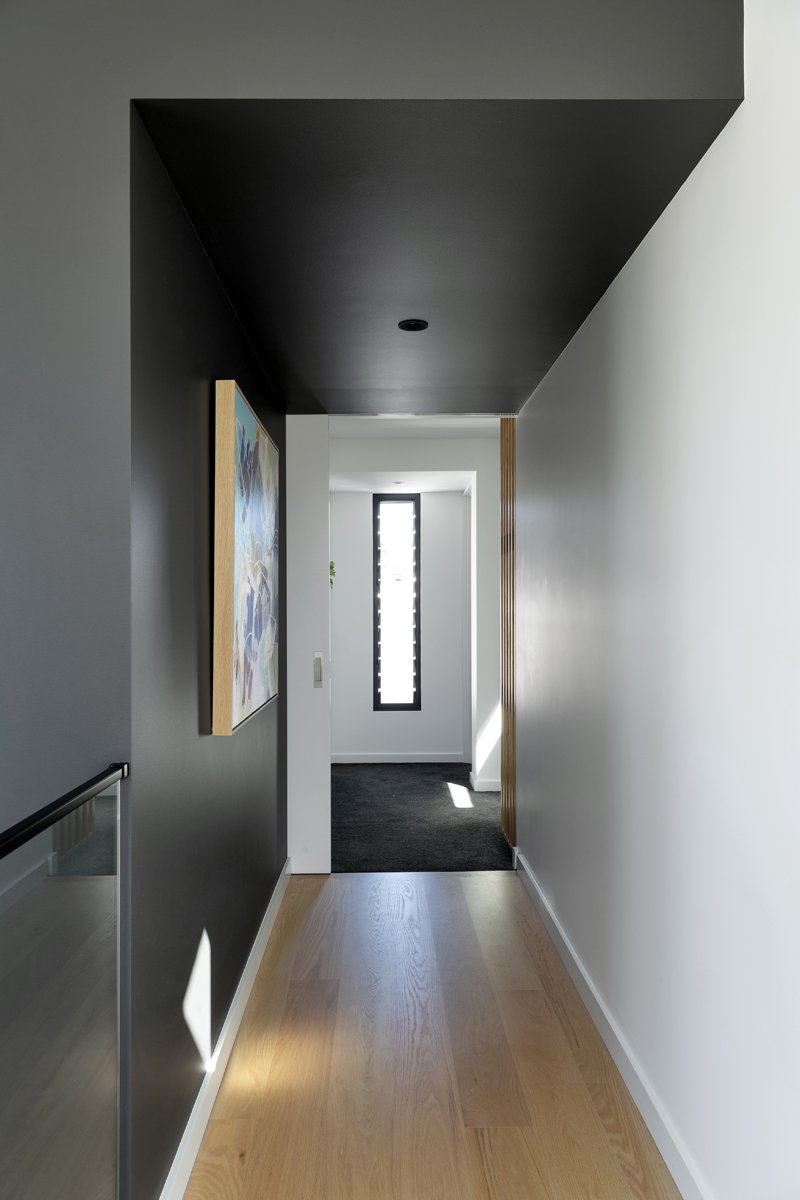

A gorgeous solid Jarrah at our Swansea project.
Where solid timber most significantly falls short, however, is its sensitivity to moisture. It’s not suitable for wet areas and can expand and contract in response to changes in humidity. For this reason, the boards need to be relatively slim to reduce warping. Notably, some species, such as Spotted Gum, will be less stable than others. It’s also important to be aware that because native logging is no longer allowed, the quality of solid timber is not what it used to be. Additionally, solid timber is likely to be more expensive than its equivalent engineered alternative. This is because more real timber is needed and installation generally requires more skilled labour—although this will depend on the project. Lastly, as its availability is reliant on raw timber, there’s no guarantee that the species you want will be readily available.
Engineered timber
Engineered timber is the main alternative that’s quickly become the most popular option for timber flooring. It consists of a veneer of real solid wood on top of a plywood core and back board. This results in a product that looks like solid timber but is more stable and less likely to warp from moisture and humidity. It’s also highly available, easier to work with and, as a result, generally more affordable upfront. Labour costs can be further reduced with the option of ordering pre-finished boards that simply need to be installed (no additional sanding or treatment required).

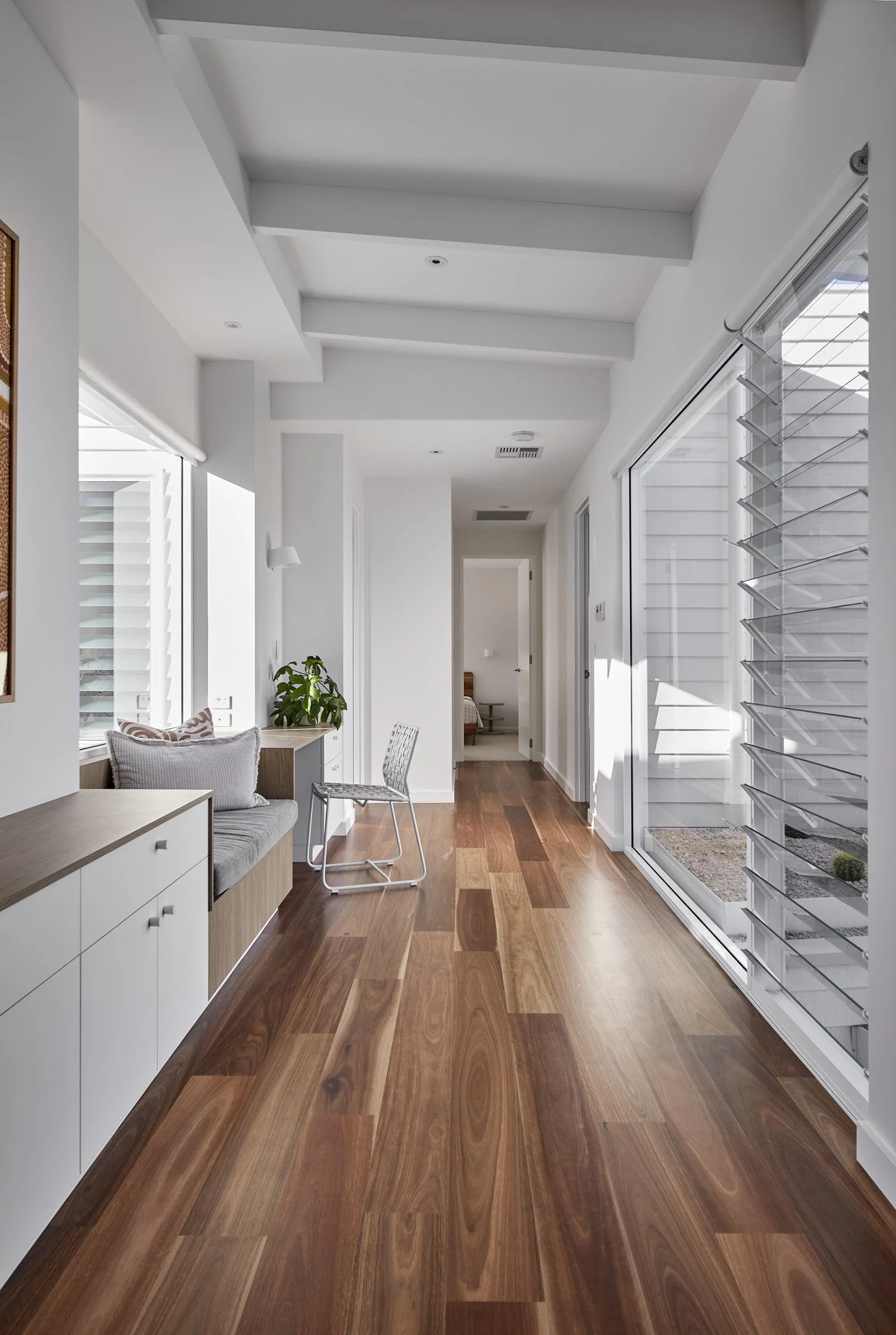
Engineered pre-finished Oak with a Walnut stain at our Kalamunda project.
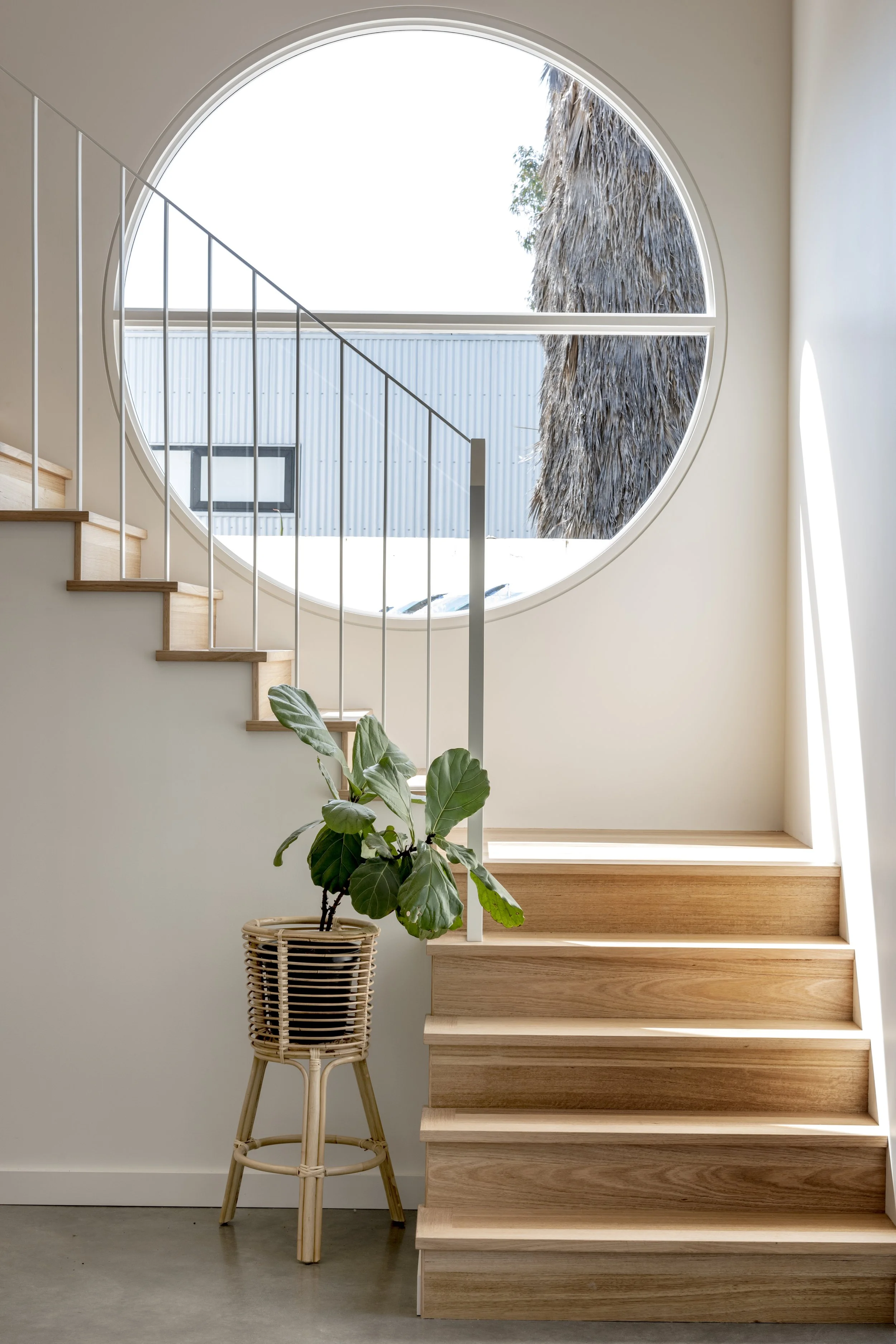
The key disadvantage of engineered timber is that it comes in set lengths up to a maximum of 2400mm and, as such, requires more joins. If a pre-finished option is chosen, these joins may also be more visible as edges are generally angled to hide manufacturing inconsistencies rather than sanded flat on site. Additionally, engineered timber lacks the high durability of solid timber and has a shorter lifespan that typically ranges from 25 to 40 years, although this can be increased to 50+ years for products with a thick layer of real timber. Notably, while it’s often thought that engineered timber can’t be sanded and refinished as many times as solid timber, this is no longer much of a concern as the layer of wood above the join on solid timber is still quite thin. That said, veneer thicknesses can vary so do make sure to consider this when comparing engineered products. In some situations, engineered timber may also limit design possibilities. For example, engineered timber stairs will always require a ‘nose’ of solid timber to hide the veneer lines. While still common with solid timber stairs, it’s not necessary and allows for more unique design decisions, like in our Ardross project below.


Recycled solid timber
Recycled solid timber is exactly how it sounds: older solid timber boards that have been salvaged from a demolition for reuse. Its history and age brings lots of character and, as it's likely to have been made with old-growth timber, it’s often of significantly higher quality. The colours and textures of old-growth timber will also be very difficult to get with newer products, making recycled timber the best option for matching existing floors in renovations. As a recycled product, it’s also likely to be the most sustainable option.
Recycled solid timber will, however, be much more difficult to source than new or engineered alternatives. Additionally, as the wood will have deteriorated and been damaged over time, a lot more will likely go to waste. What is suitable for reuse will have notable wear and tear, which may create character but also adds to the labour required to prepare it. Each board needs to be de-nailed, cleaned and sometimes re-machined—although some suppliers will have done this before selling it. Depending on its thickness and how many times it’s been sanded in the past, the lifespan of recycled timber may also be relatively short.

At our Arundel renovation project, recycled Jarrah boards were used to match the already existing boards that were able to be refurbished.
PATTERNS
All the different types of timber can be laid in virtually any pattern you choose, from your classic straight boards to the more unique herringbone or chevron patterns. This is another stylistic, personal choice, although the more complicated the pattern the more expensive it will be. Importantly, the flooring of all connecting rooms should run in the same direction to maintain flow throughout the house. More intricate patterns are also not recommended in smaller areas as they can make the space feel busy and cluttered.
TRADE SECRETS
Skirting a necessity: While solid timber is more sensitive to humidity, both solid and engineered timber will need to be paired with skirting boards to allow for some movement.
Let it climatise: With solid timber, it’s a good idea to store the boards in the house for 1-2 weeks before installation. This lets them climatise so there’s no sudden expansion or contraction straight after they’ve been installed.
Treatments: The different treatment options are largely the same in terms of long-term maintenance and, as such, should be chosen based on the brand and desired level of sheen (such as glossy, matte, and satin).
Floor transitions: Consider how your timber flooring will transition to another flooring material early in your design. Subfloors will need to sit at varied heights to allow for different material thicknesses and, where the transition is in a doorway, make sure it’s centred under the door so it’s not visible when the door is closed. Learn more in our Floor transitions blog.
Have any questions about your choice of flooring, or want to consider a build with Arklen? Get in touch!