
Retaining walls are a vital part of many home designs. They may be needed to create level ground, stabilise foundations, or simply allow for more interesting design elements. But there’s more than one way to build a retaining wall, so let’s run through some of the basics.
WHAT IS A RETAINING WALL?
At its simplest, a retaining wall is a wall or structure which is designed to hold back soil. This might be to prevent erosion, create a stable foundation, or manage the surcharge of stress added to the land due to other factors like a house or a pool. If you’ve bought a sloped block where the natural gradient of the ground needs to be altered, a retaining wall will likely be a necessity.
THE DESIGN AND BUILD
As retaining walls are needed to ensure a home’s foundations are stable, they’re usually completed as part of the site preparations and should be one of the first things to be built on site. Only when the retaining walls and foundations are structurally sound should any other construction begin. If done retrospectively for, say, a renovation, your options will be significantly more limited.
Importantly, most retaining walls should be completed with consultation from a structural engineer. This is because consideration of things such as soil type, slope angle, groundwater, and drainage can be very complex. If your retaining wall exceeds a certain height (usually 500mm in WA) or will support a load surcharge, a consultation may even be a regulatory requirement.
COMMON TYPES
Depending on your needs, there are various ways that a retaining wall can be designed. For residential properties, two are particularly common:
Mass/gravity retaining walls
Mass or gravity retaining walls are triangular structures that are wider at the base and essentially rely on their own mass to resist the pressure of the soil they’re holding back. The taller the wall, the wider it’ll need to be at the base and the heavier it’ll need to be overall. They can be made using a variety of materials, such as brick or limestone, and are usually relatively easy to build. Due to their size and weight, however, they’re generally not the best option if there are space constraints or the retaining wall needs to be more than 3 metres high.
Vertical/cantilever retaining walls
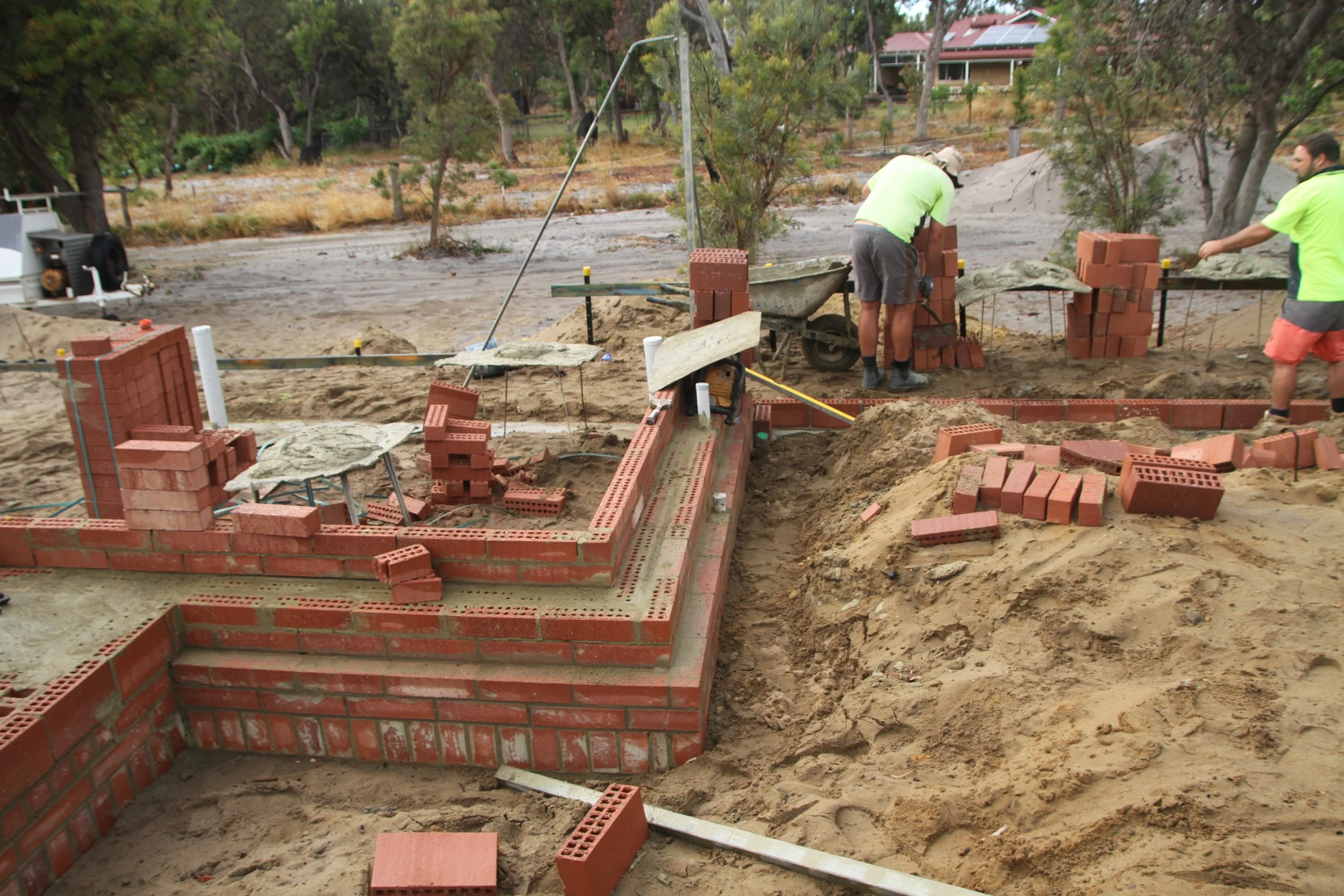
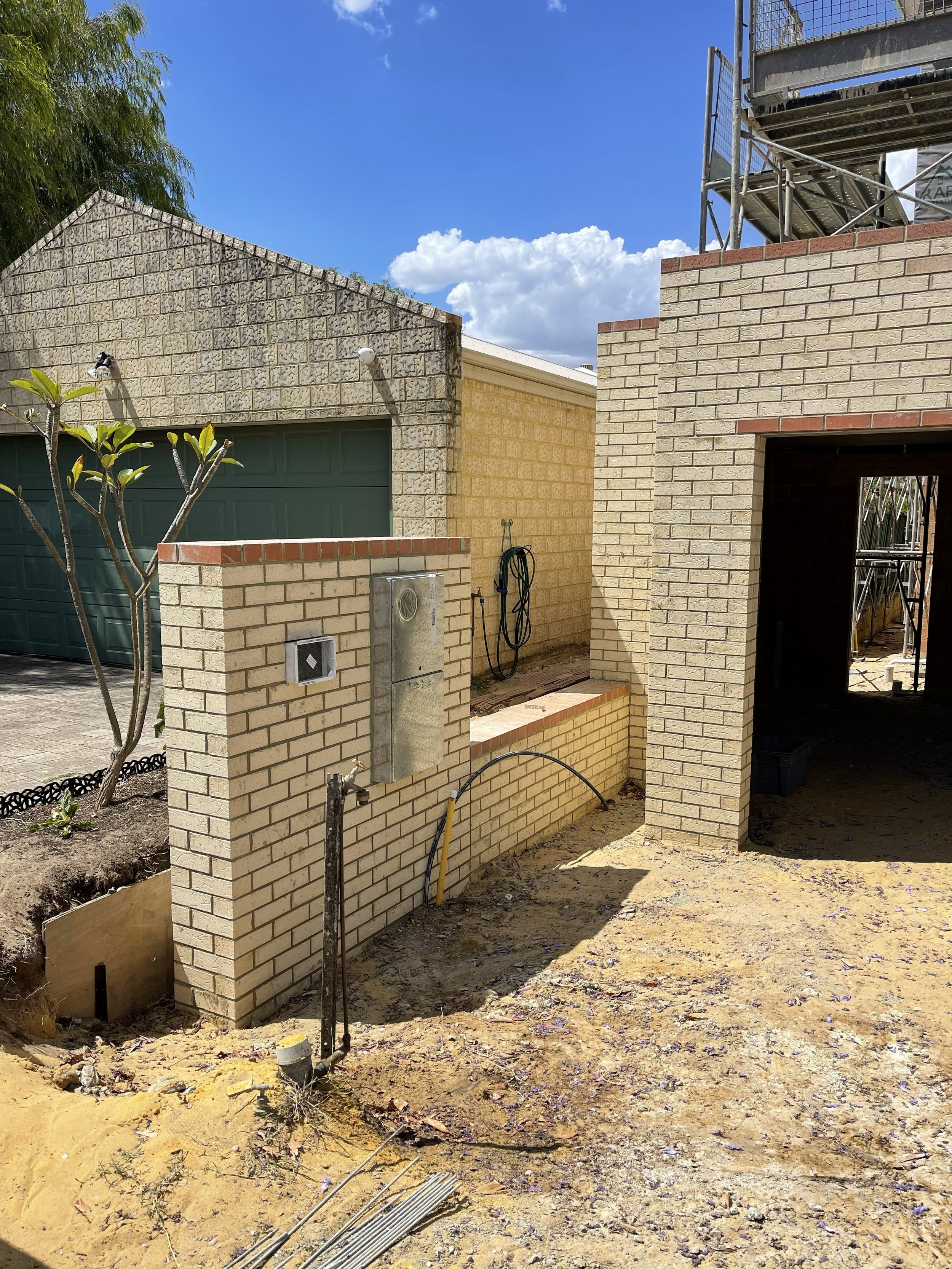
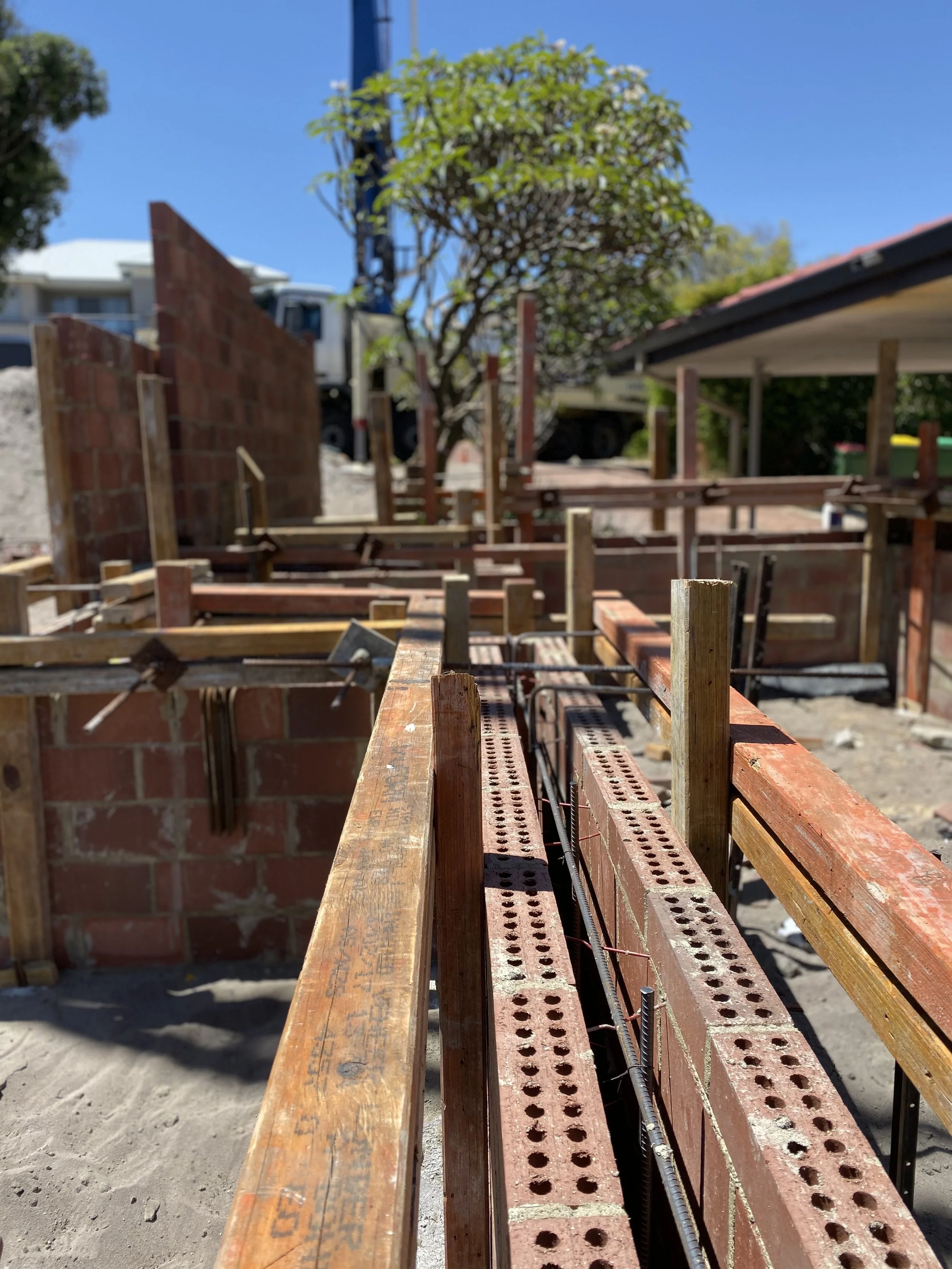
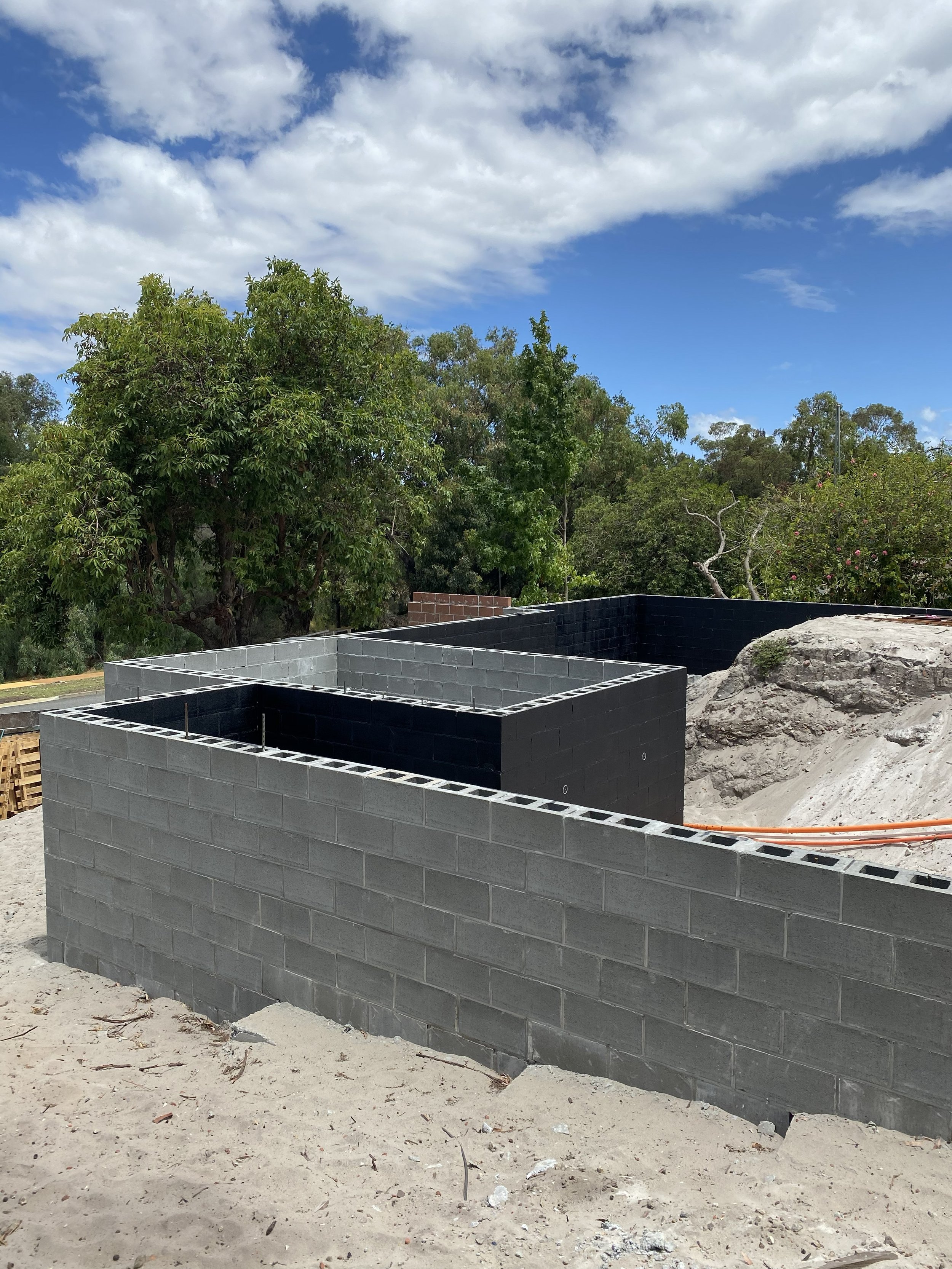
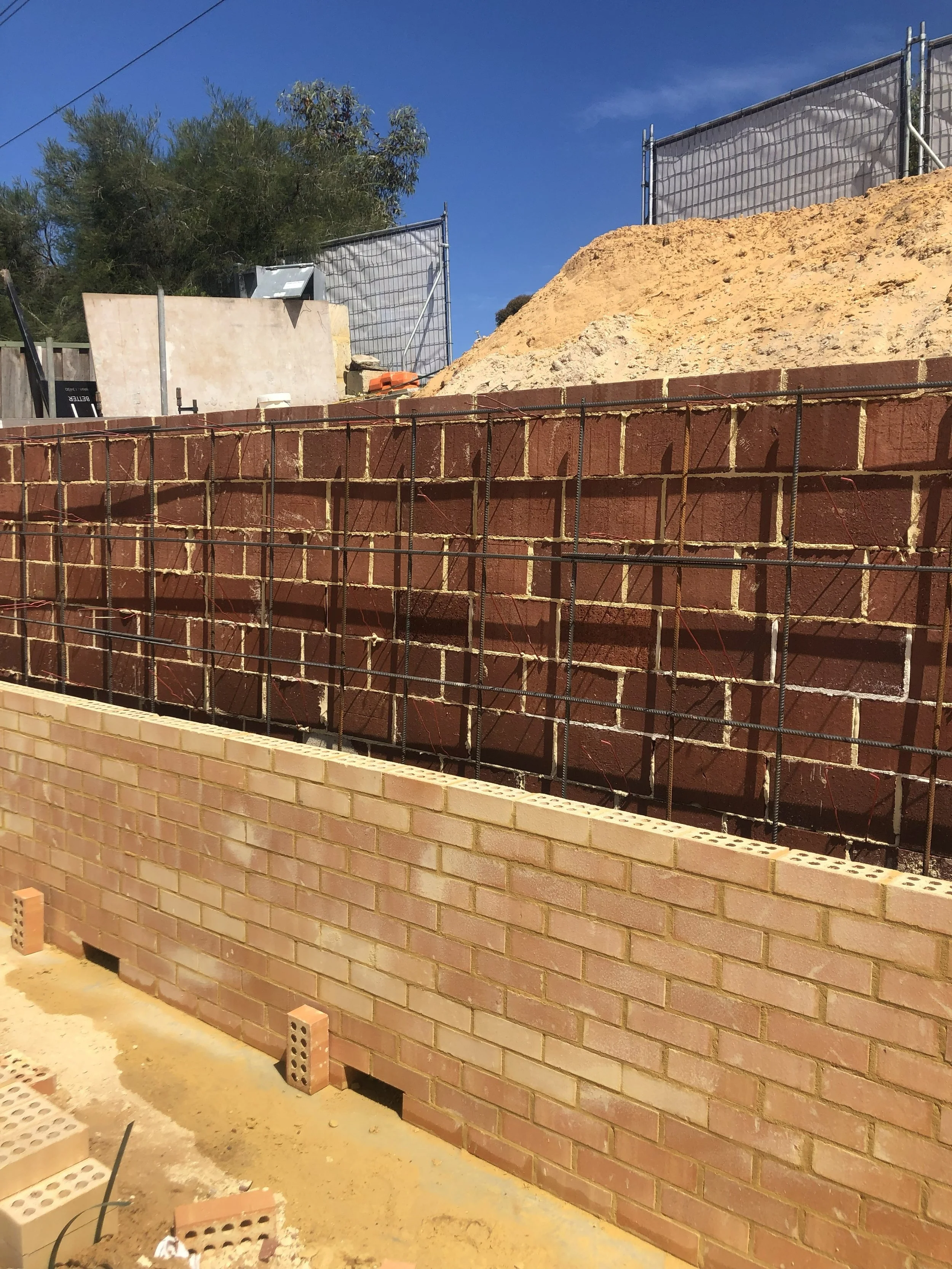
Vertical or cantilever retaining walls typically look like an ‘L’ or inverted ‘T’, with a footing that sits in the soil that’s being retained. The vertical stem can be built in a few different ways. The most common is with reinforced concrete that’s poured between two leaves of another material, such as brick. Alternatively, reinforced concrete blocks can be stacked in a single leaf. Both of these options transfer the weight of the retained soil onto the footing to allow for a comparatively thin, but very strong wall that can retain to heights of up to 5 metres. They do, however, typically need to be built by hand, which requires significantly more labour. Access is also needed on both sides of the wall, which can bring complications if building in front of an existing slope.
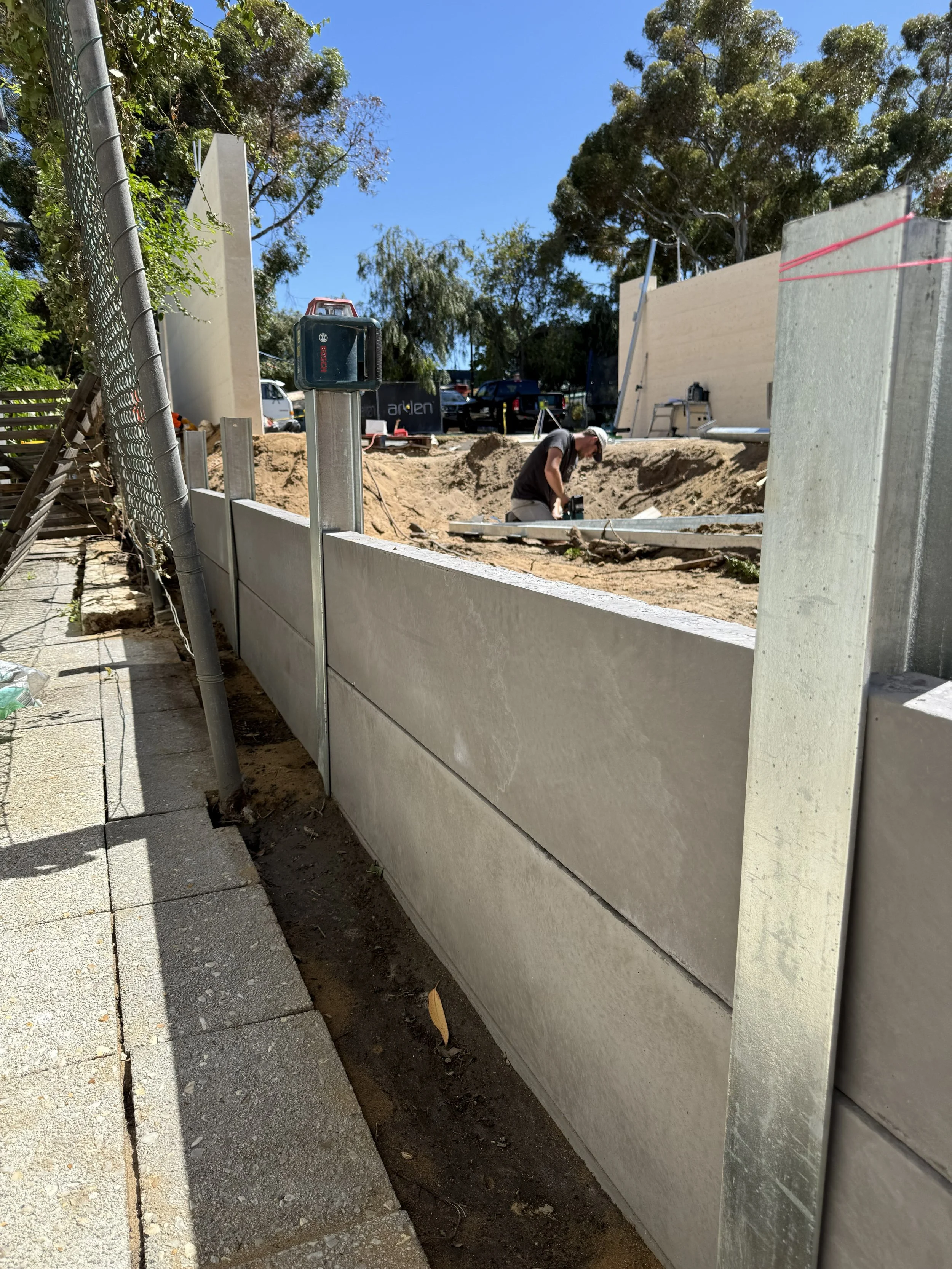
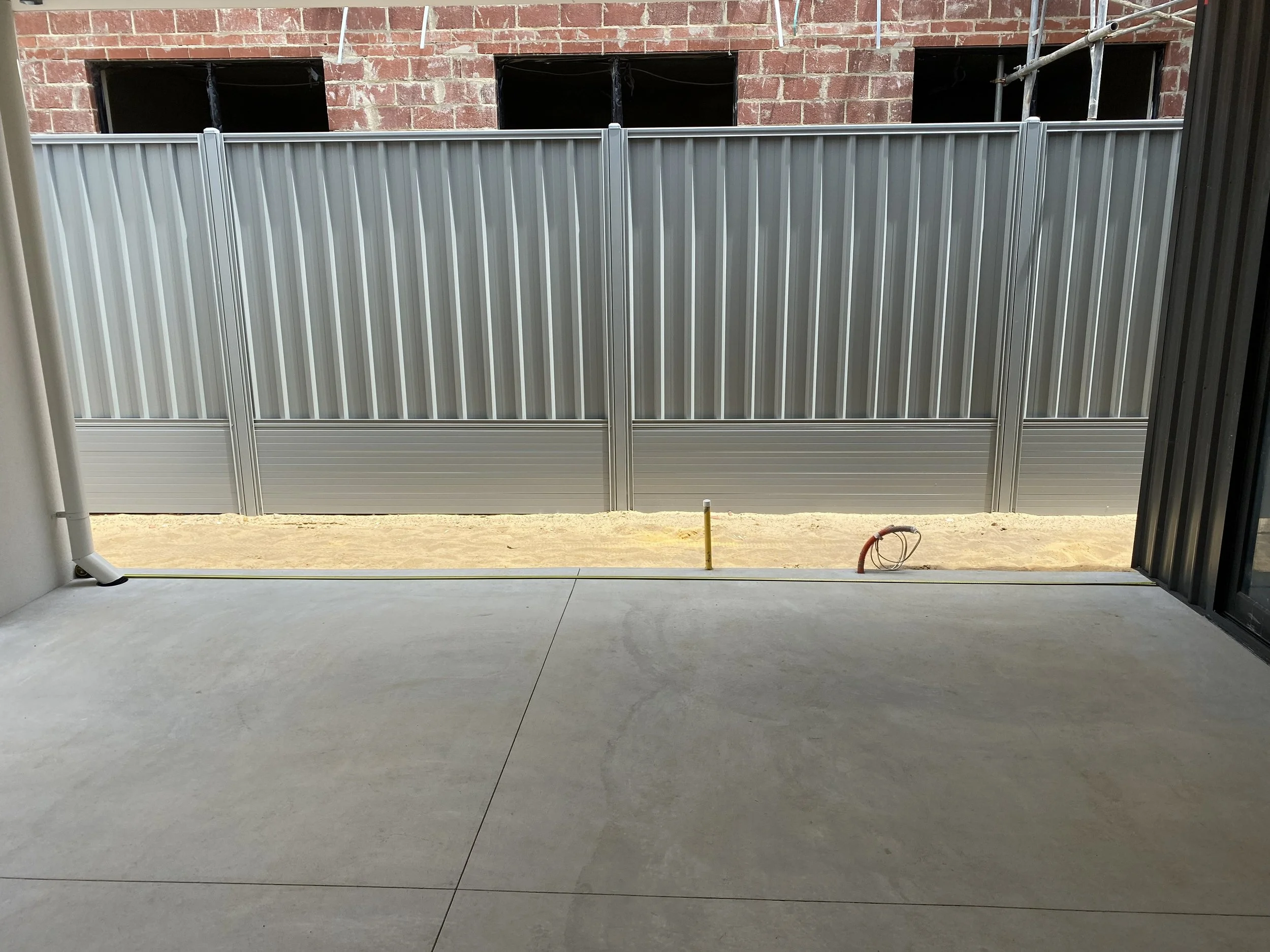
A more affordable vertical option is a panel and post design, in which horizontal panels are attached to vertical posts that are anchored in the ground. These can be built with materials like timber or Colorbond, and can be very thin, making them ideal on boundary walls where space is a concern. Unsurprisingly, they can’t support much weight so need to be used with caution.
EXAMPLE SITUATIONS
Aesthetics and price will often be the most significant deciding factors when choosing a retaining wall, but there are times when a certain type is more appropriate. Let’s take a look at what some of our clients chose and why.
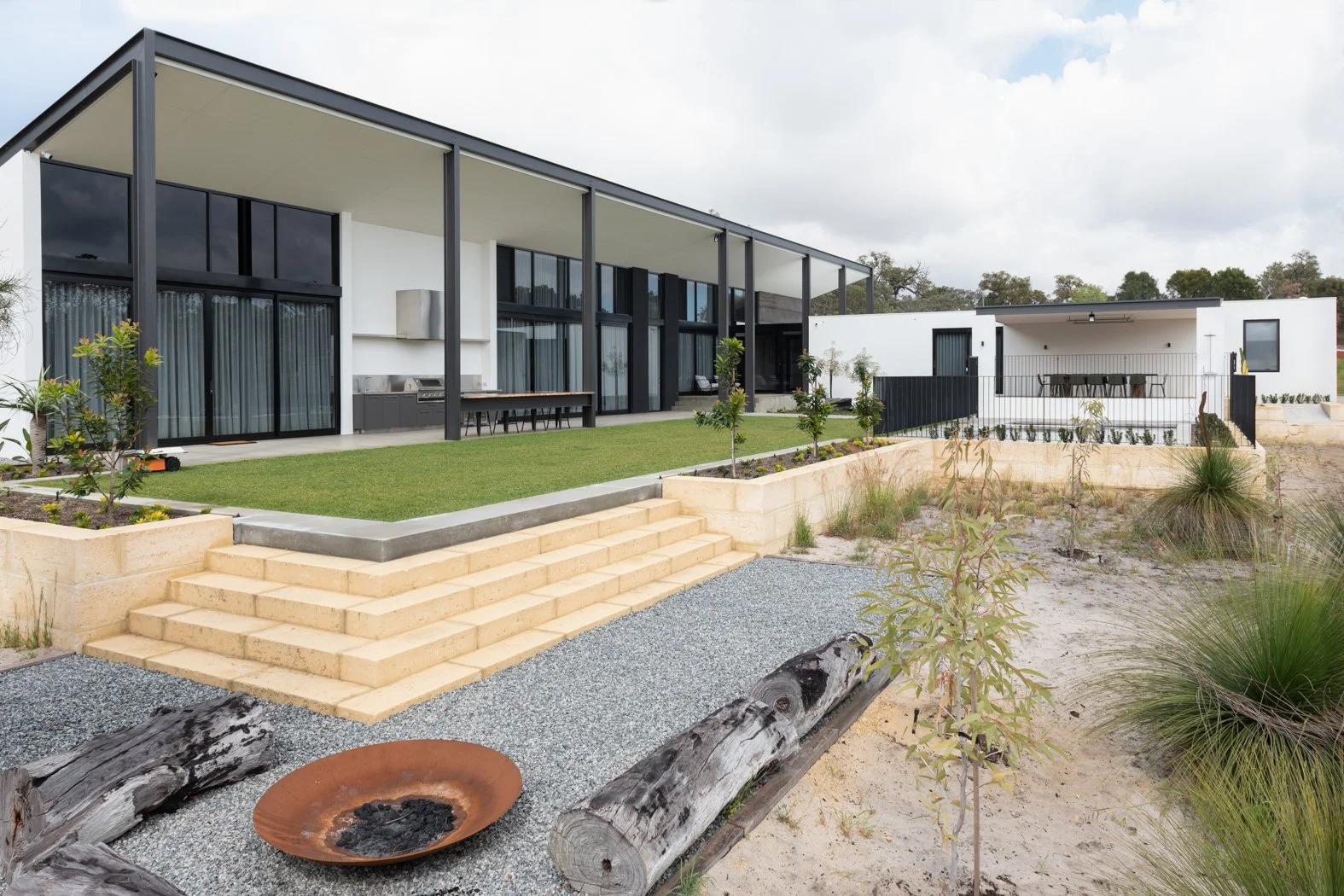
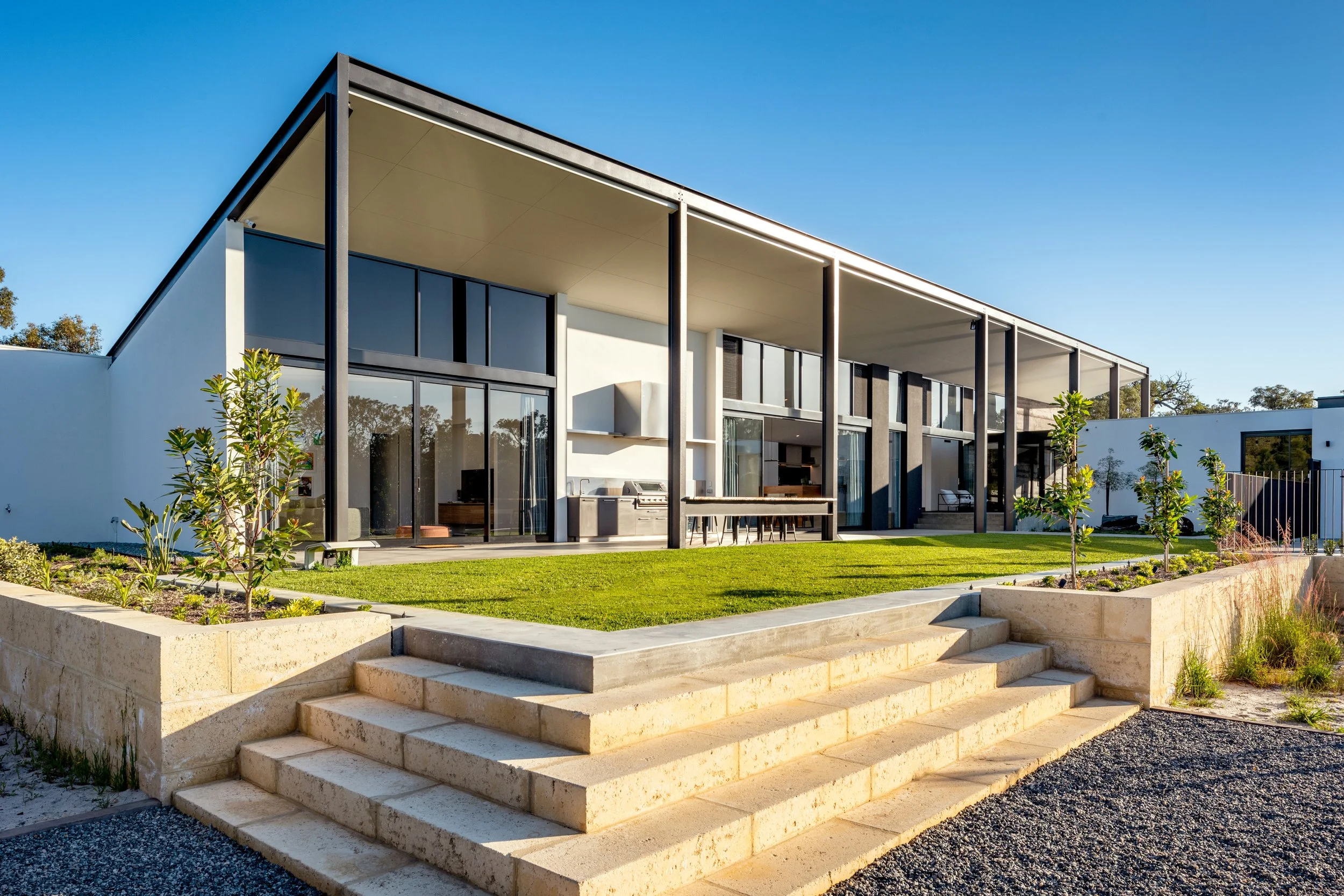
At our Banjup project, we had to raise the ground level as there were minimum floor height requirements due to the water table level. A mass limestone retaining wall was chosen for its natural, timeless aesthetic, minimal maintenance and quick installation. The cut blocks are also particularly good for stairs.
At our East Fremantle project, a tall retaining wall was needed to account for a significant slope. Concrete filled vertical brick was chosen as it allowed for a tiered design with a slim but deep garden bed. This creates a much nicer space than if it had simply been a solid wall but still takes up a relatively small amount of space. To do the same with a mass retaining wall would have required a significantly wider garden bed that would have encroached on the walkway.
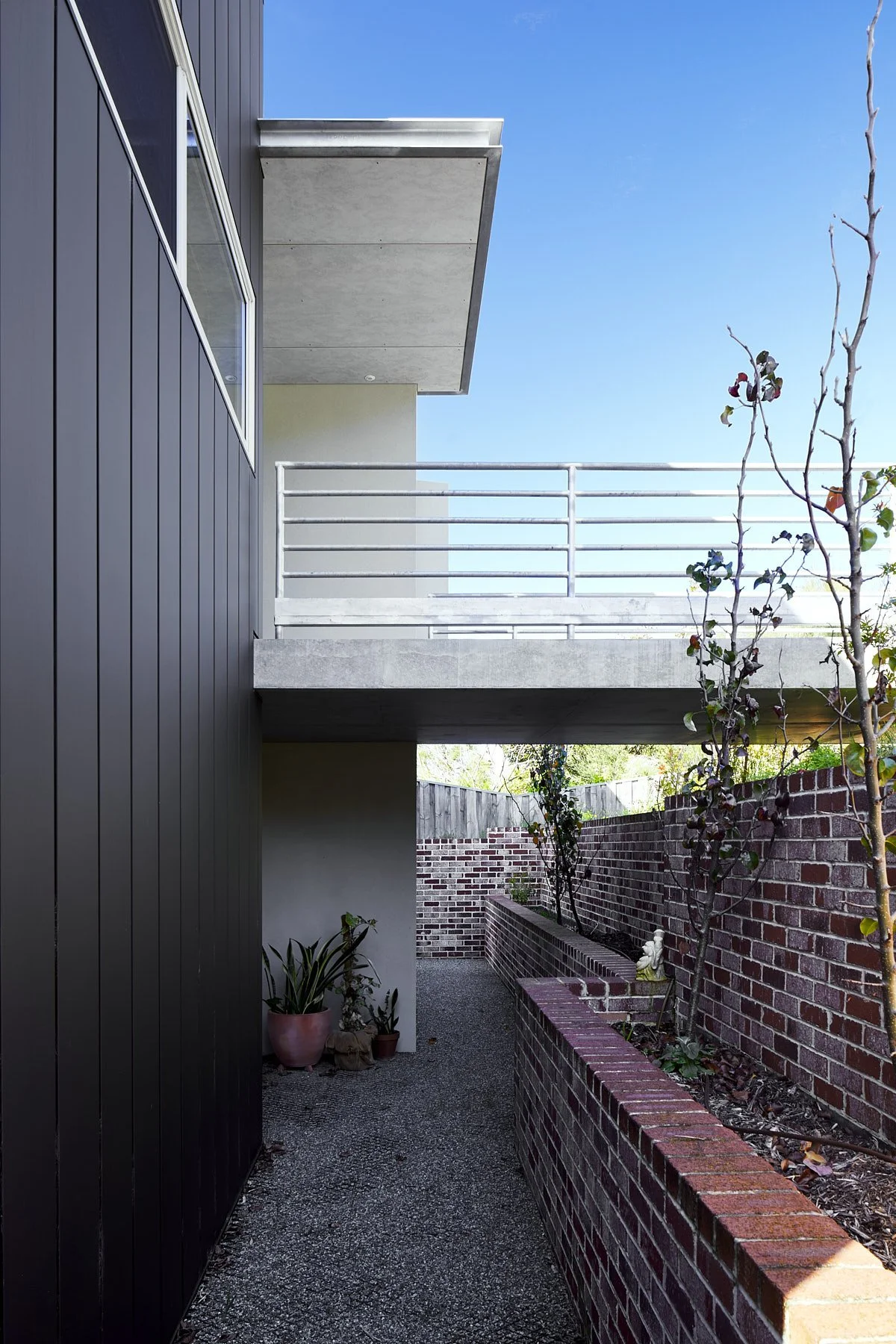
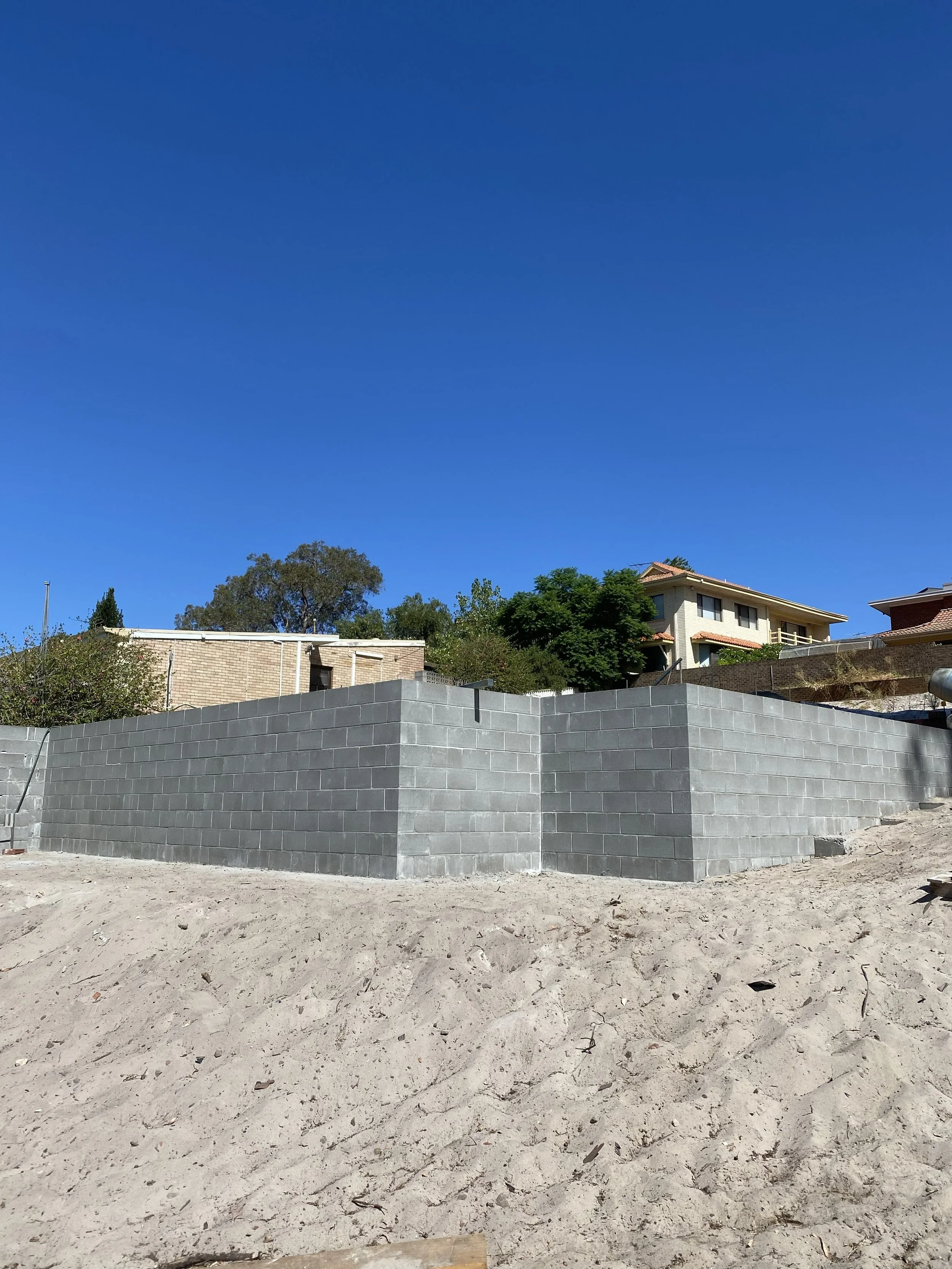
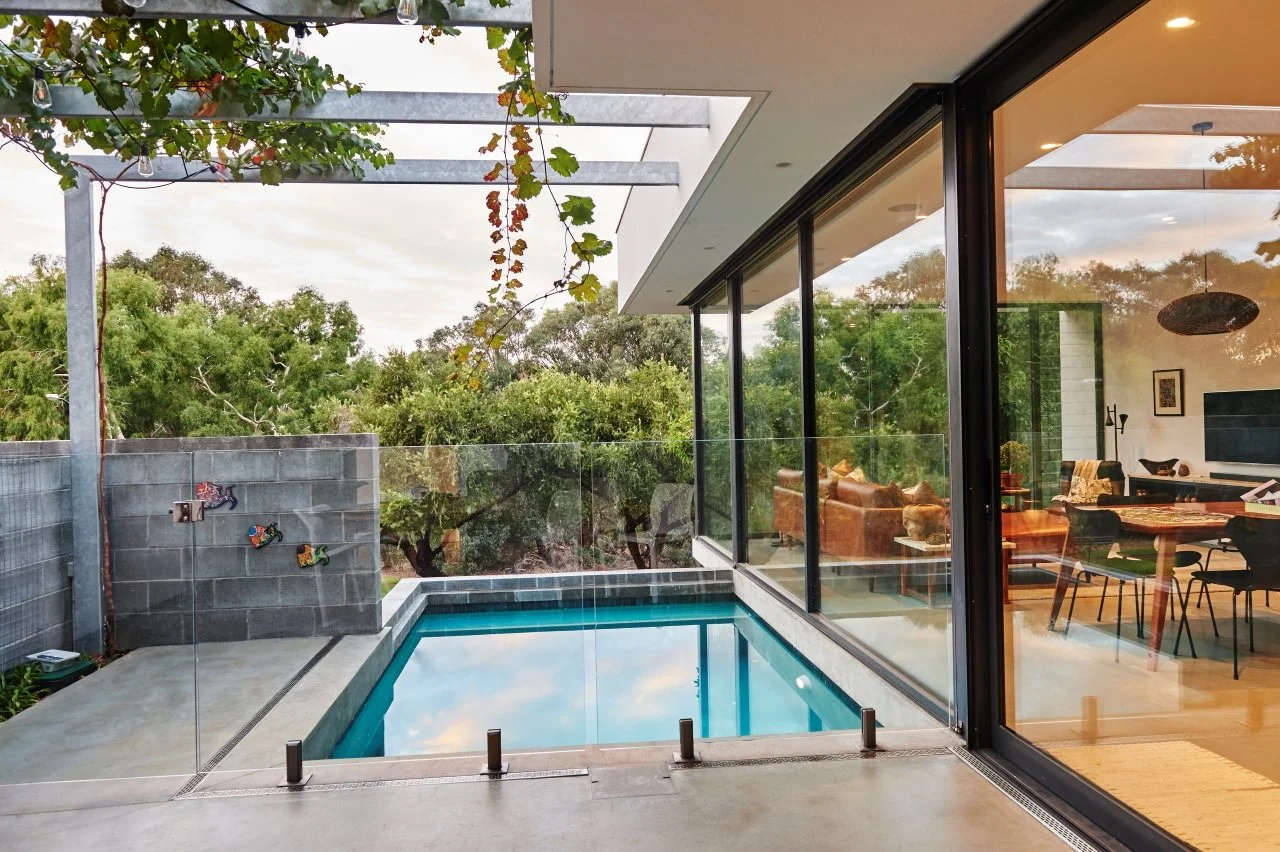
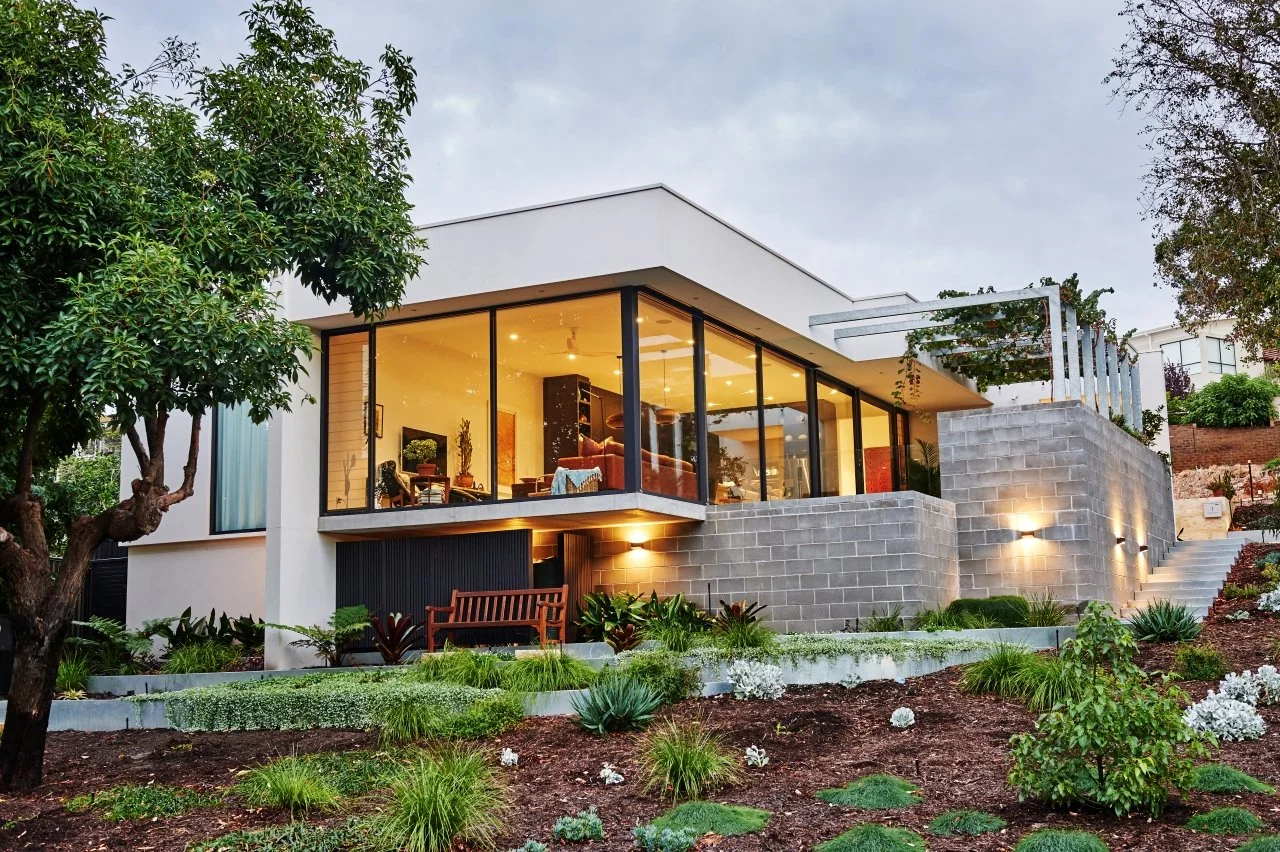
Finally, our Mount Pleasant project is the perfect example of how a retaining wall can actually become a part of the home design. Here, a very sloped site required significant retaining. Rather than simply flattening the site with an enormous retaining wall, however, a vertical retaining wall of reinforced concrete blocks has been brought into the building envelope. It forms the home’s foundation but, with the help of a cantilevered slab, sits beneath the single storey home to give the appearance of multiple levels. This is carried around to the front of the house where it also forms a pool, the sides extend higher to create a solid balustrade and improve privacy. All of this results in a standout design that works with the sloped site rather than against it.
TIPS FROM THE TRADE
Work with the block: While it may be tempting to transform a sloped site into a flat one, this can be quite costly and usually requires a very tall, very boring retaining wall. By designing for the slope, you can get a much more interesting home without any intrusive retaining walls.
Match the house: If a retaining wall is against your house, choose either the same material as used in your cladding, or make sure it’s complementary.
Consider waterproofing: If waterproofing is required, some types such as mass brick and concrete vertical walls, are easier to work with than others. Clear access is also critical to ensure the waterproofing is applied to the necessary standard.
Have a question or keen to build with Arklen? Get in touch!