
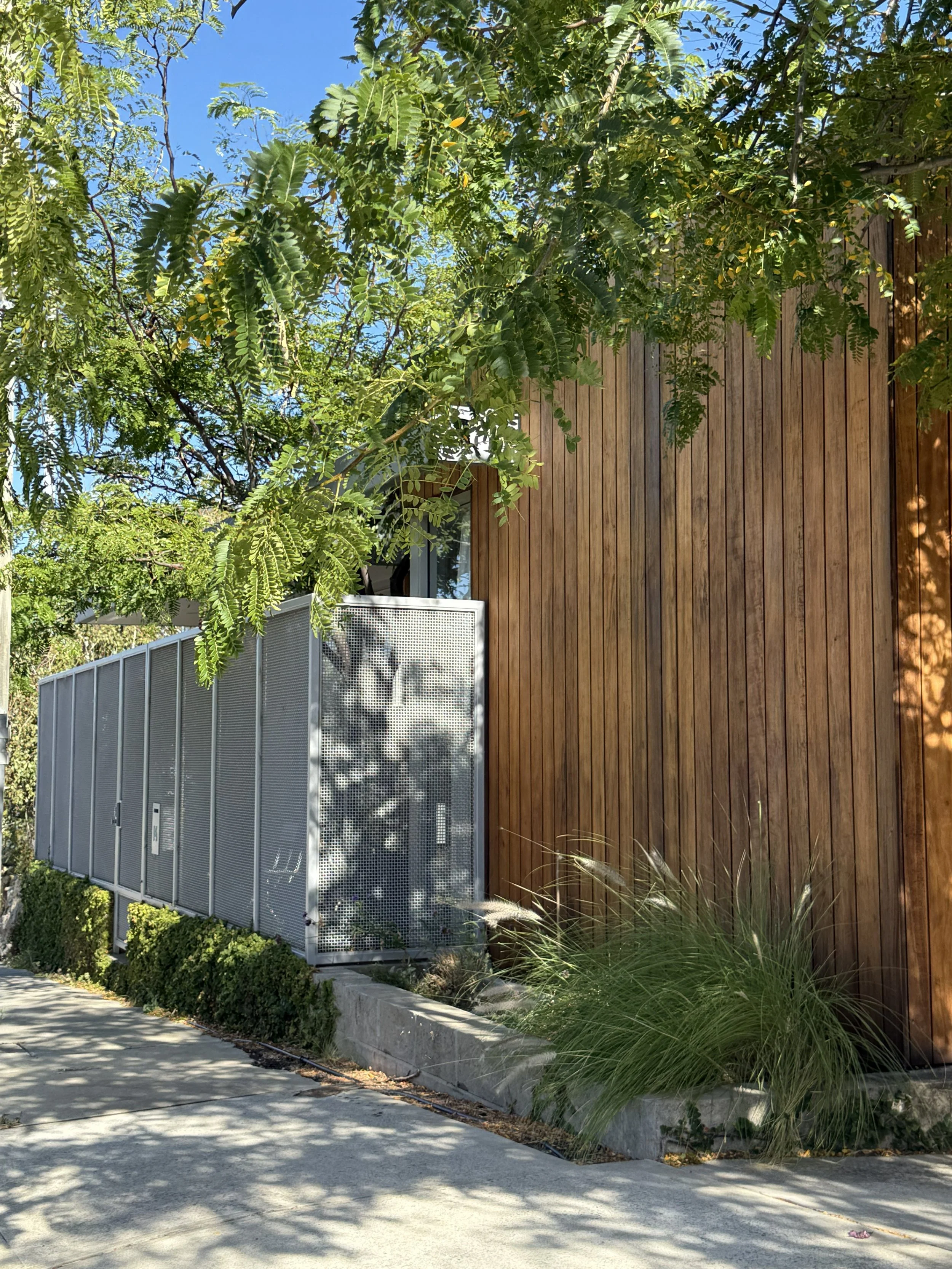
Considerations for privacy are a necessary part of almost every home design, especially those built in high-density areas. To address this, we discussed a wide range of solutions in the Designing for Privacy blog that was published earlier this year. One of these deserves a little more attention, though. Privacy screens are a particularly versatile solution that create a visual barrier without completely blocking light or airflow.
PURPOSE
The most common purpose of a privacy screen is to block or minimise sightlines that may cause privacy concerns. This could include views into your property from the street or neighbouring homes, or views from your home into a neighbour’s property—in which a solution may be required by the council.
They can offer a lot more than just privacy, though. They can also be used to block unsightly views and/or draw the eye towards a particular outlook. On properties with granny flats or multiple residences, they’re a great way to partition dwellings without closing in the outdoor spaces. Inside, they can help define boundaries between different zones where a wall would be too disruptive. And they can do all this while also providing extra weather protection by reducing wind and solar exposure.
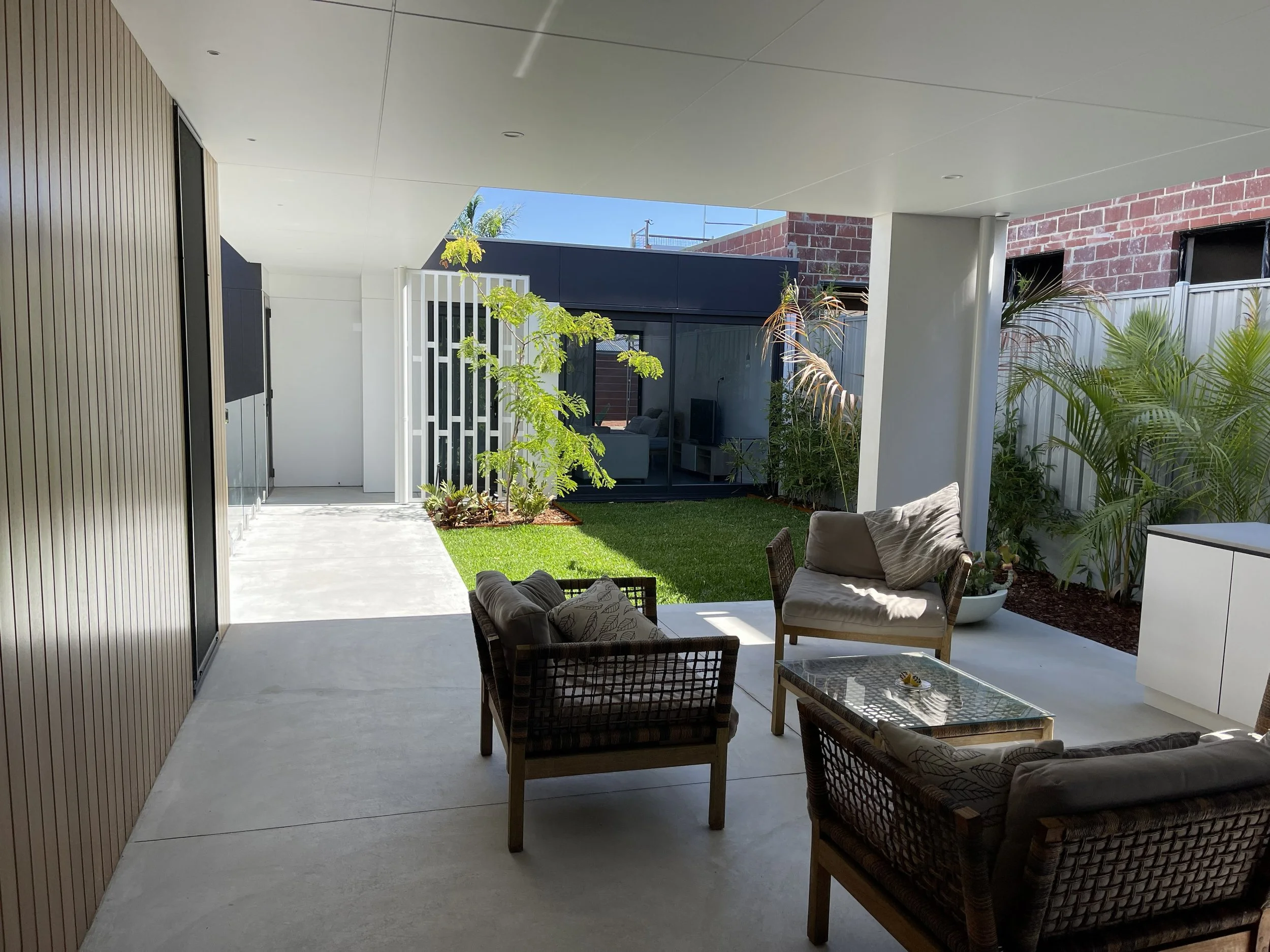
A minimal privacy screen at the entrance of a self-contained studio at Salter Point.

A privacy screen that separates the ensuite from the primary bedroom while still allowing plenty of natural light at Ardross.
DESIGN OPTIONS
When custom designed, privacy screens are a highly versatile solution with lots of design options to choose from.
Battens
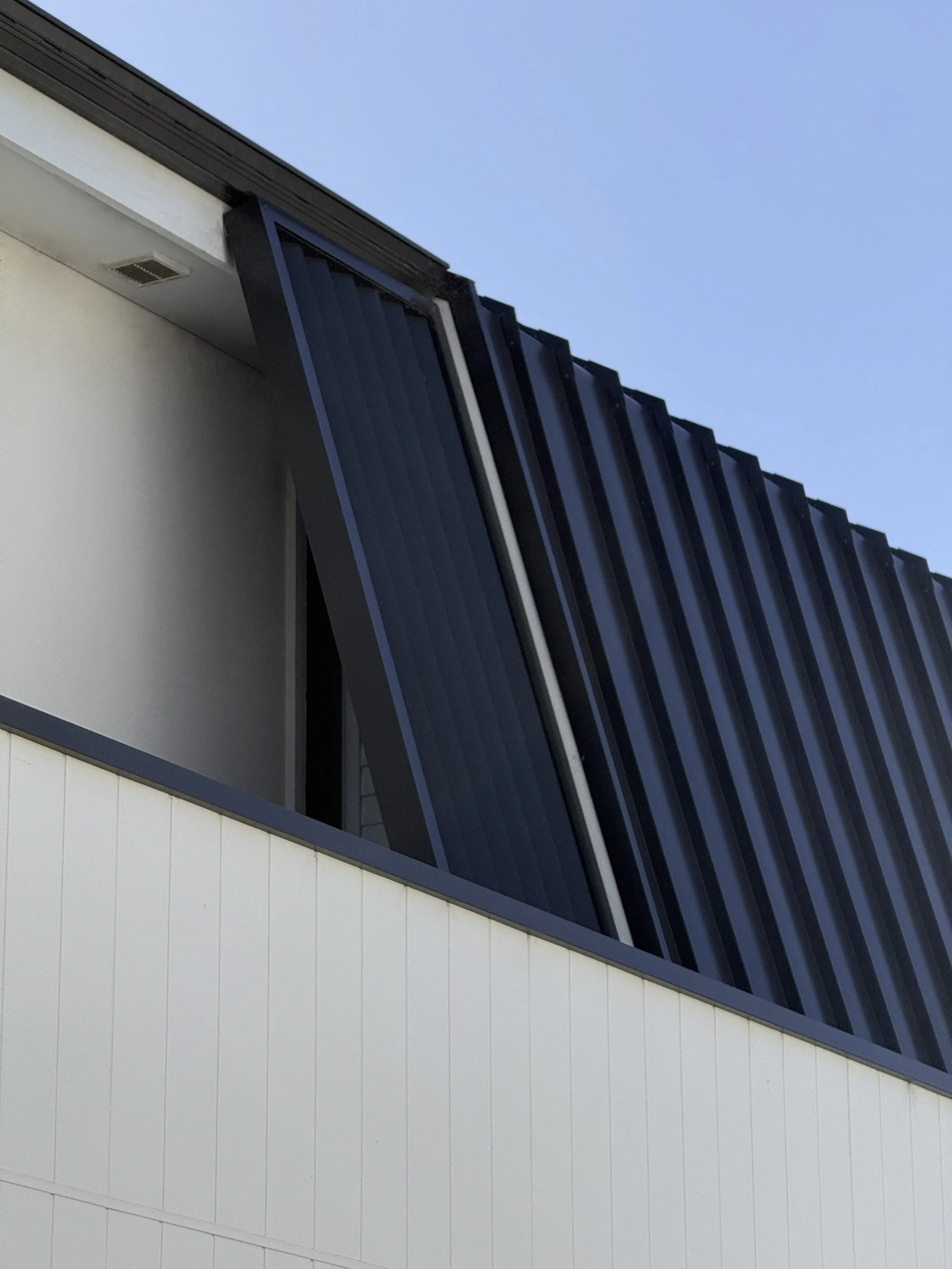
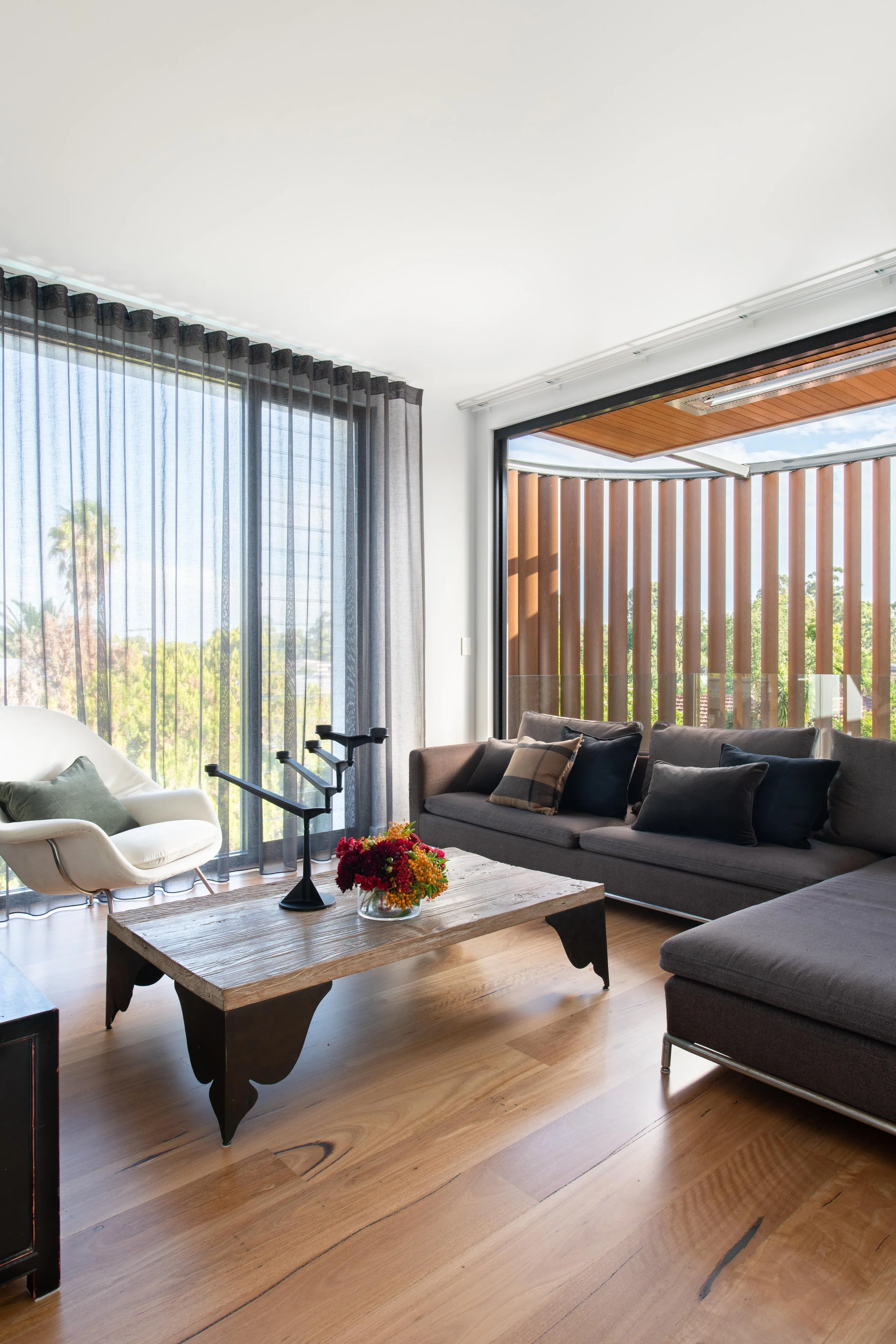
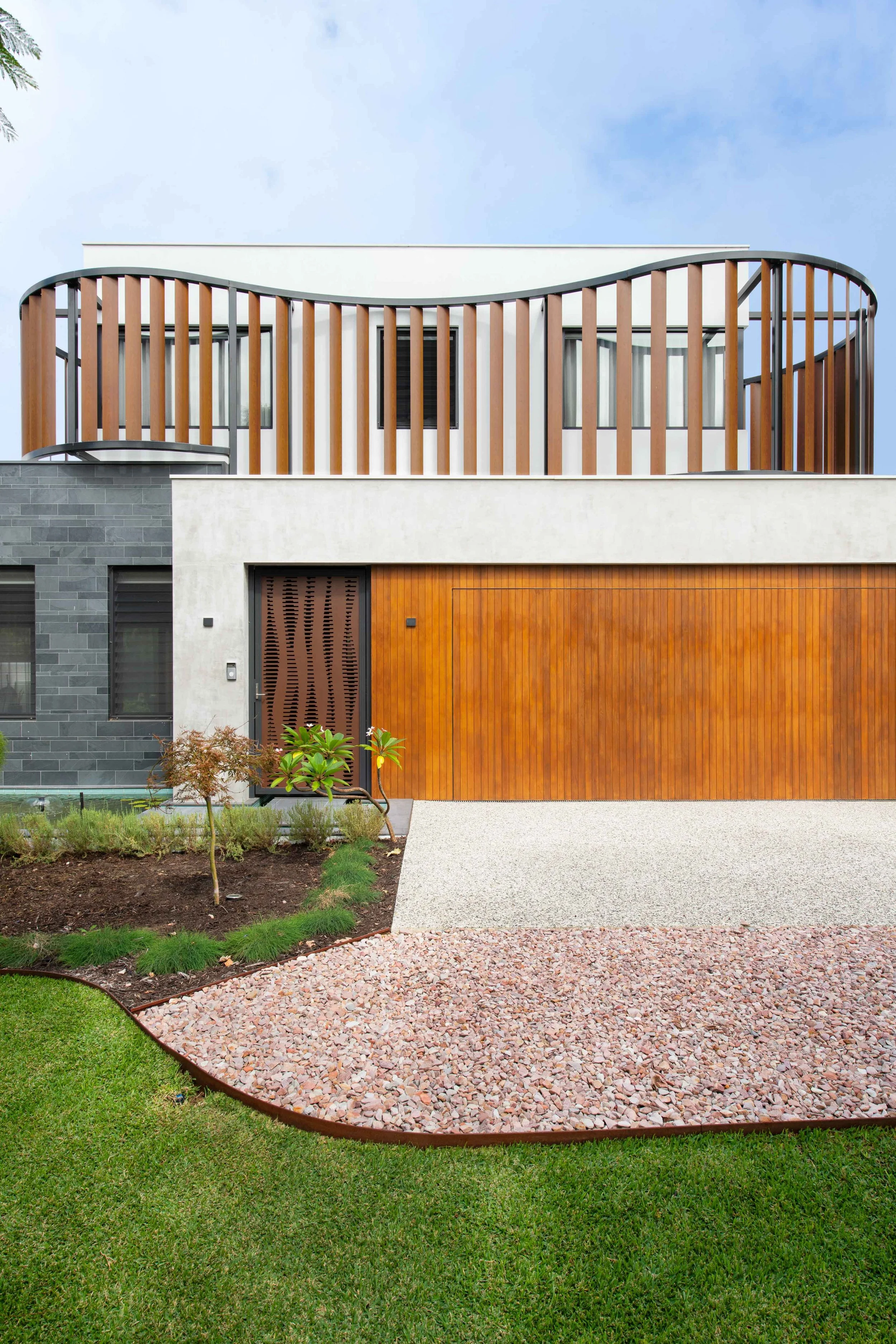
Battens are one of the most popular options for a classic, contemporary style that offers lots of flexibility. These can be horizontal or vertical and spaced according to the desired balance between privacy, airflow and light. Where these can really shine, though, is in the option to angle them towards desired sightlines. If privacy isn’t a concern all the time, there’s also the option for slats that can be rotated like blinds.
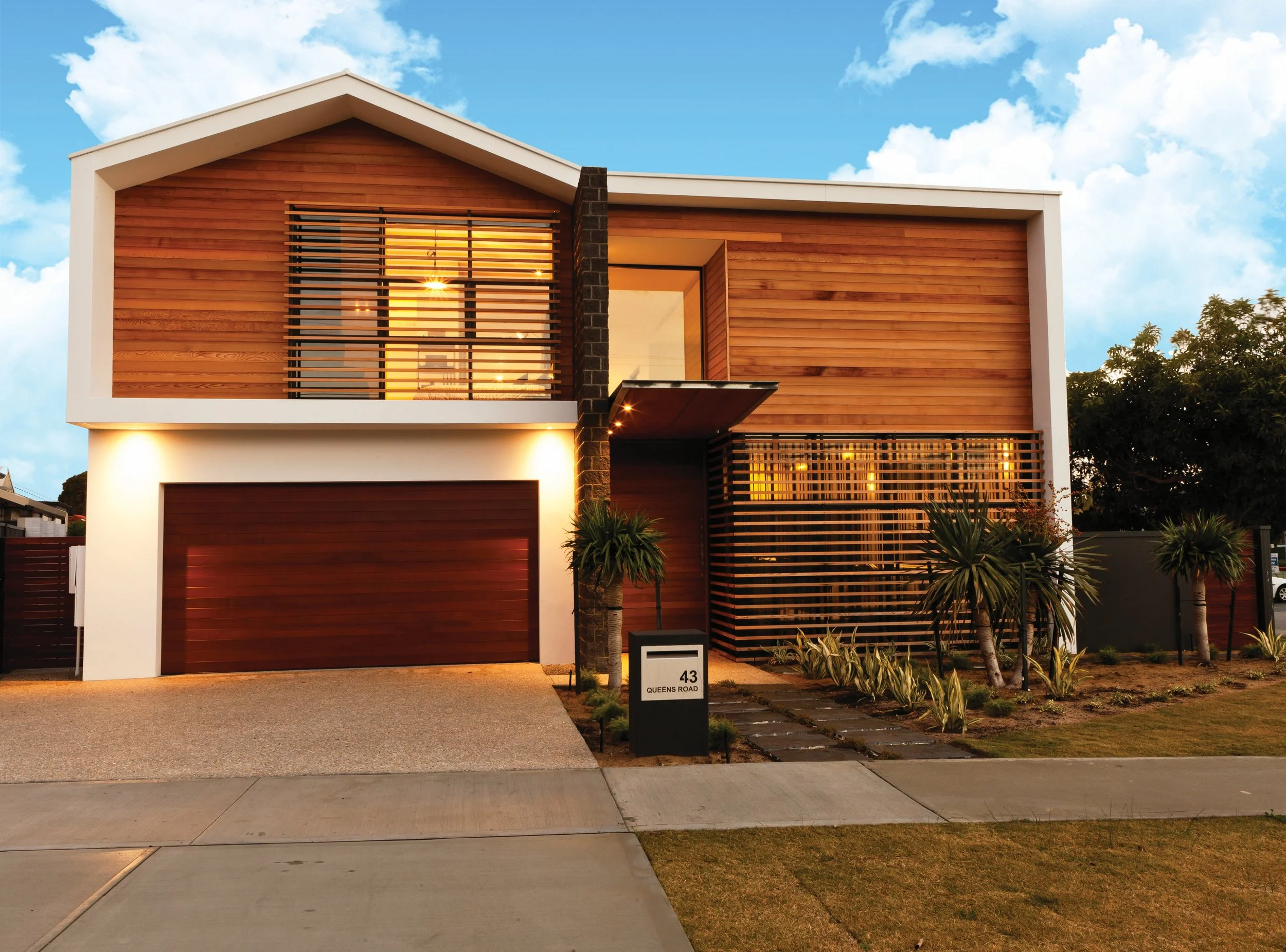
Horizontal battens for some streetfront privacy at our Ardross project.
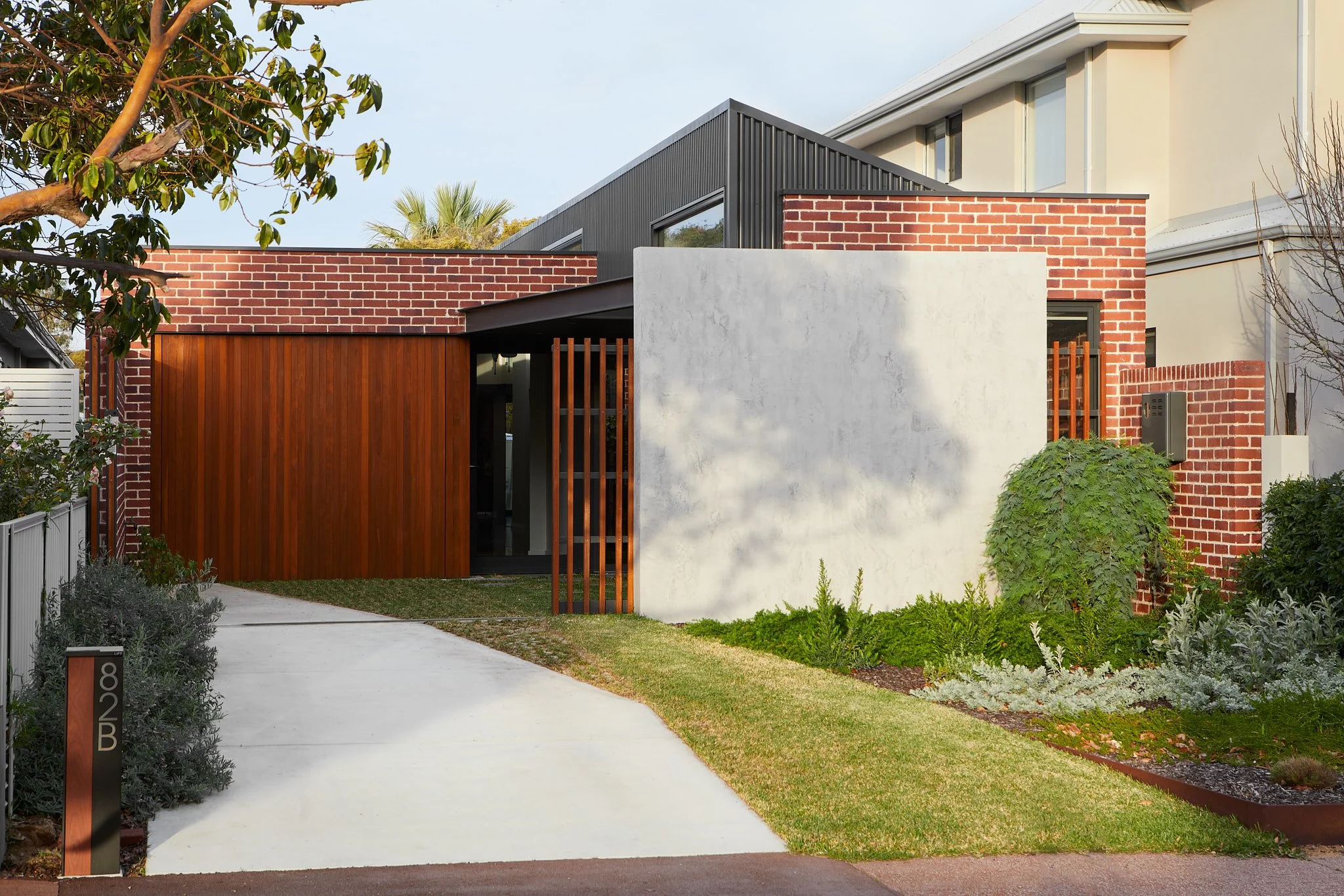
Vertical battens adding privacy and security on a gate and front window at East Fremantle.
Perforated screens
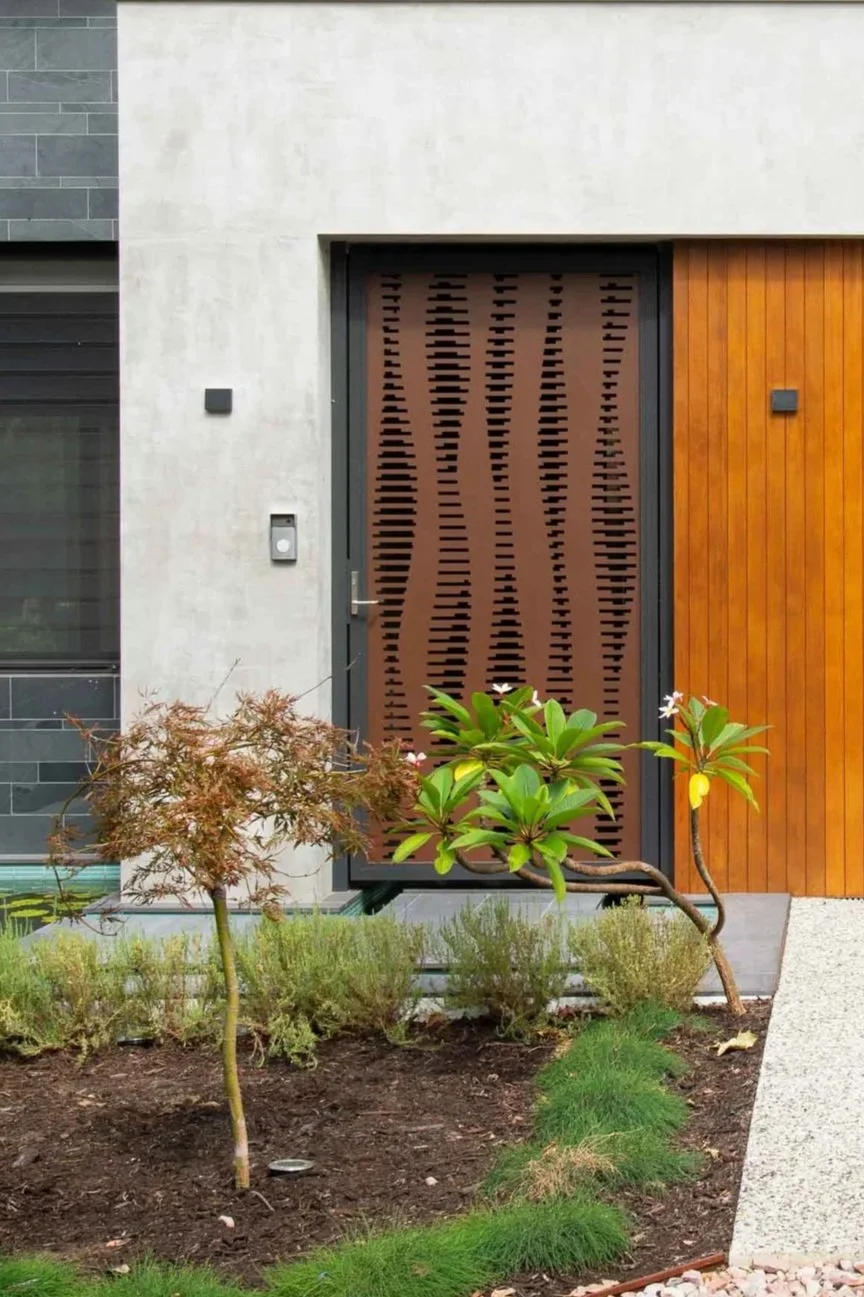
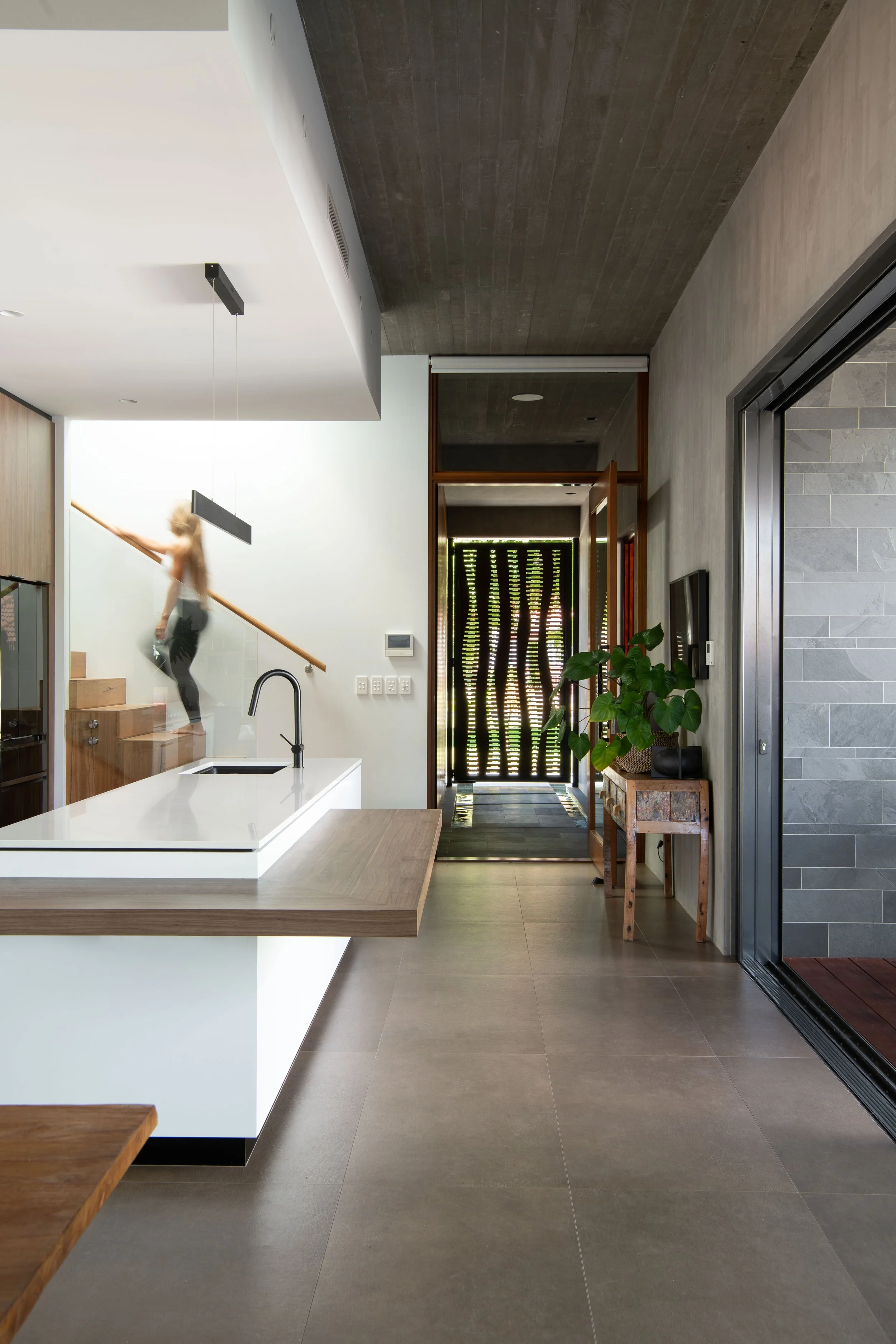
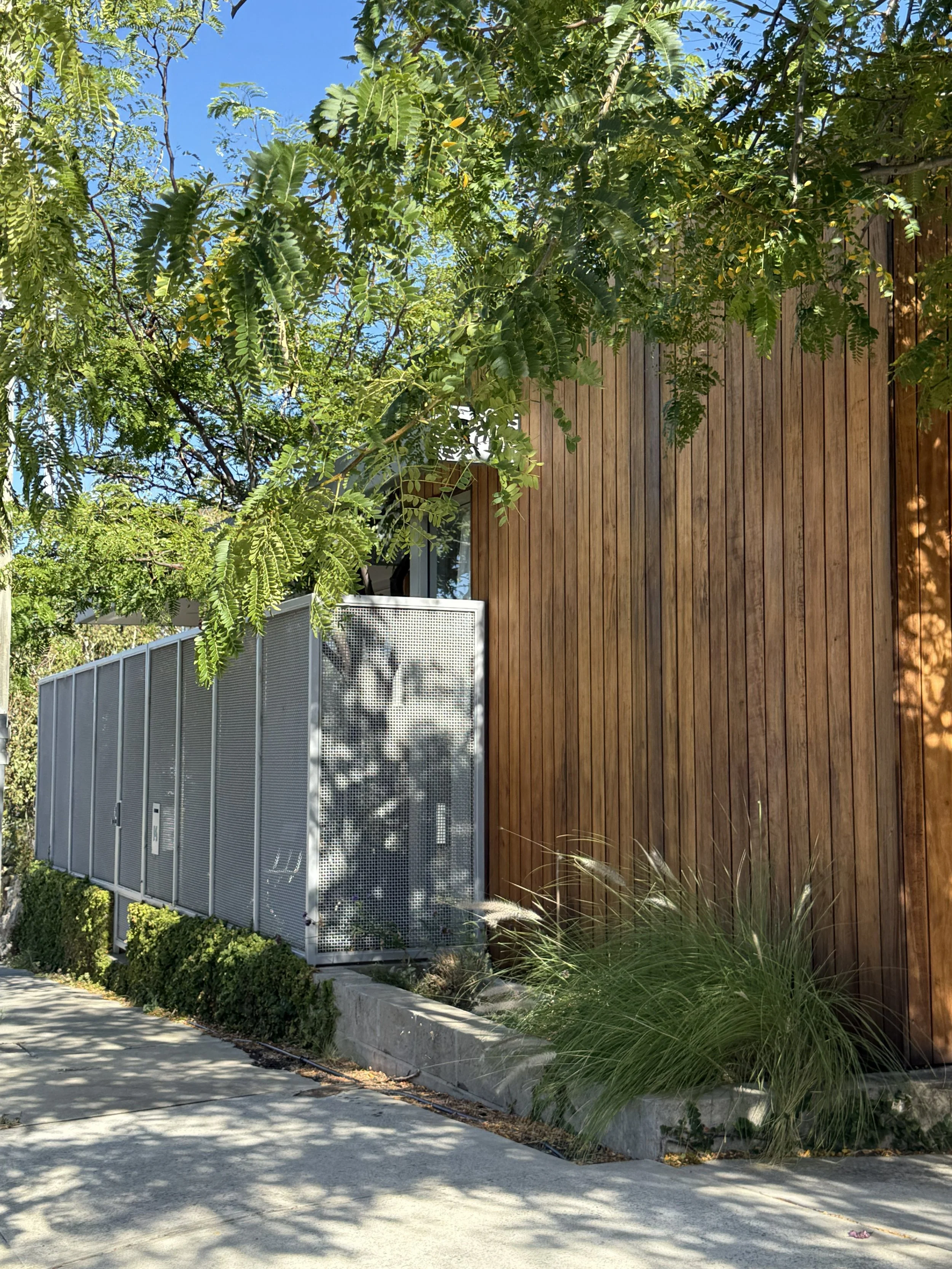
Perforated privacy screens are made by cutting holes into a solid sheet of material, with the balance of privacy, light and airflow determined by the size, spacing and layout of the holes. Subtle patterns can also be created to add some design interest. These can be chosen from pre-designed prints, developed from an image of your own, or custom designed. This privacy screen entry-door at our Ardross project, for example, was custom designed in a waterlike pattern that beautifully complements a pond in the home’s entryway.
Other alternatives
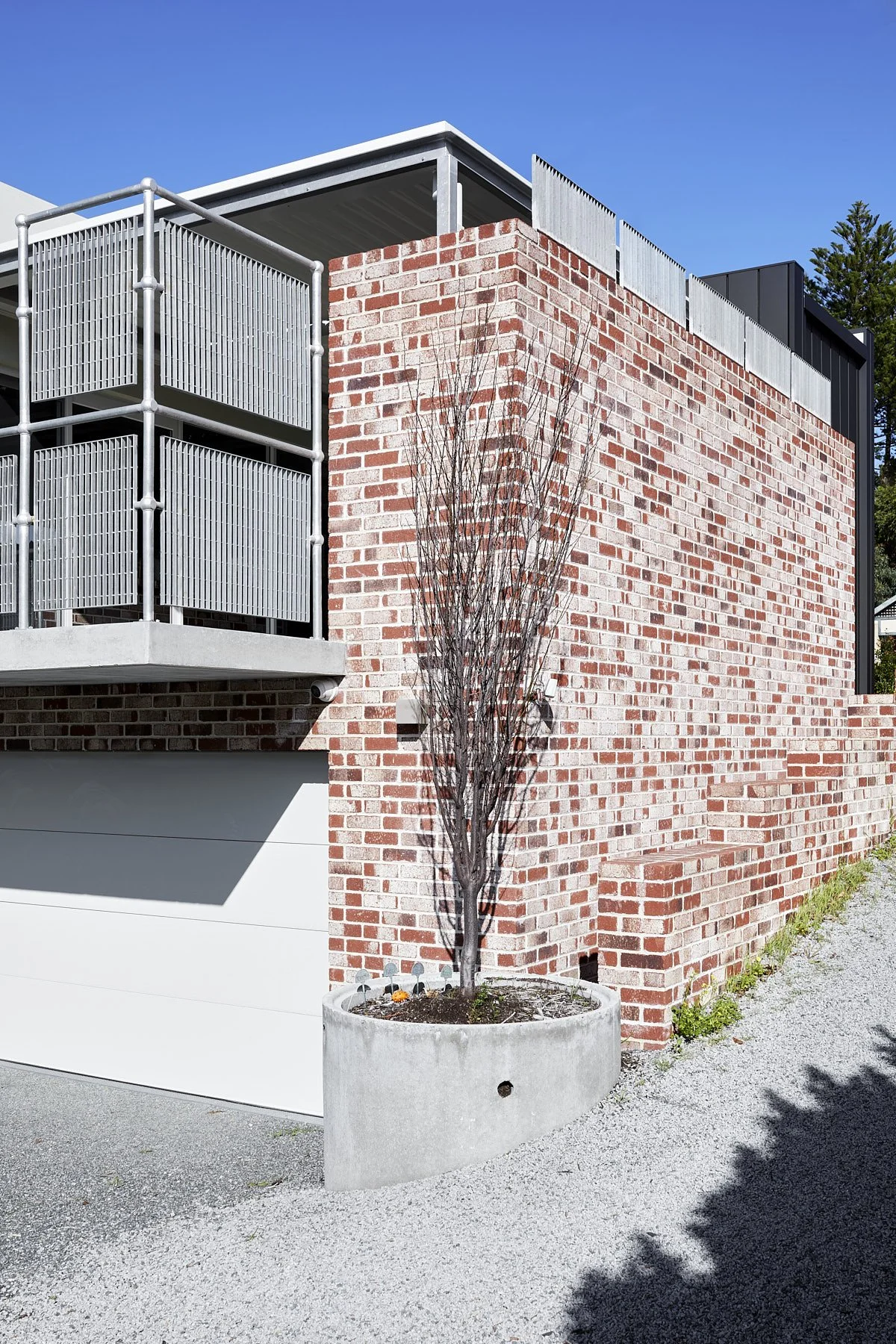
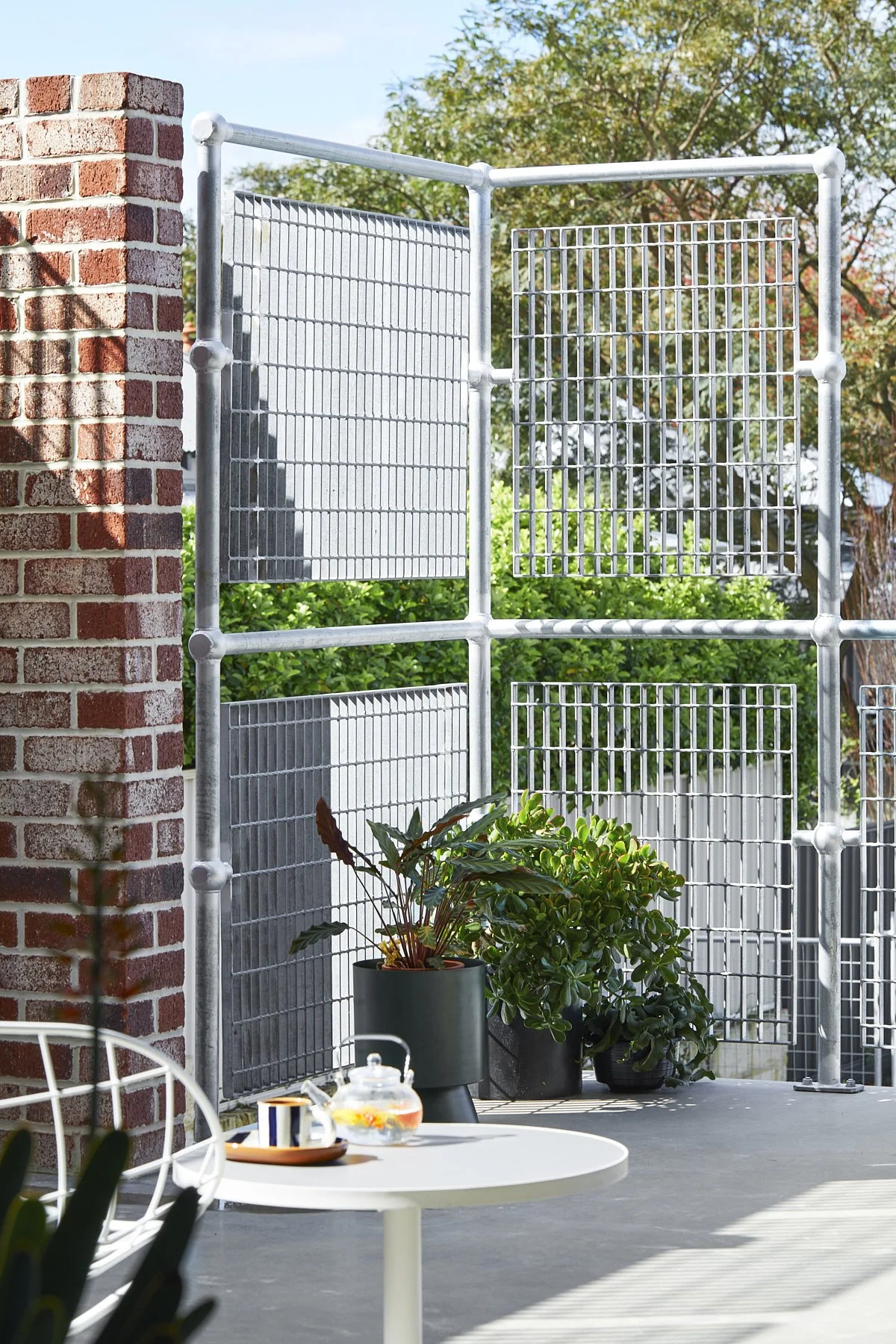
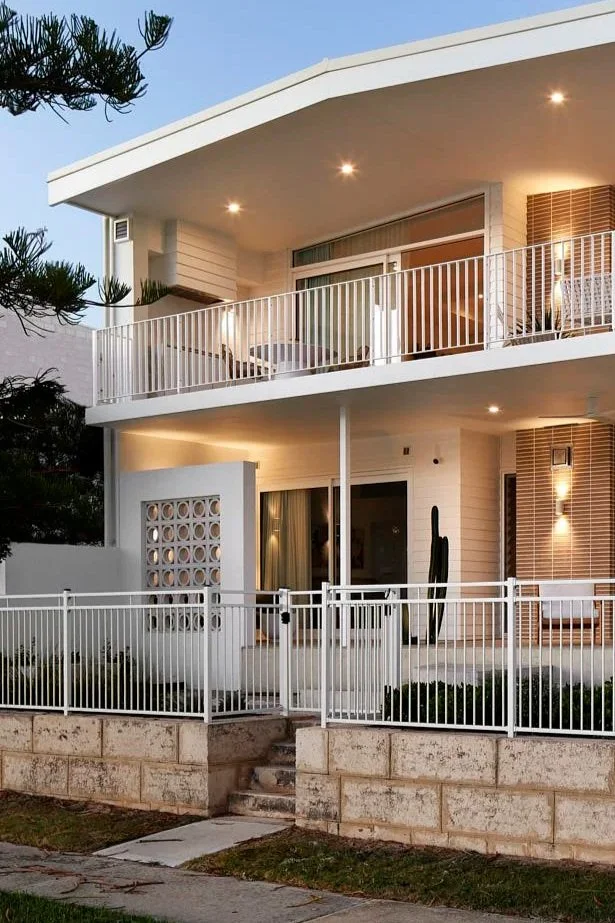
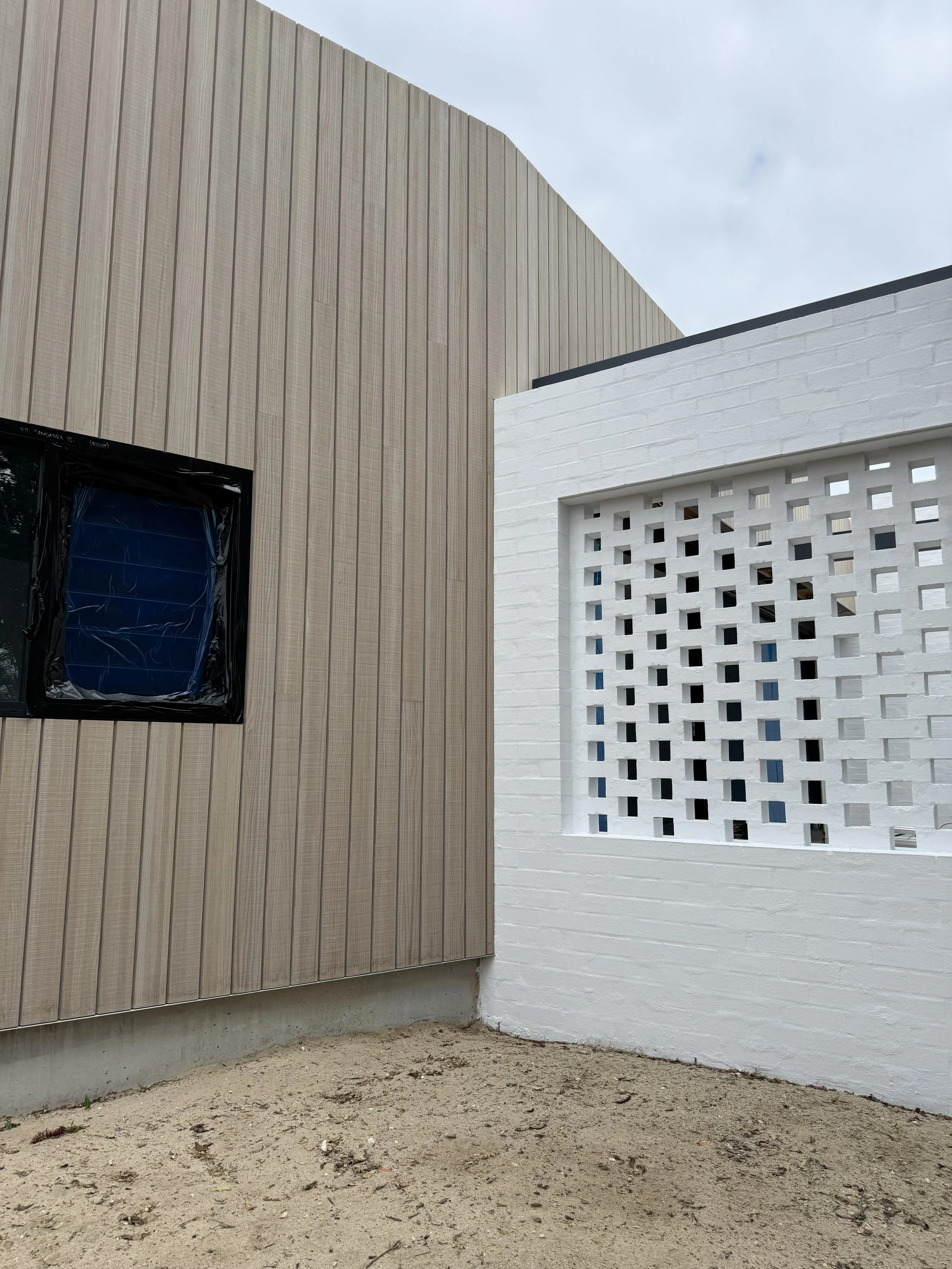
With a bit of creativity, there are also many other, less common ways to create a privacy screen. At one of our East Fremantle projects, for example, the metal walkways from a warehouse were recycled into a unique privacy screen and balustrade. At our Mandurah and Wembley Down’s projects, breezeblocks double as both privacy screening and security.
KEY DESIGN CONSIDERATIONS
For the most effective privacy screens that don’t hinder design aesthetics, there are some key things to consider.
Placement: Positioning should be well considered to ensure you meet your privacy goals without blocking more natural light or views than necessary. If you only need to block the view in one direction, a blade-style screen to one side could be all that’s needed.
Viewing angle: Battens or holes should, ideally, be angled to redirect sightlines rather than completely blocking the entire view. Vertical battens can point towards a particularly good view, or horizontal battens could point to your own backyard while blocking out the neighbour’s.
Spacing: The size, spacing and pattern of the gaps in a screen will influence the level of privacy it provides, as well as the amount of light and airflow that’s allowed through. The goal here is to find a good balance between permeability and privacy, although this can be a little more complicated than it seems. While overall permeability plays the biggest role in the total volume of light allowed into a space, the width of the battens can affect the light’s distribution. Where wider batters typically create stronger shadows and a more solid barrier, narrow battens tend to allow for more evenly scattered light which can make the space feel brighter.
Architectural design: The screen should also complement the overall home design. Selecting materials, patterns and finishes that coordinate with the facade, interior design or surrounding landscape can transform it from a purely functional element into an architectural feature.
MATERIALS
No matter the stylistic choice, there are also a variety of material options to choose from. Key considerations here should include aesthetics, maintenance and weathering.
Timber
Timber typically offers a warm, organic aesthetic but is also highly customisable. Different species can suit different design styles, and it can be stained or painted in a wide range of colours. It’s also usually cheaper upfront and is relatively easy to work with for custom designs. It does, however, require regular sealing, staining or painting to protect it against moisture, UV damage, and decay.
Steel
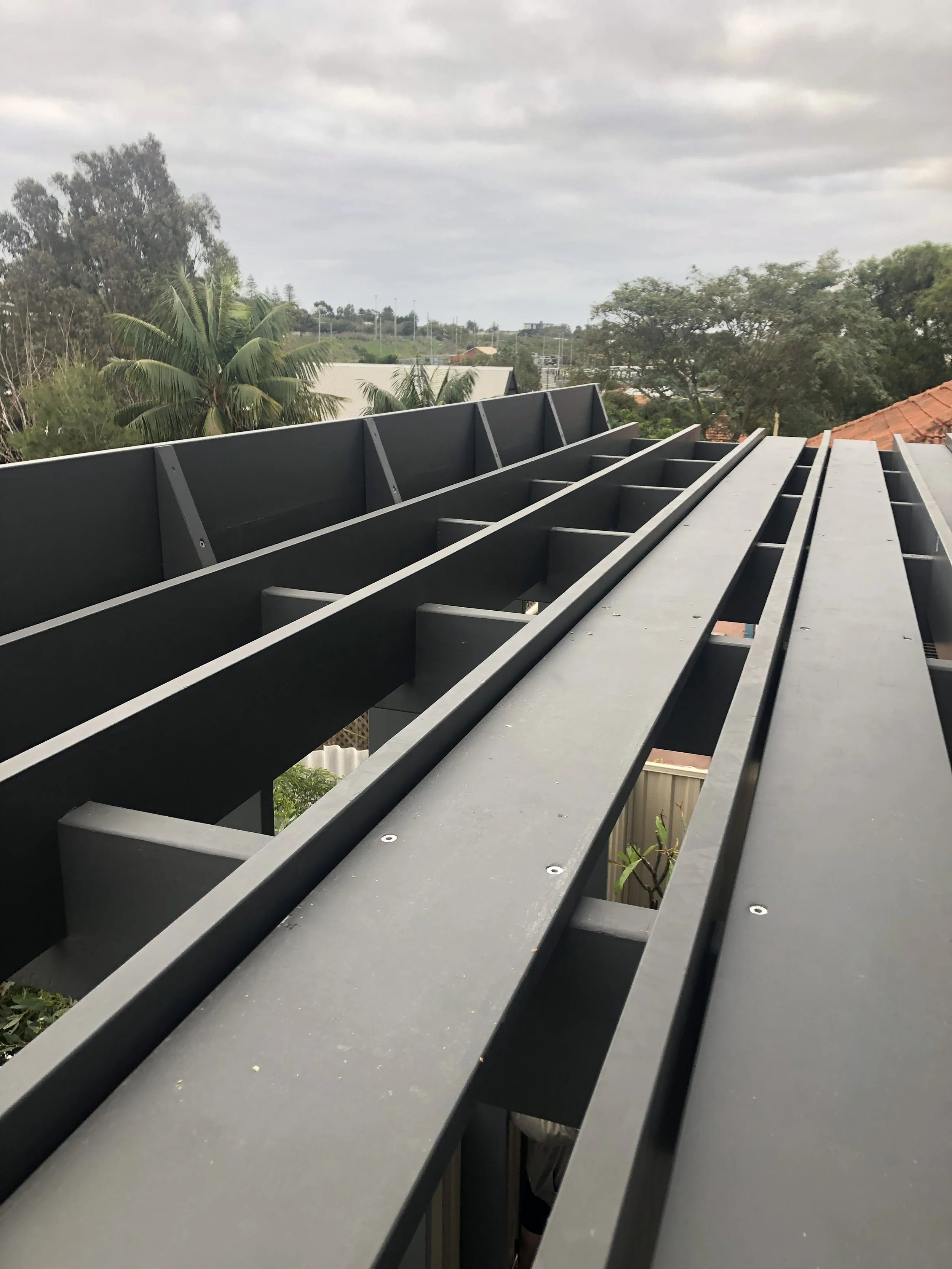
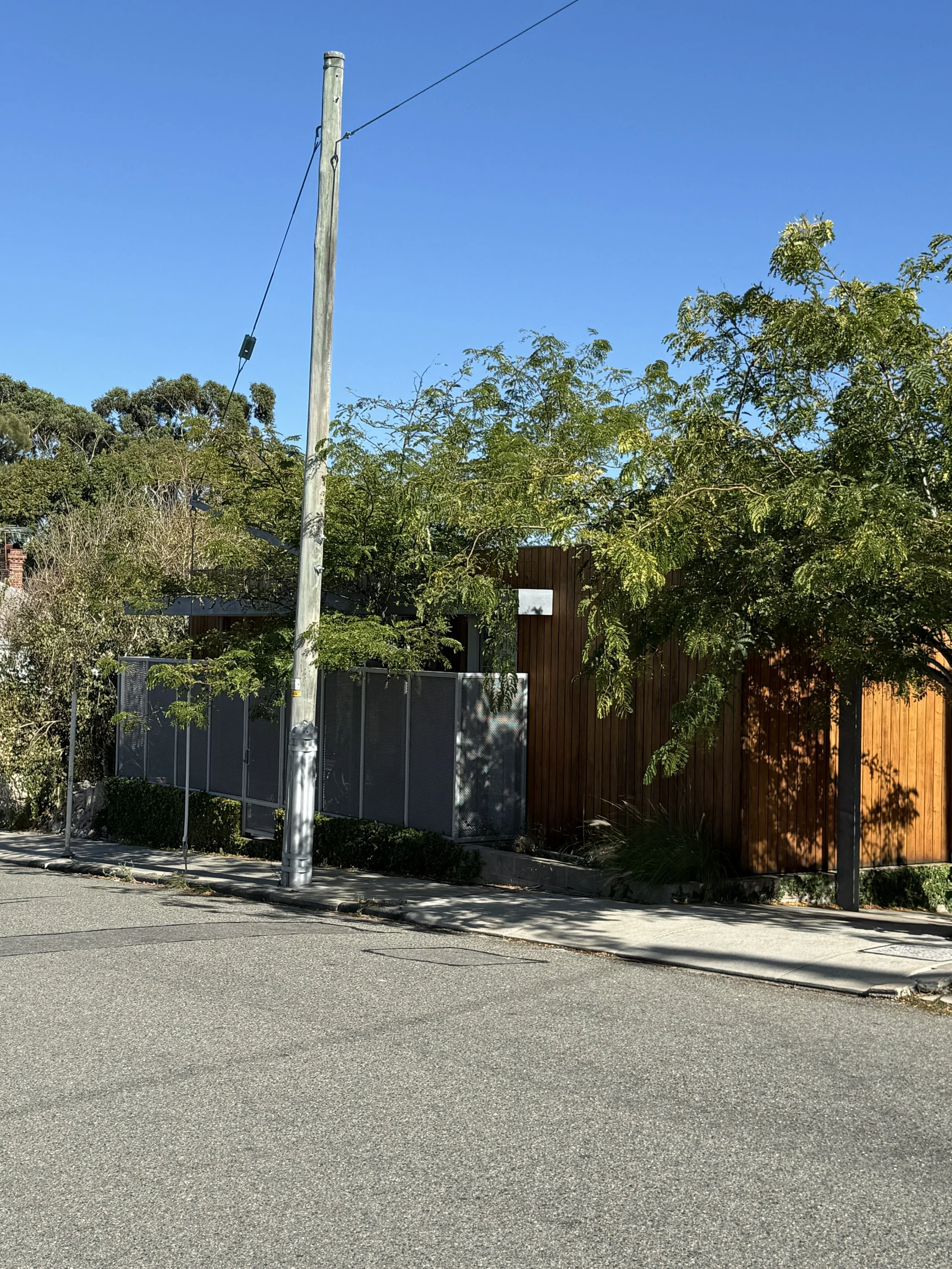
Steel is a great option for modern, industrial styles. It’s usually a bit more expensive than timber, but is very strong and able to hold very fine detail, making it ideal for laser cut perforated designs. It’s usually powder coated or galvanised to ensure it won’t rust over time. This means it’s also very low maintenance and shouldn’t need more than the occasional hose down or clean. .
Powder-coated aluminium
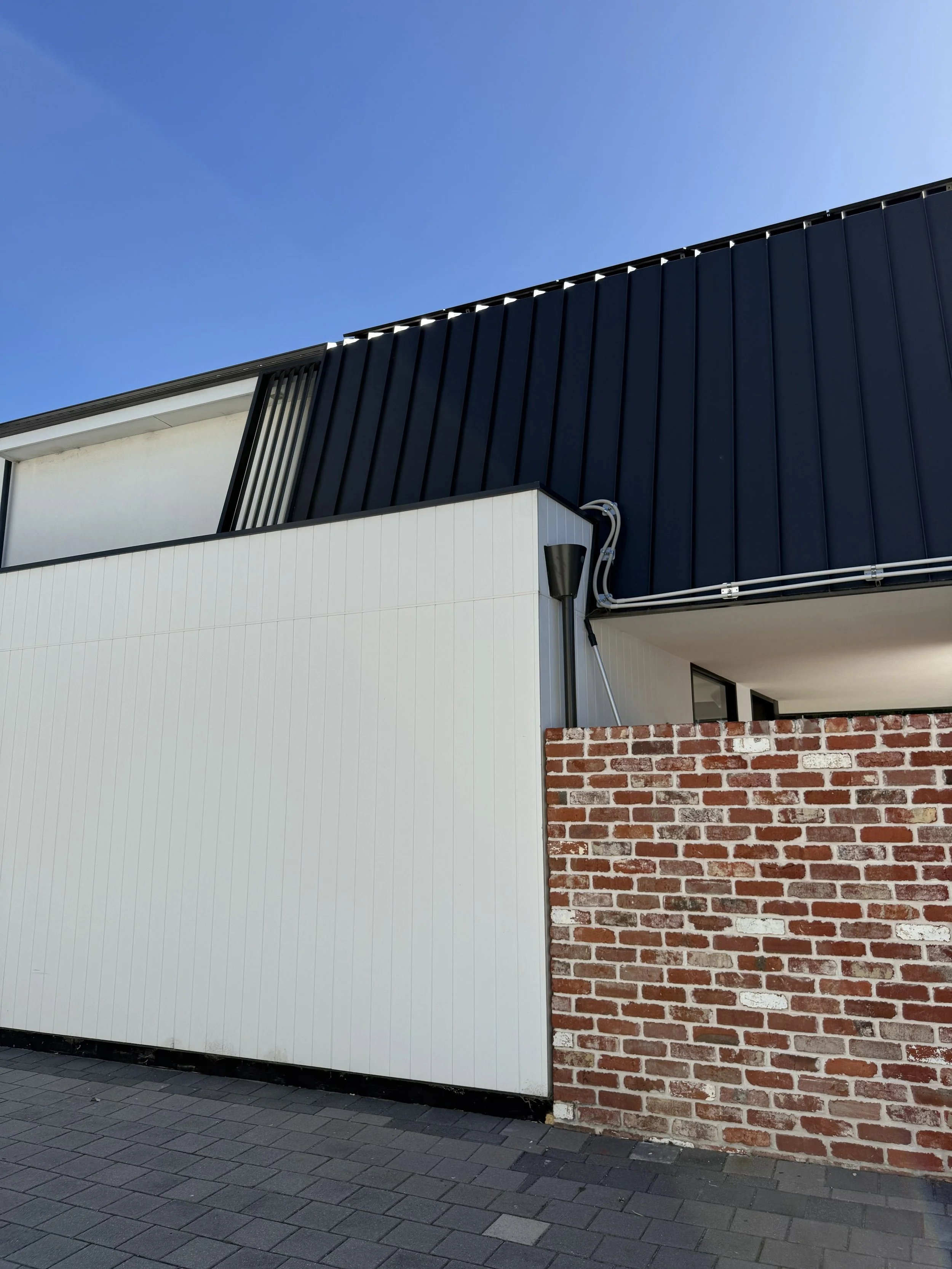
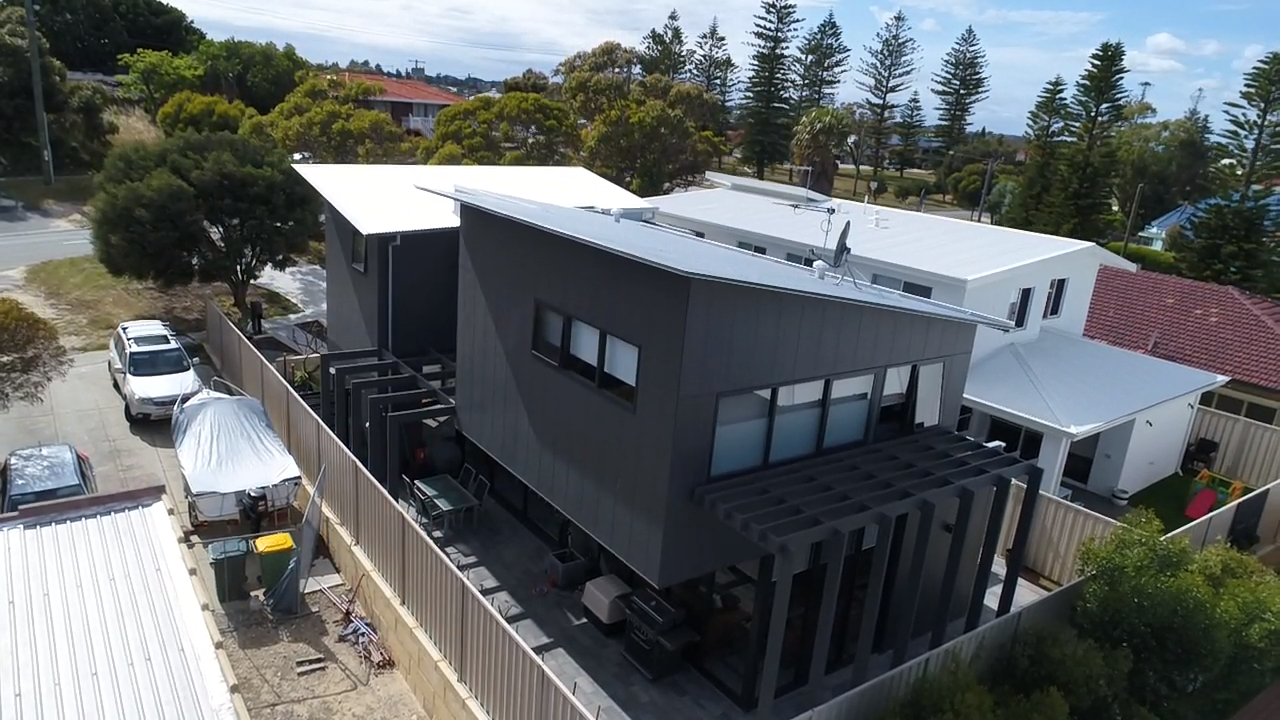
A very contemporary option, powder-coated aluminium is strong, lightweight and corrosion-resistant. It’s very low maintenance and will generally only need occasional cleaning. It’s also highly customisable. It can, however, be easier to dent than steel and, over time, can gradually fade with UV exposure.
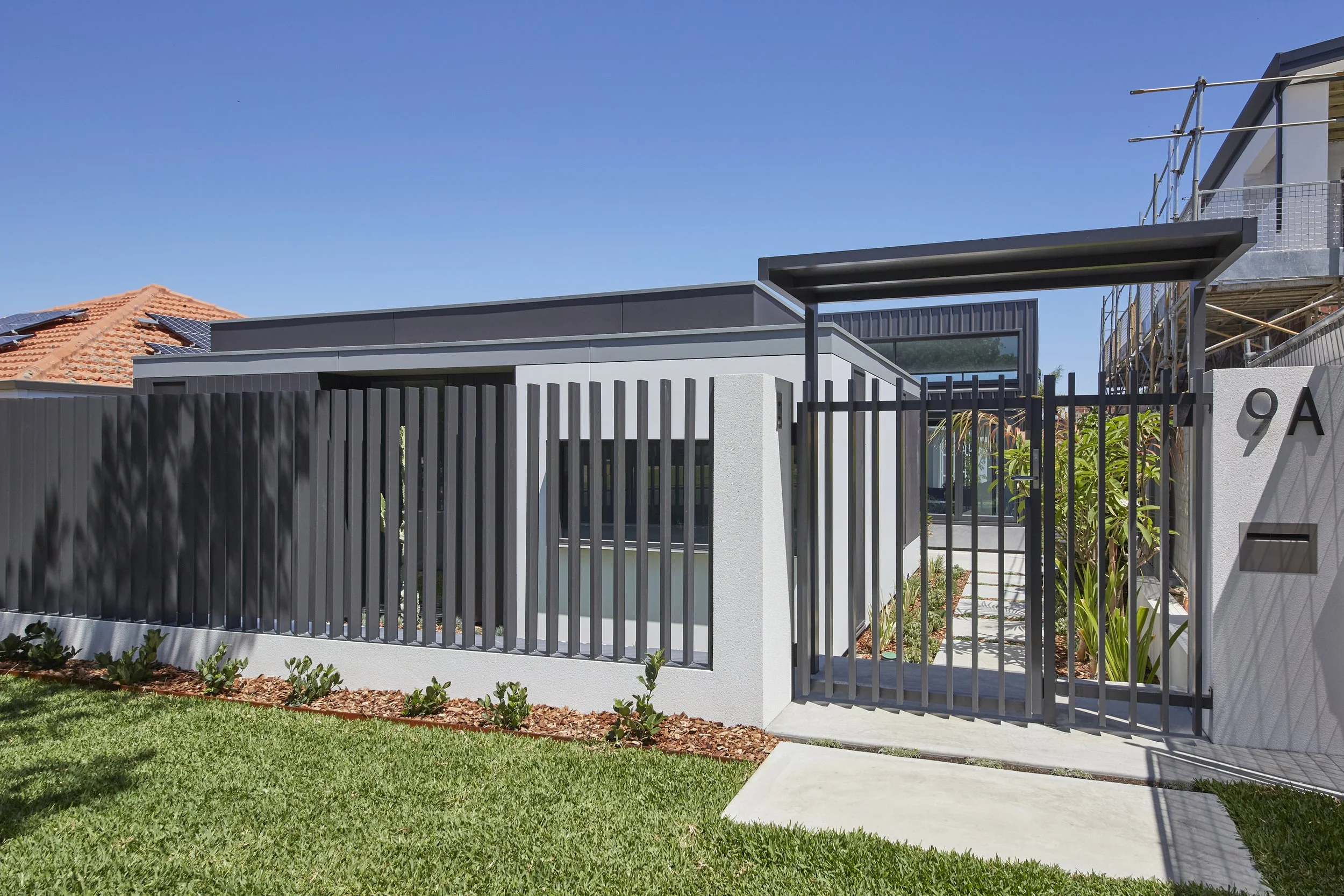
A powder-coated aluminium privacy screen fence at Salter Point.
COUNCIL REGULATIONS
Importantly, privacy screens will need to comply with council regulations. These can vary but there are a few that are usually quite consistent. Most notably, street-facing screens or fences are typically limited to 1.8 metres in height to allow for passive street surveillance. If on a balcony, deck, or verandah, that goes down to 1.6m. There are also requirements for visual permeability, which usually sits at around 20 percent, although this may vary depending on whether the screen faces a neighbouring property or a public street. They also need to be at least 900mm from the boundary fence and should not form part of a retaining wall.
Ultimately, privacy screens are one of the most versatile ways to improve privacy. For the best outcome, talk to your architect or designer early in the design process so the screens can be integrated into the overall design, rather than tacked on as an afterthought. For more privacy solutions, be sure to check out our other blog, or get in touch if you have specific questions.