
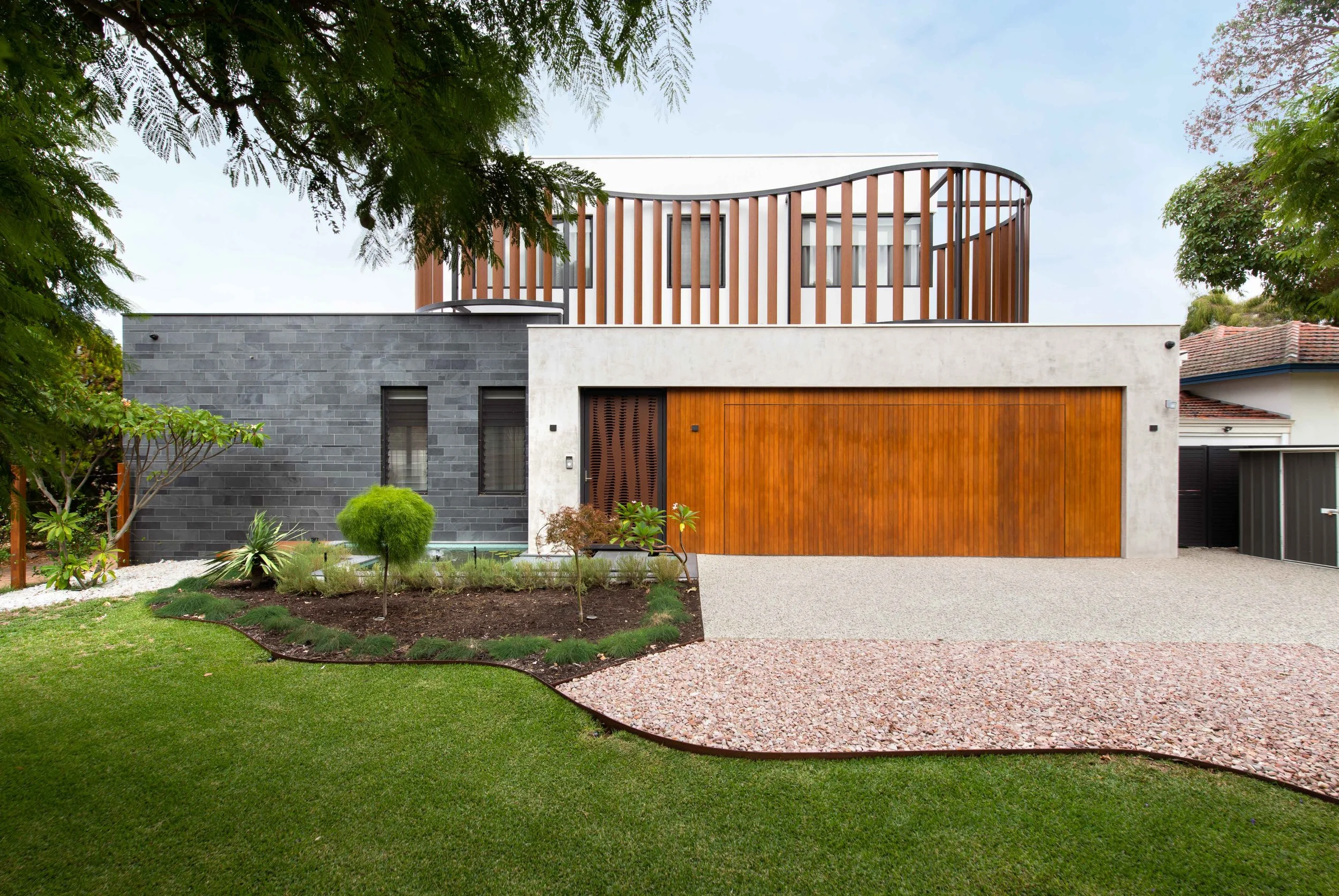
As cities face the need for increased density, two-storey and small-lot homes are going to become more and more common. With them, will also come a greater need for privacy design solutions. Thankfully, over the years, we’ve seen designers use all manner of creative solutions that not only improve privacy, but also add to the design.
TEMPORARY WINDOW TREATMENTS
Window treatments are the simplest and most flexible way to improve privacy. These can include curtains, blinds and shutters, and will allow you to open and close them as needed.
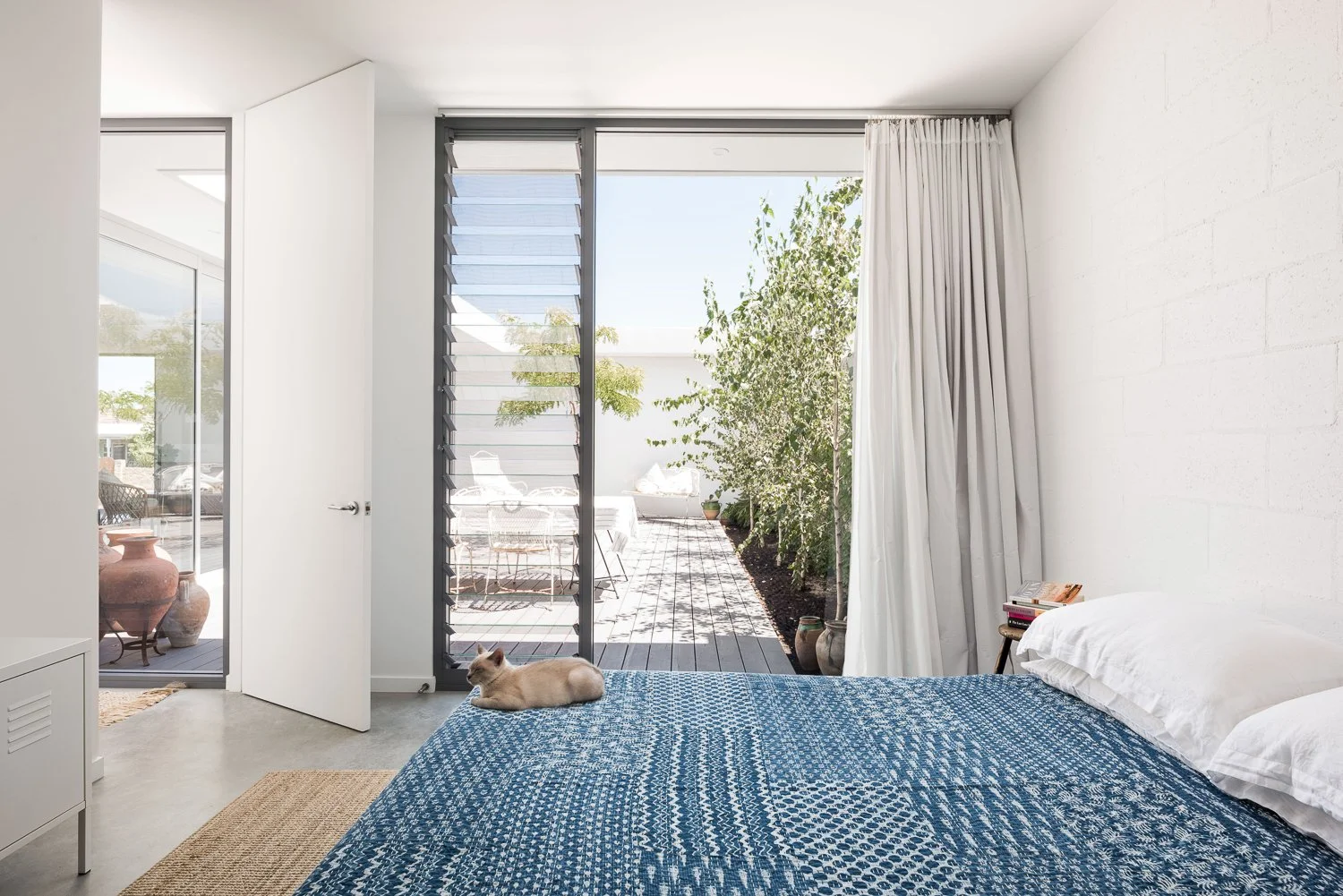
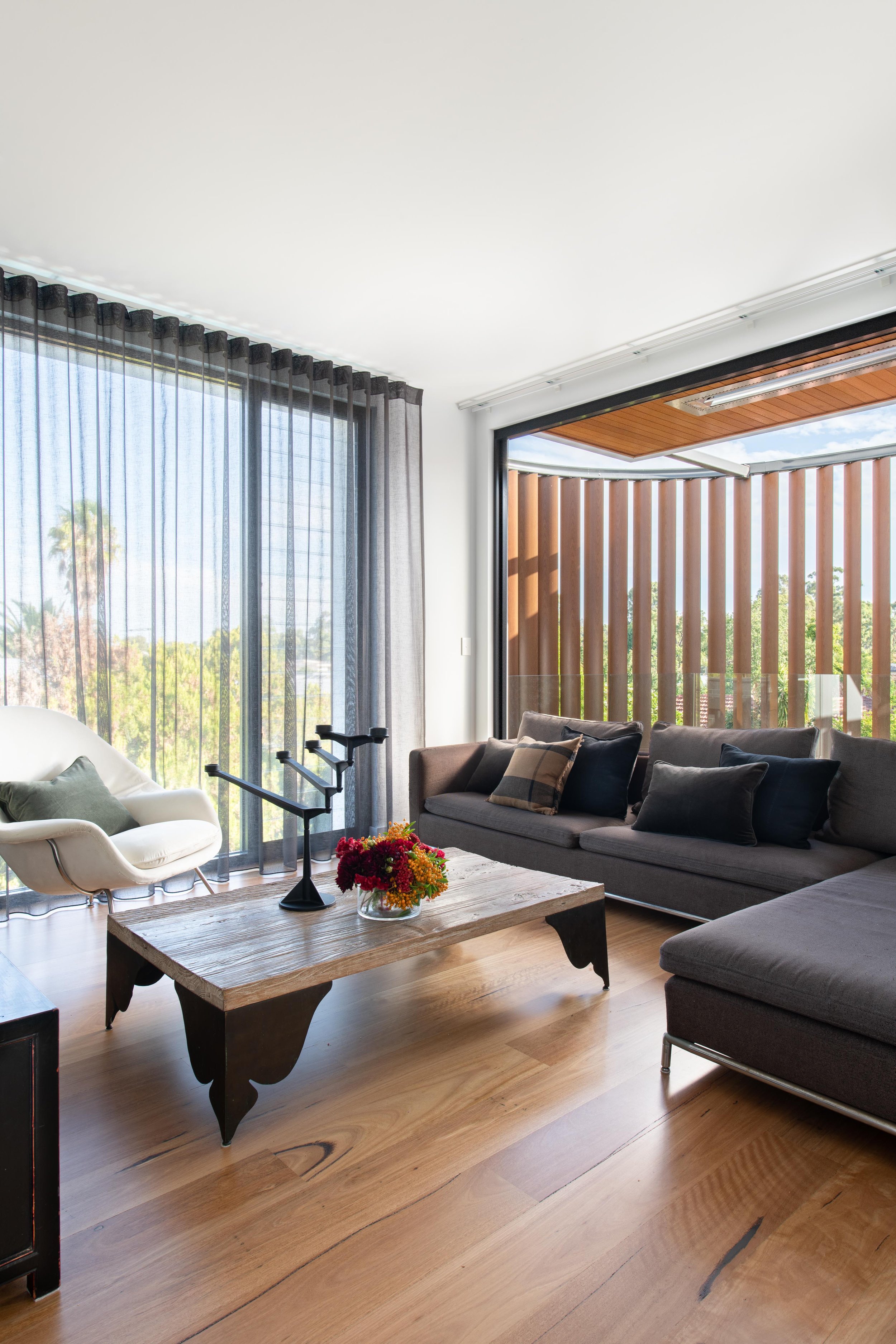
In our Beaconsfield project, block out curtains are a gorgeous and functional way to improve privacy and block out light when needed. And, to take them to the next level, they have recessed tracks for a more seamless design and a sensor for automatic operation.
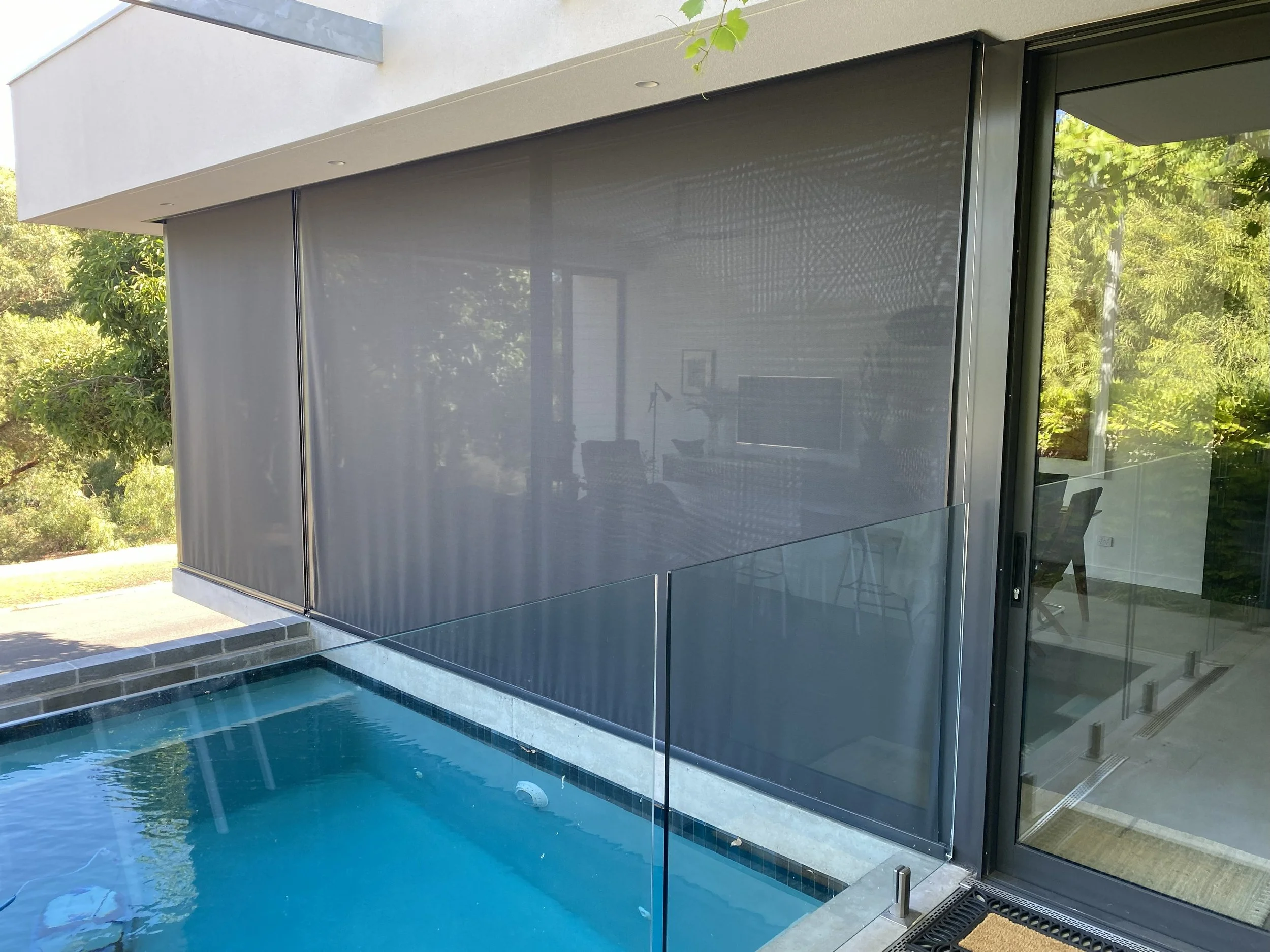
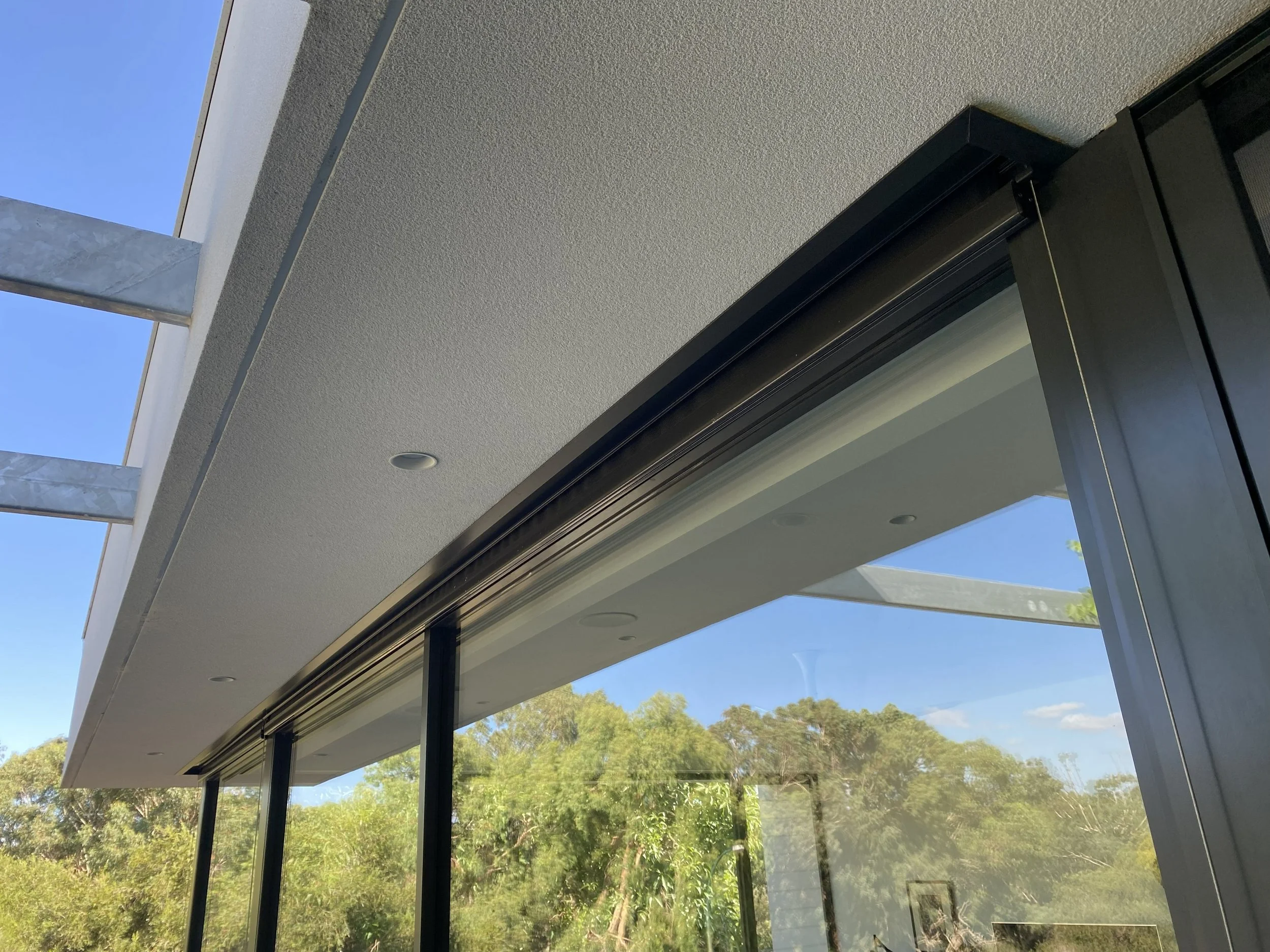
But window treatments don’t have to be internal. External options can also offer privacy, and tend to be better at reducing heat transfer. At our Mount Pleasant project, while the height of the home ensures the line of sight from the road is relatively minimal, sheer external blinds provide that little bit of extra privacy so they can go about their day without concern. Recessed tracks were also used here to maintain the seamless design.
PERMANENT PRIVACY SCREENS
Alternatively, privacy screens offer a more permanent solution. These can be made using a variety of materials and will reduce sightlines without completely sacrificing airflow or light.
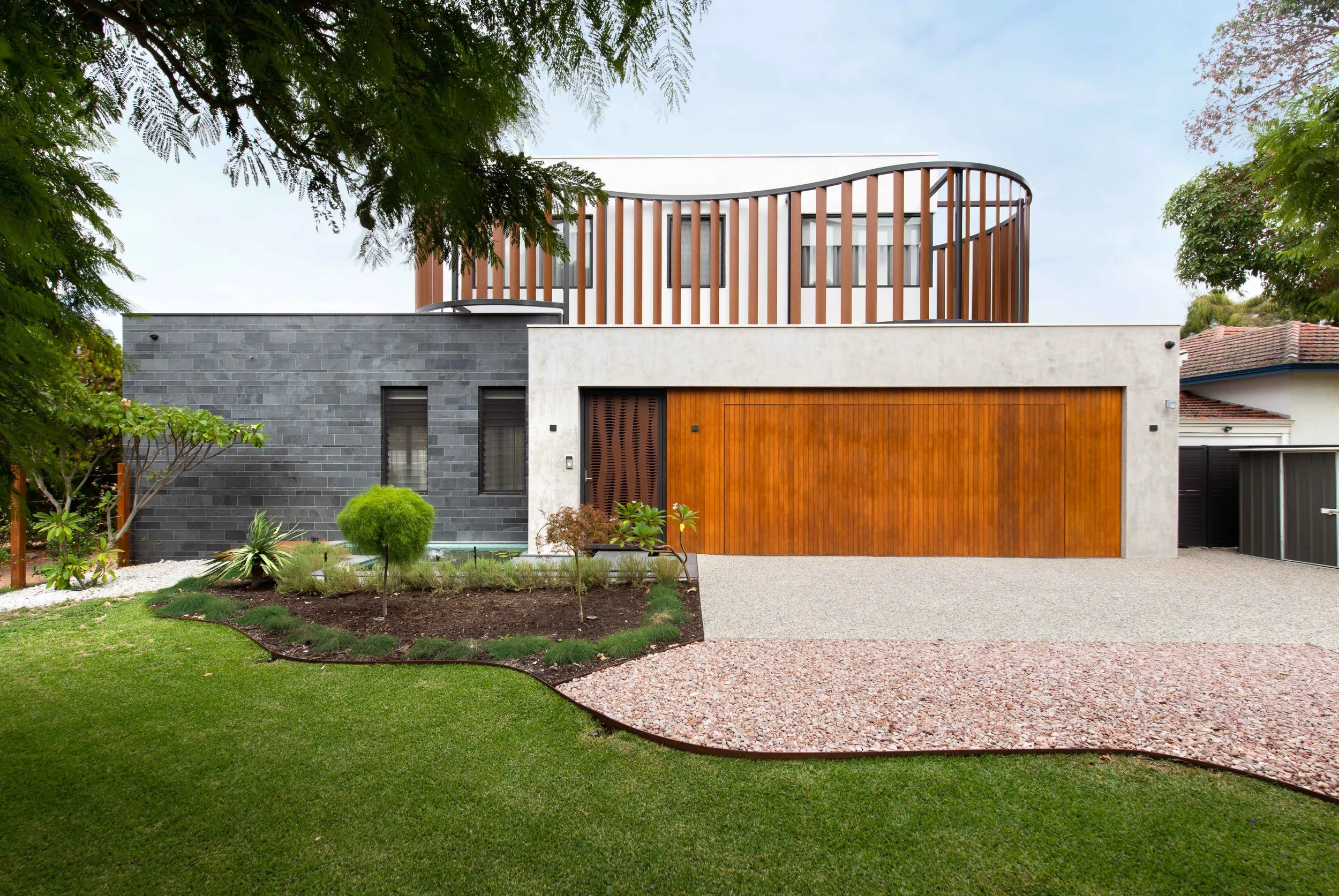
At our Ardross project, curved timber screening provides privacy to the street-facing upper floor. Angled timber slats let natural light inside, while significantly reducing visibility from the street. And that’s not even mentioning what a great example it is of how, with good design, you can turn a necessity into a stand-out architectural feature.
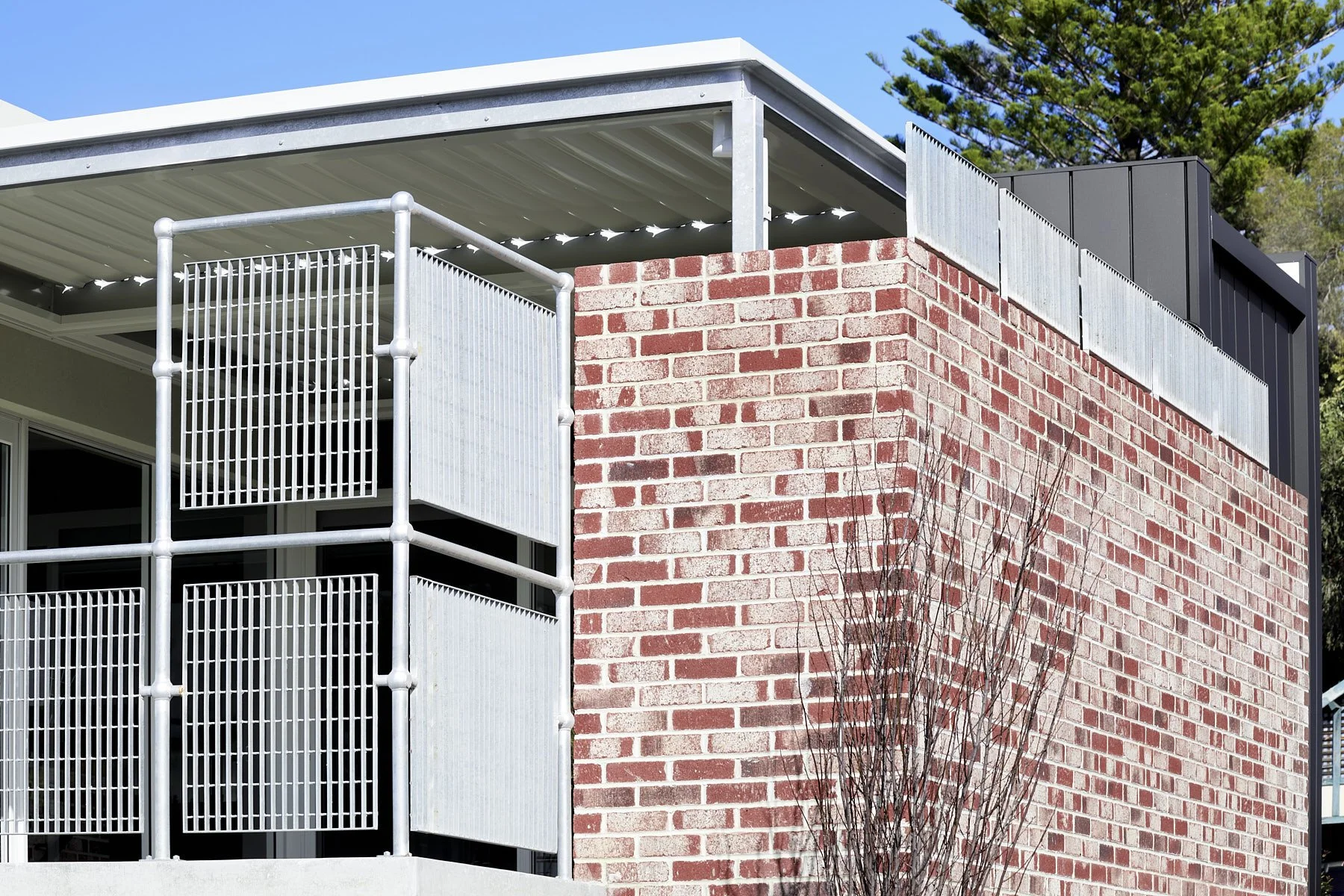
At East Fremantle, it’s mesh balustrades that do the same for their balcony. Recycled from the salvage yard, these were the perfect choice for clients keen for a sustainable, industrial style home.
WINDOW DESIGNS
Your next option is to start playing with the size, placement and design of the windows themselves.
Window size/placement
The first thing to think about is your window size and placement. There’s absolutely no reason you need to stick to your typical square or rectangular window designs. They can be virtually any shape and size, and placed high, low or off-centre to block sightlines from neighbours or the street.
Clerestory windows, for example, are horizontal windows that sit near the ceiling. They’ll provide minimal views, but will still let a decent dose of natural light into the room.
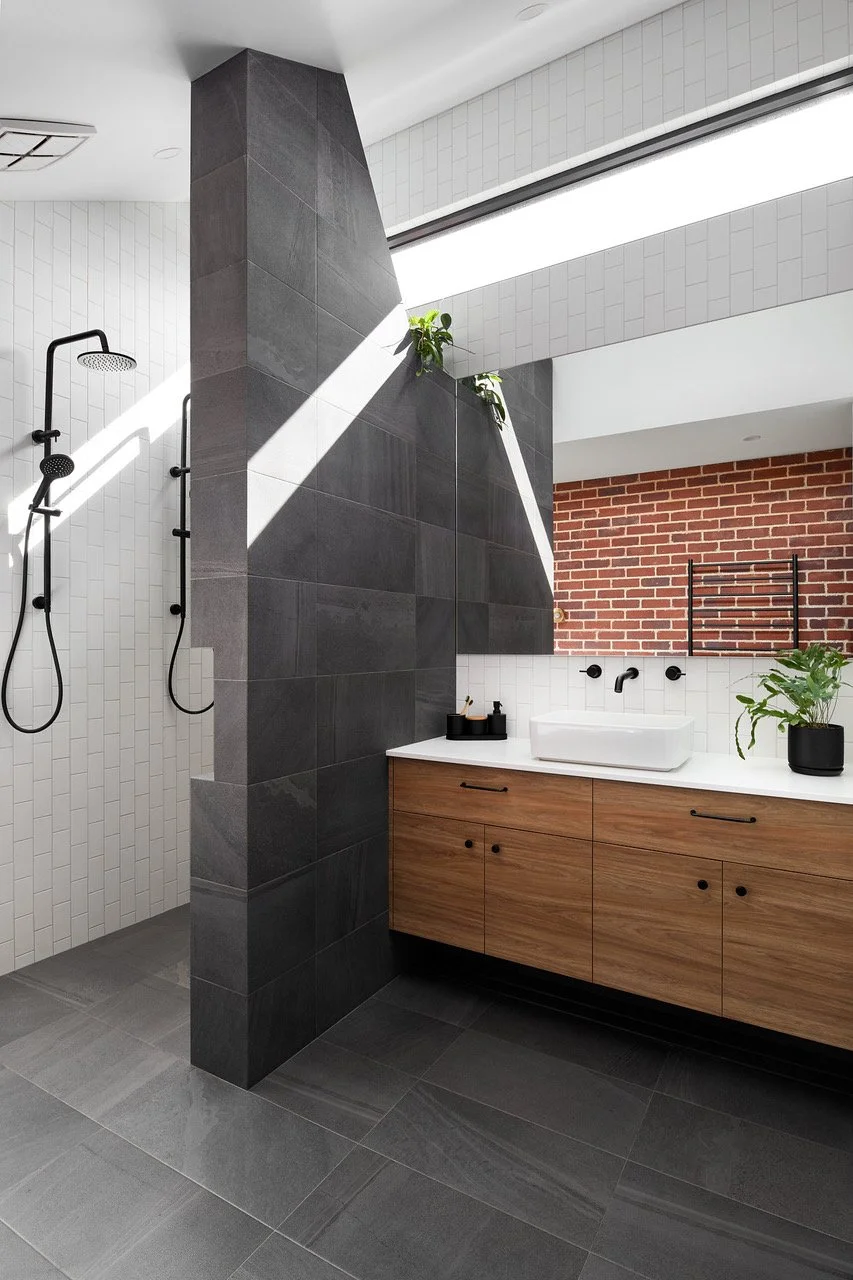
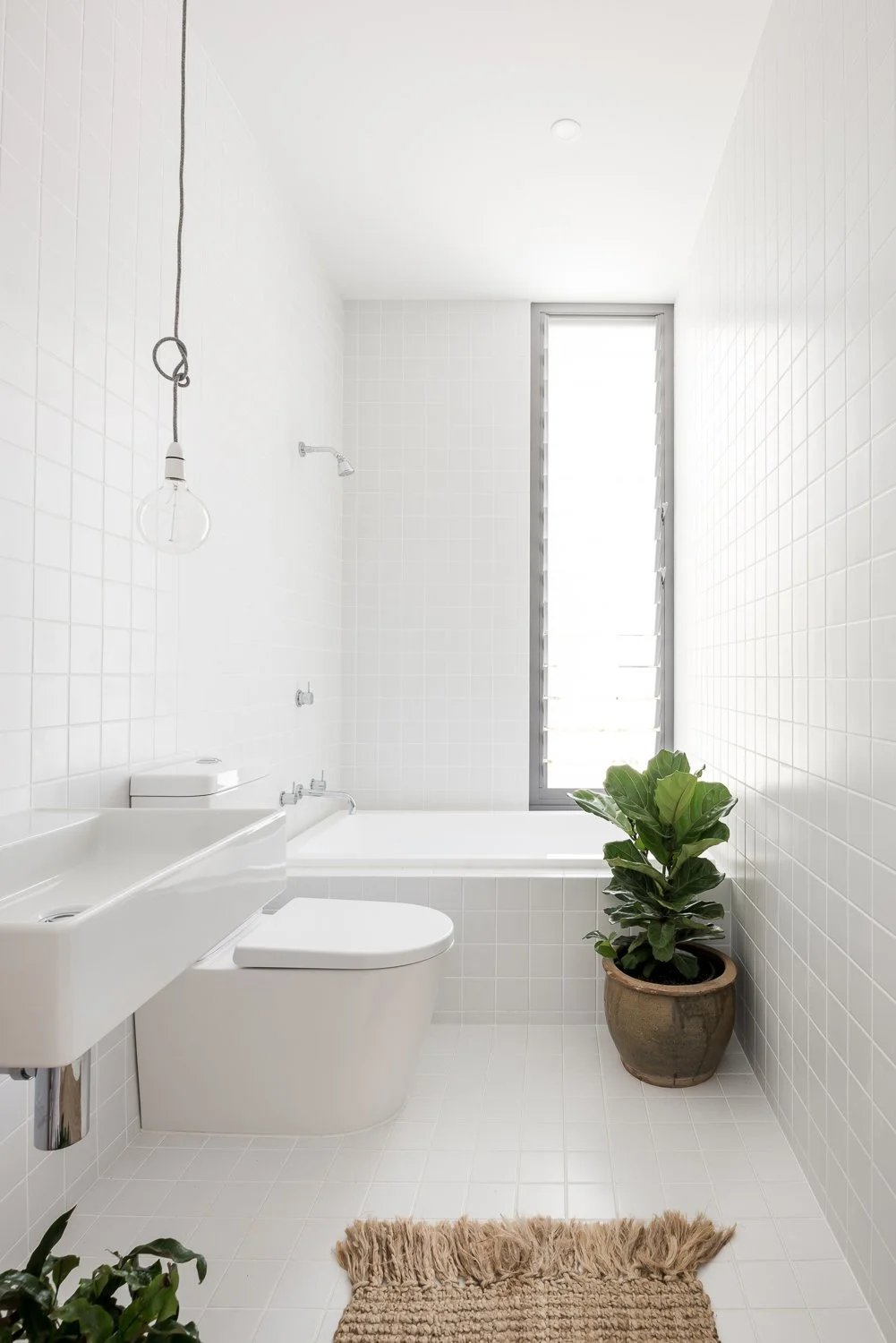
Similarly, thin vertical windows can sit off-centre to reduce the line of sight inside and provide some architectural interest.
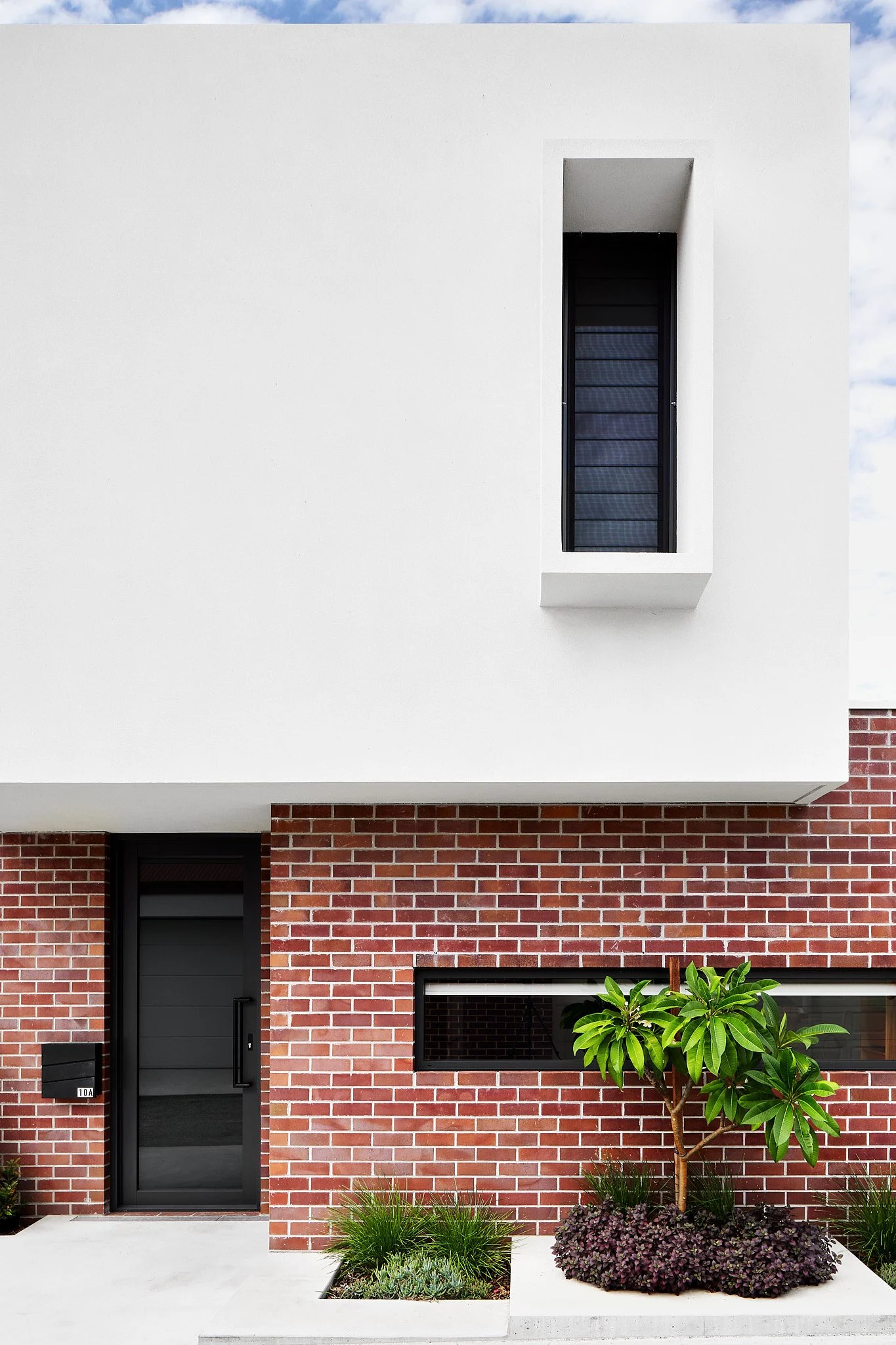
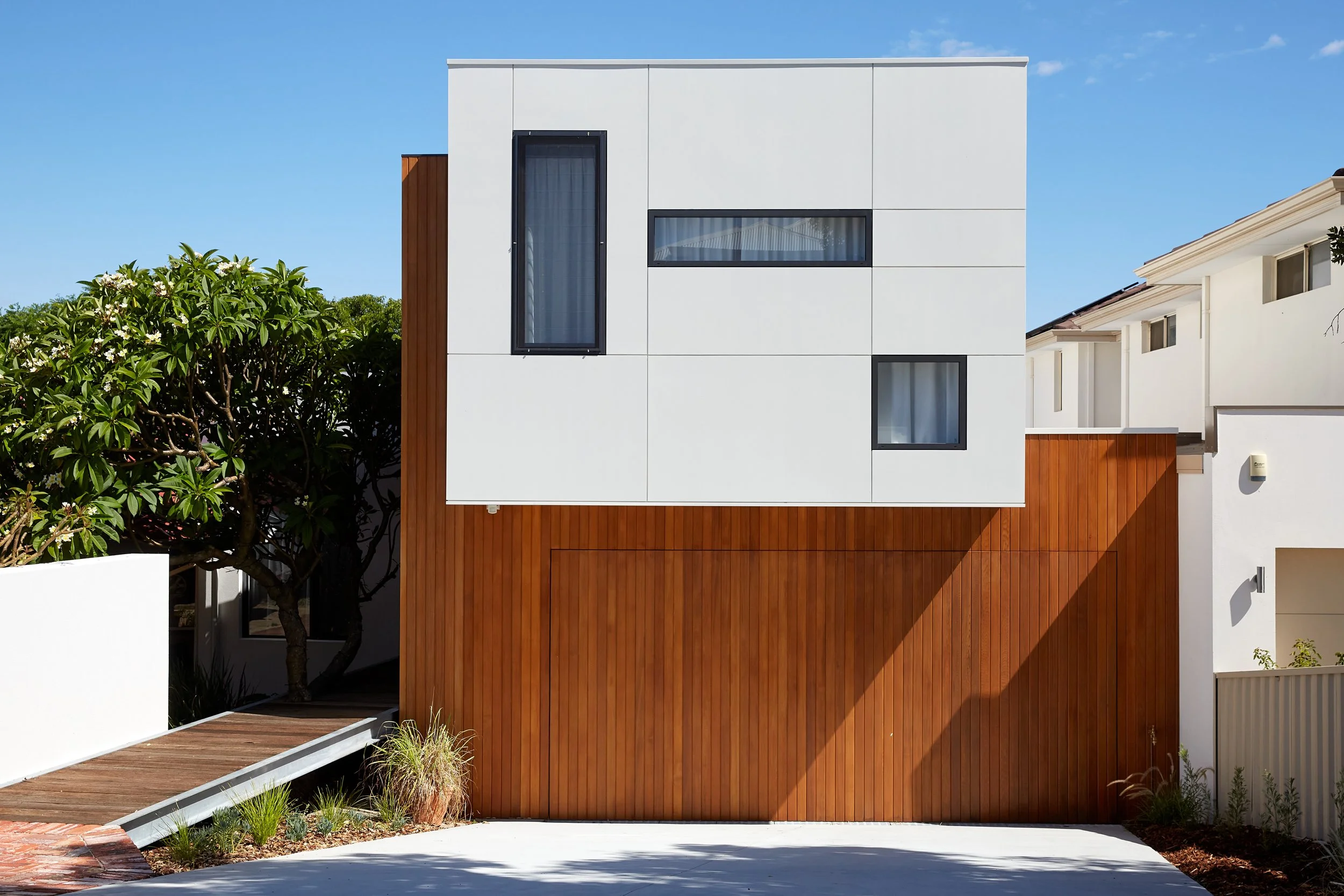
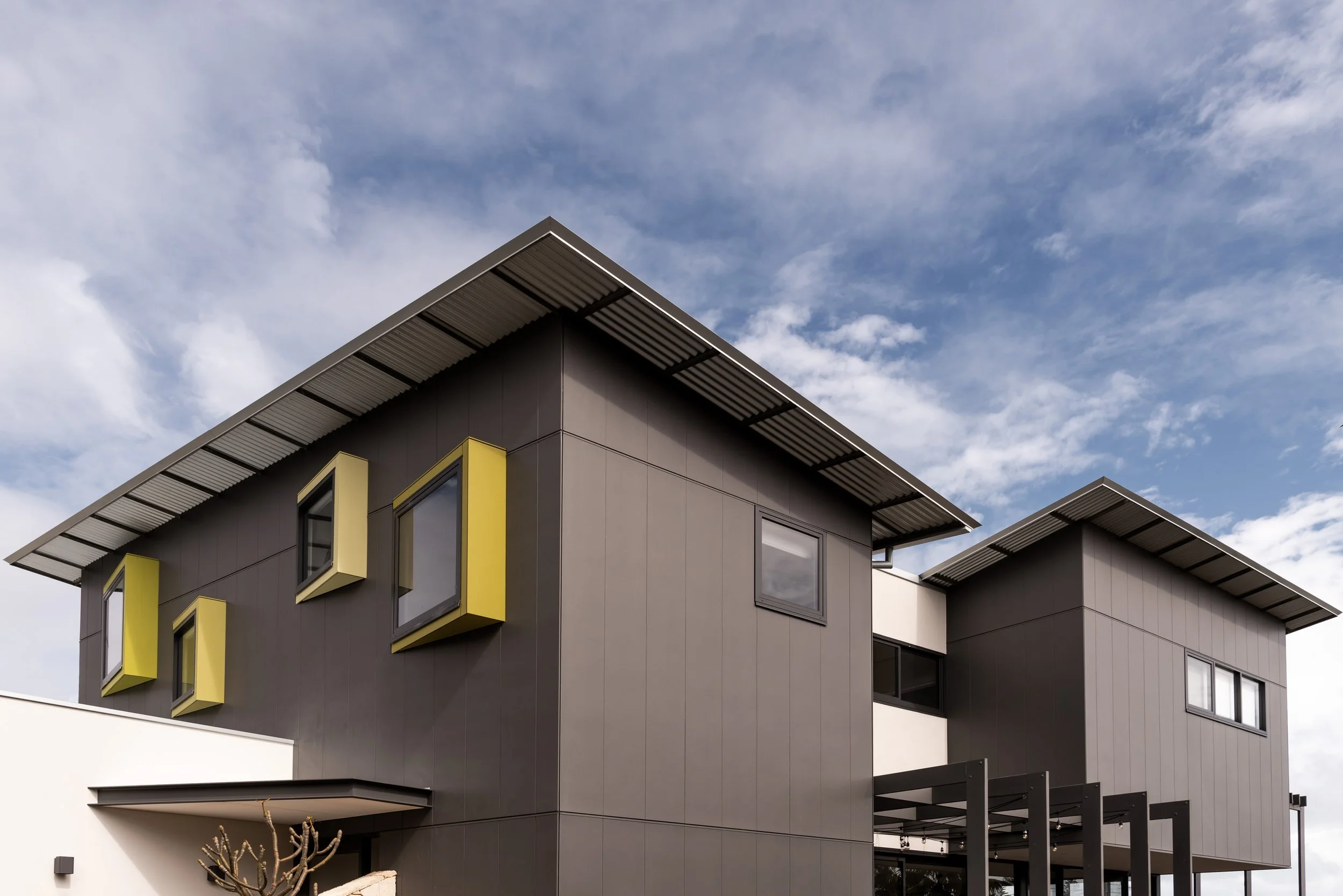
And why not mix and match them all, like here at our Mount Pleasant project. This, along with interior window treatments, helped limit views from the street and created a striking facade.
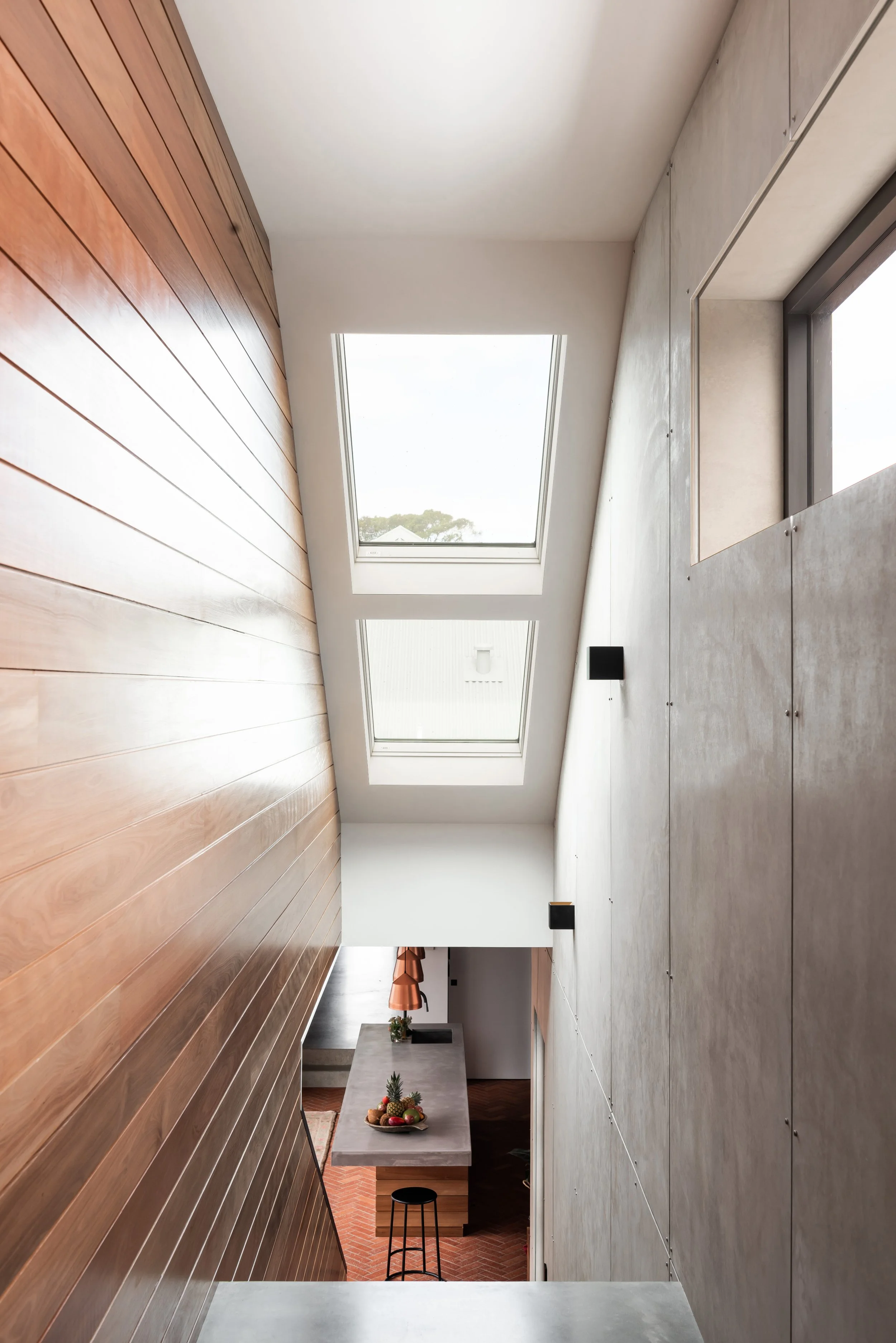
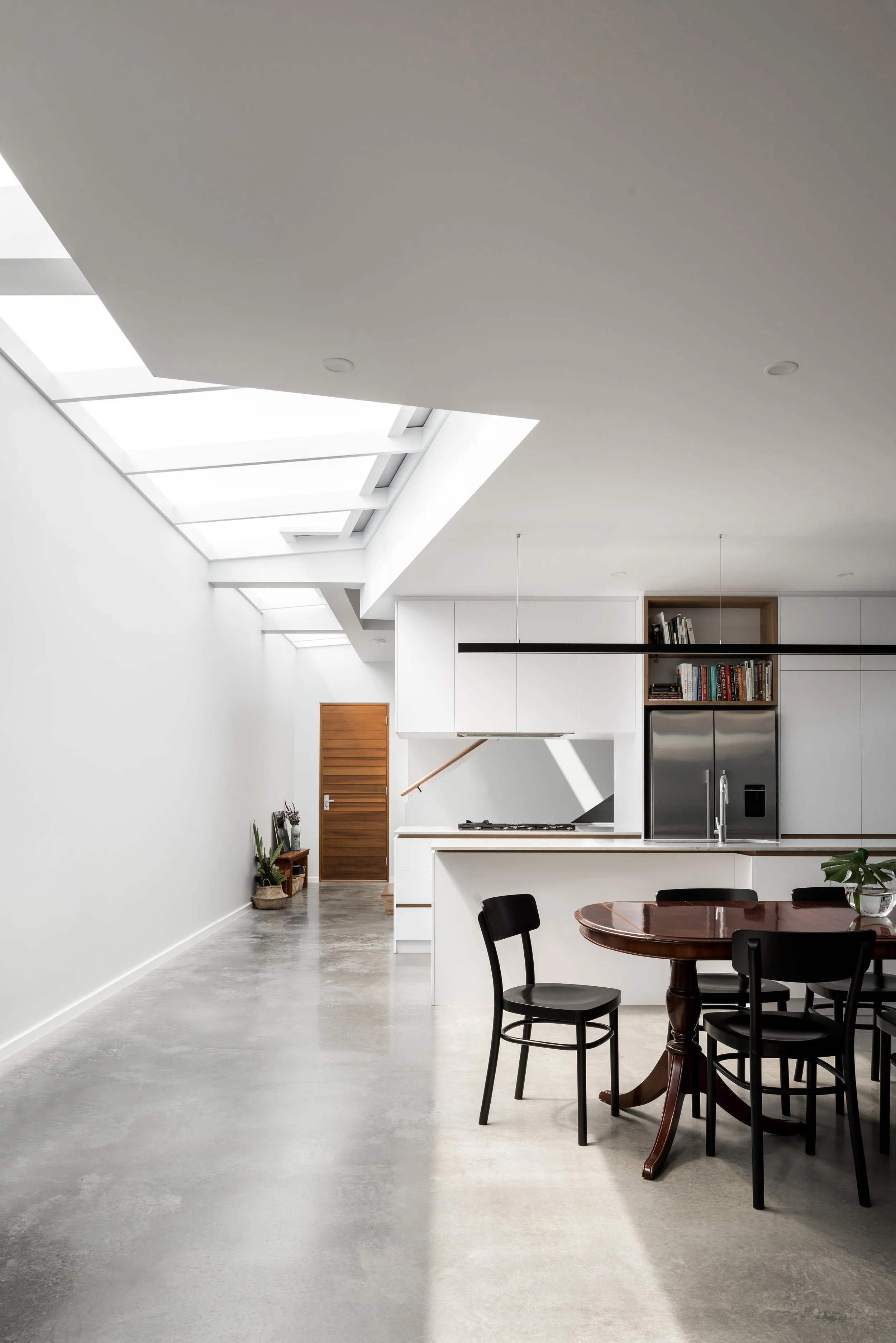
Finally, if you’re still lacking in natural light, skylights—like the ones in our Claremont and Spearwood projects below—are always a good, stunning solution.
Bring in the angles
If you want to get even more creative, you can even design the windows to sit at an angle that reduces the line of sight inside. In our White Gum Valley project, angled windows add character, capture eastern light, frame the view, and help improve the privacy to the upper levels.
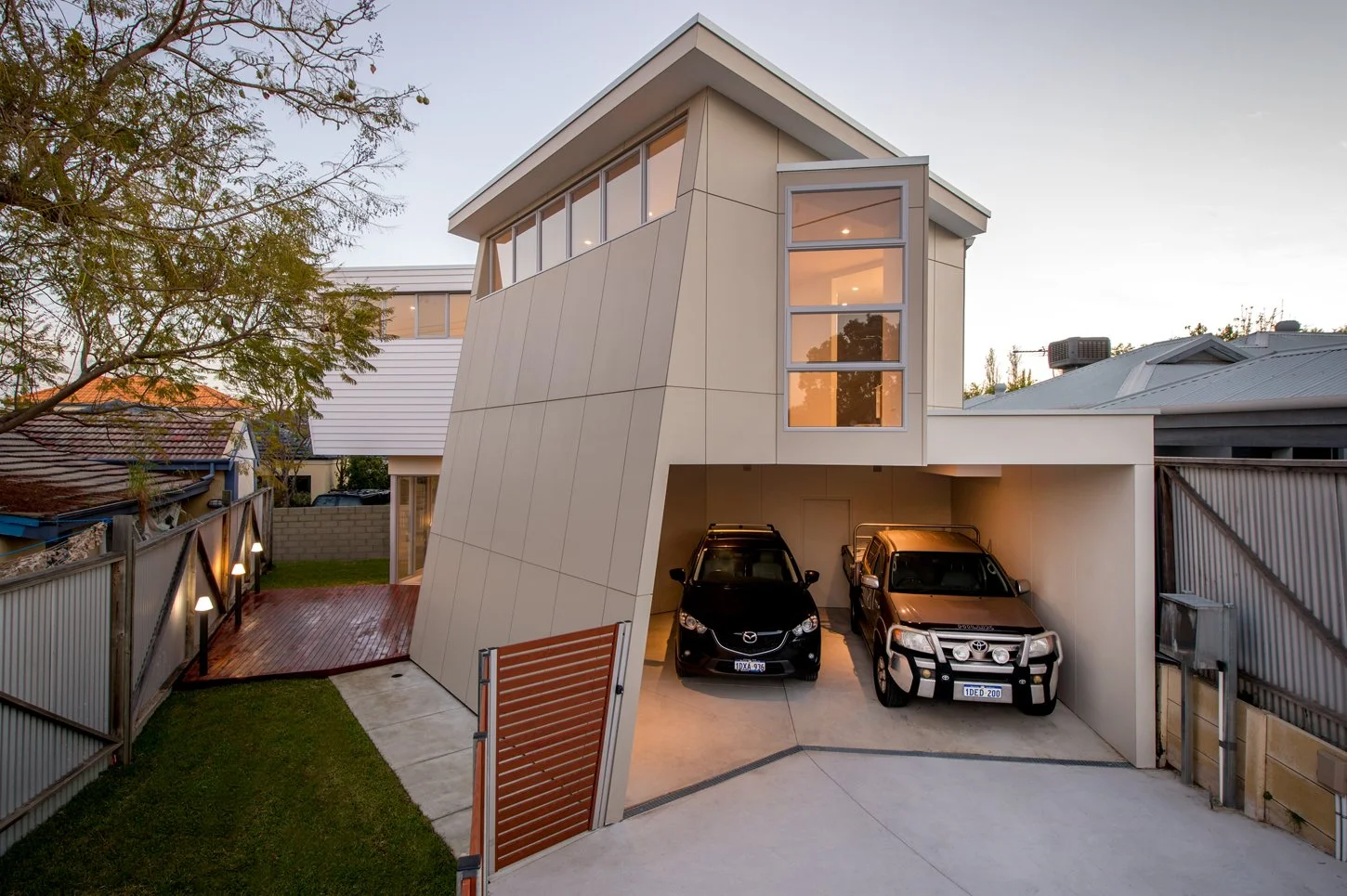
At our Claremont project, the angle was created in the wall of the house, instead. By doing this, they could still include a window but were able to stop the view from the street from looking directly into the upstairs bedroom.
LANDSCAPING
Landscaping is another great way to improve privacy in a way that adds ambiance and encourages a connection with the outdoors. Denser plants, like hedges, can act as green walls, while more sparse options, like vines, create privacy without completely blocking light. Just make sure to integrate your landscaping early in the build so it’s considered as part of the home design.
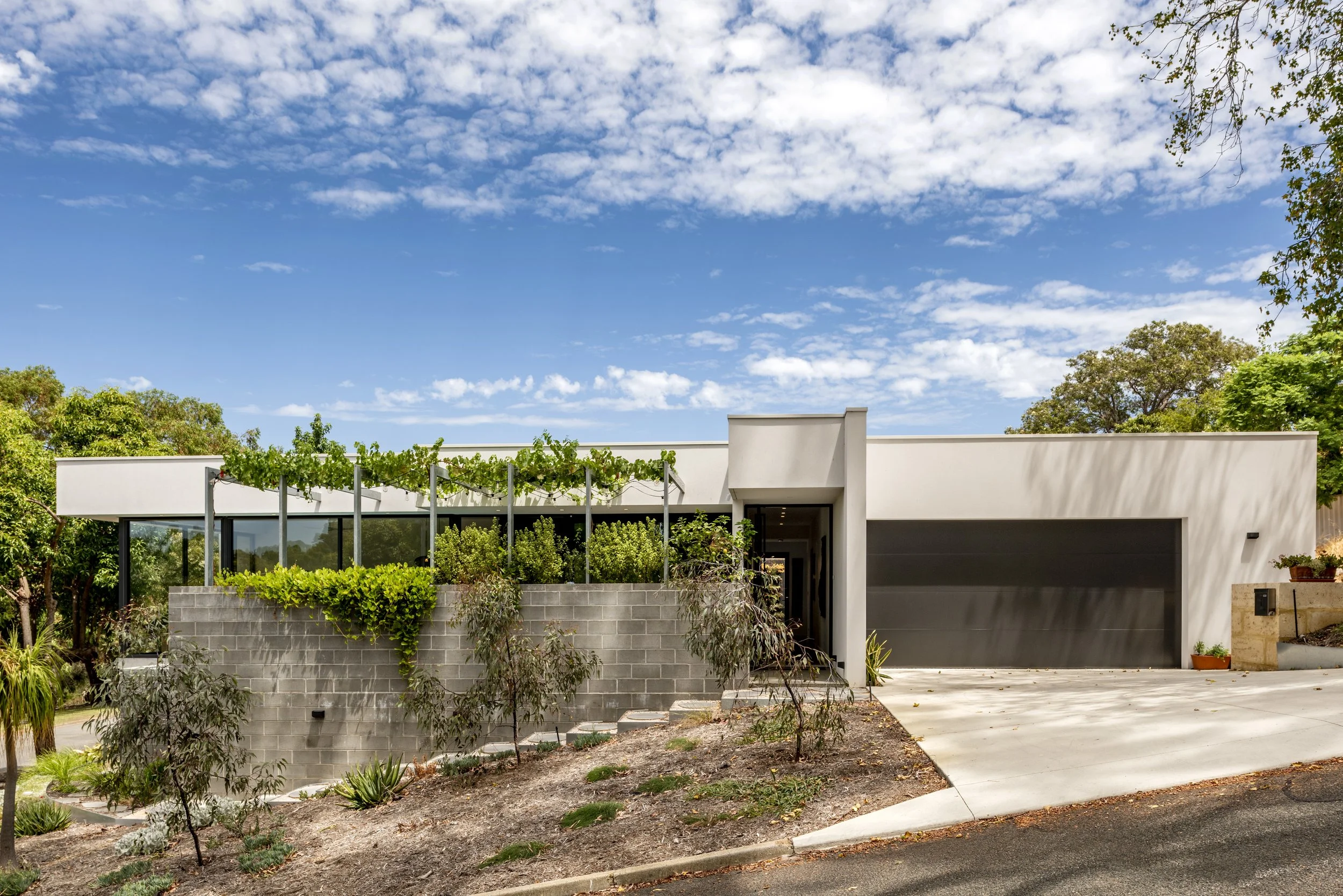
At our Mount Pleasant project, grapevines have been used to add some privacy to their alfresco and pool area.
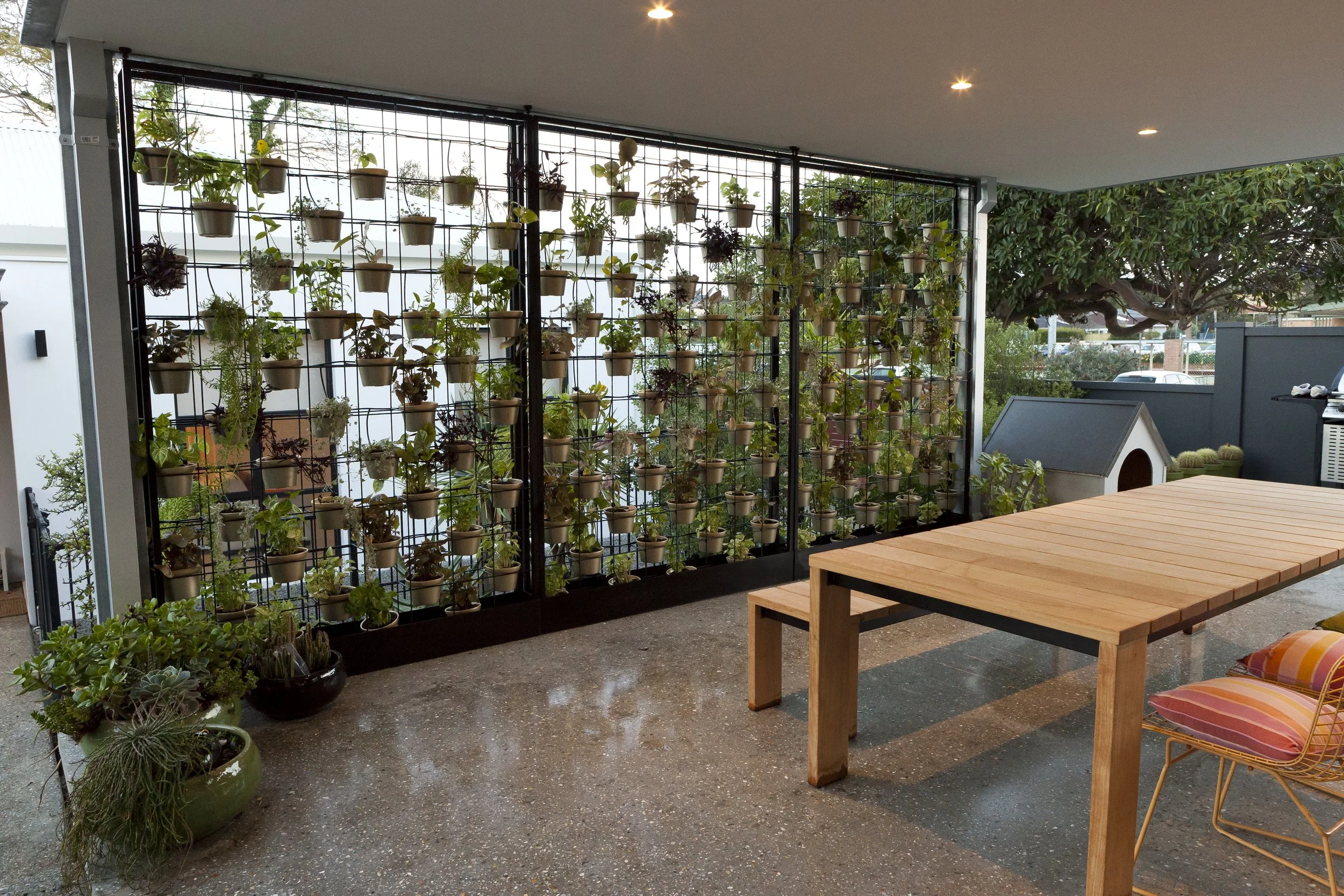
A lattice-look planter dividing the main house and guest house at Ardross.
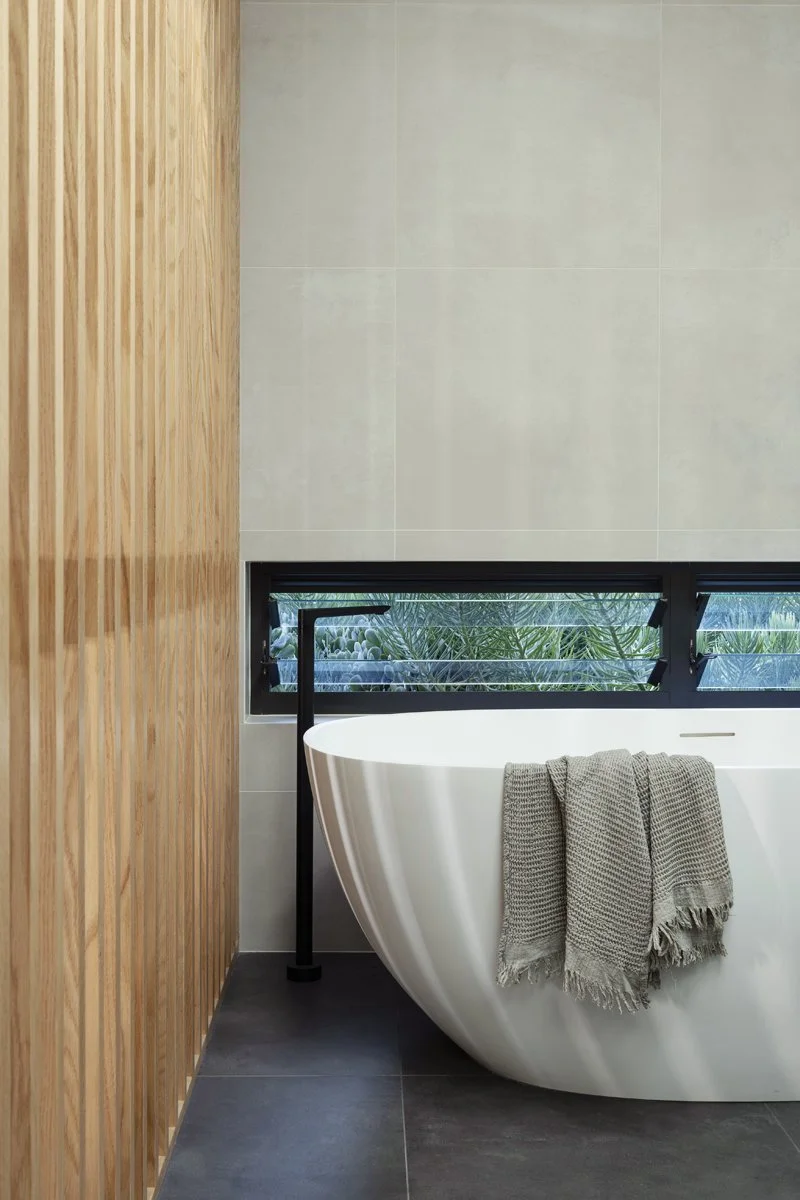
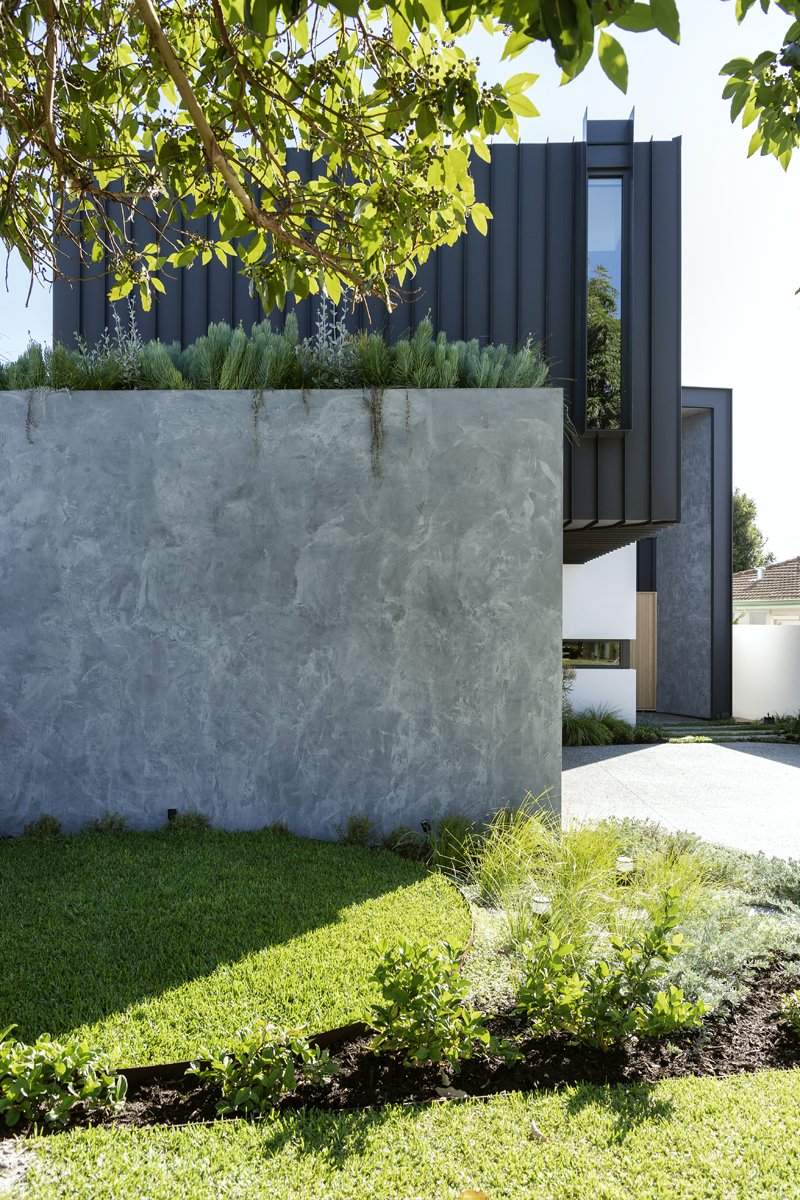
In a particularly stunning example, at Purdie, a low-set window paired with a rooftop garden brings natural light into a street-facing bathroom without compromising on privacy.
HOUSE LAYOUT
If you’re building new or doing major renovations, the layout of your entire house can be designed with privacy in mind.
Room locations and internal courtyards
Depending on the flexibility of your orientation, locating your main living spaces towards the rear of the home can distance them from the street. Better yet, L- or U-shaped floor plans allow the home to wrap around an internal courtyard, so you can open up your rooms without feeling like you’re on display.
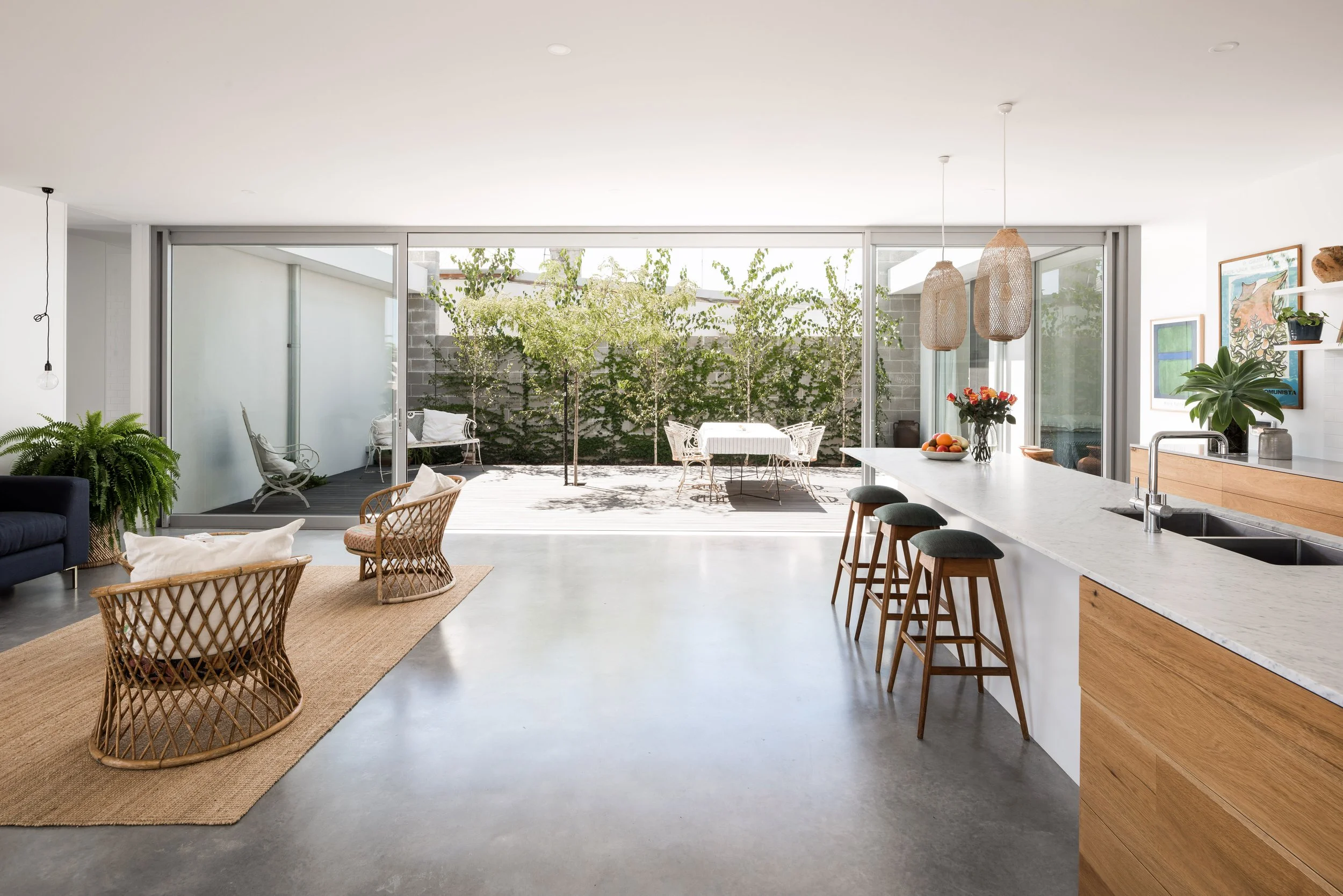
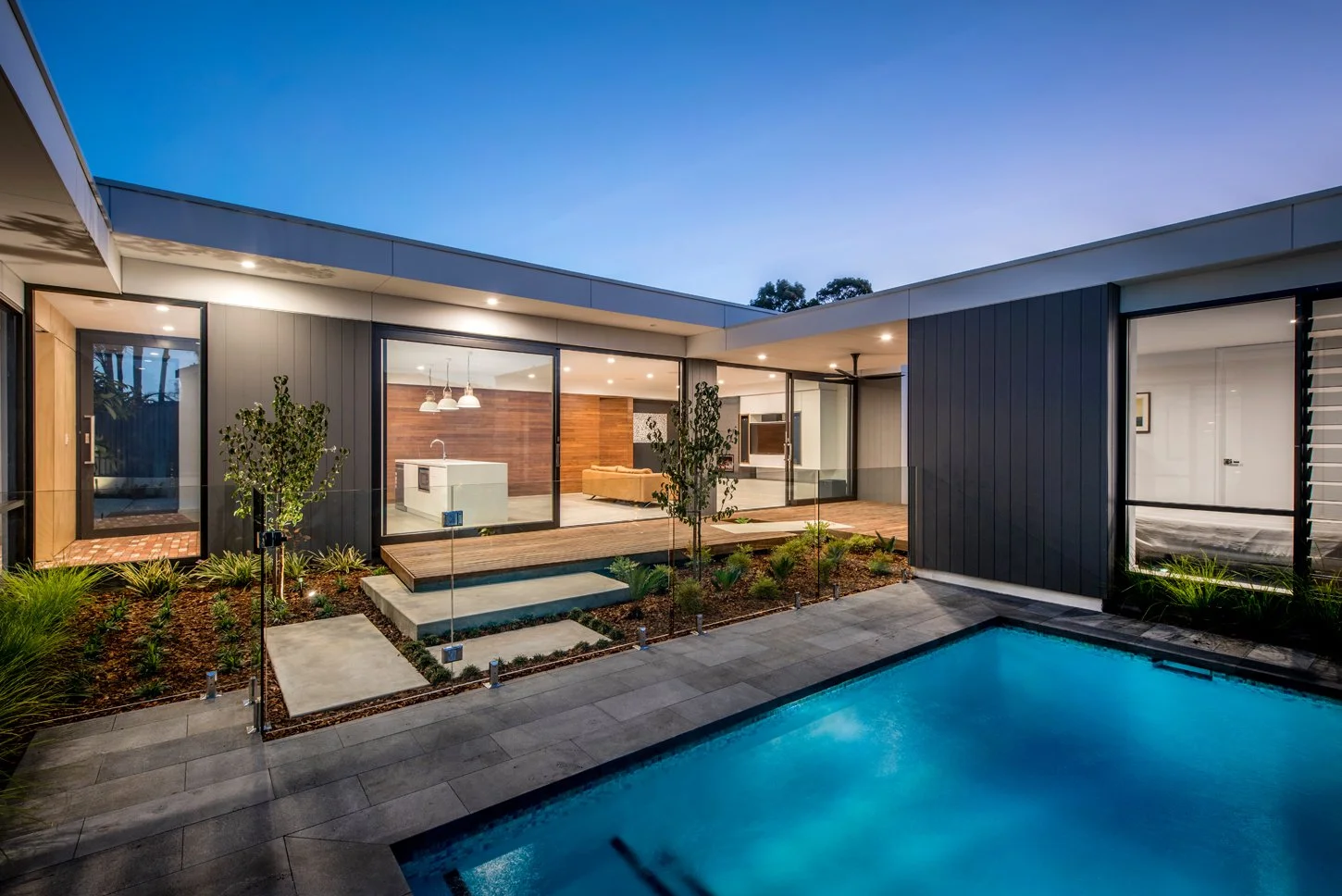
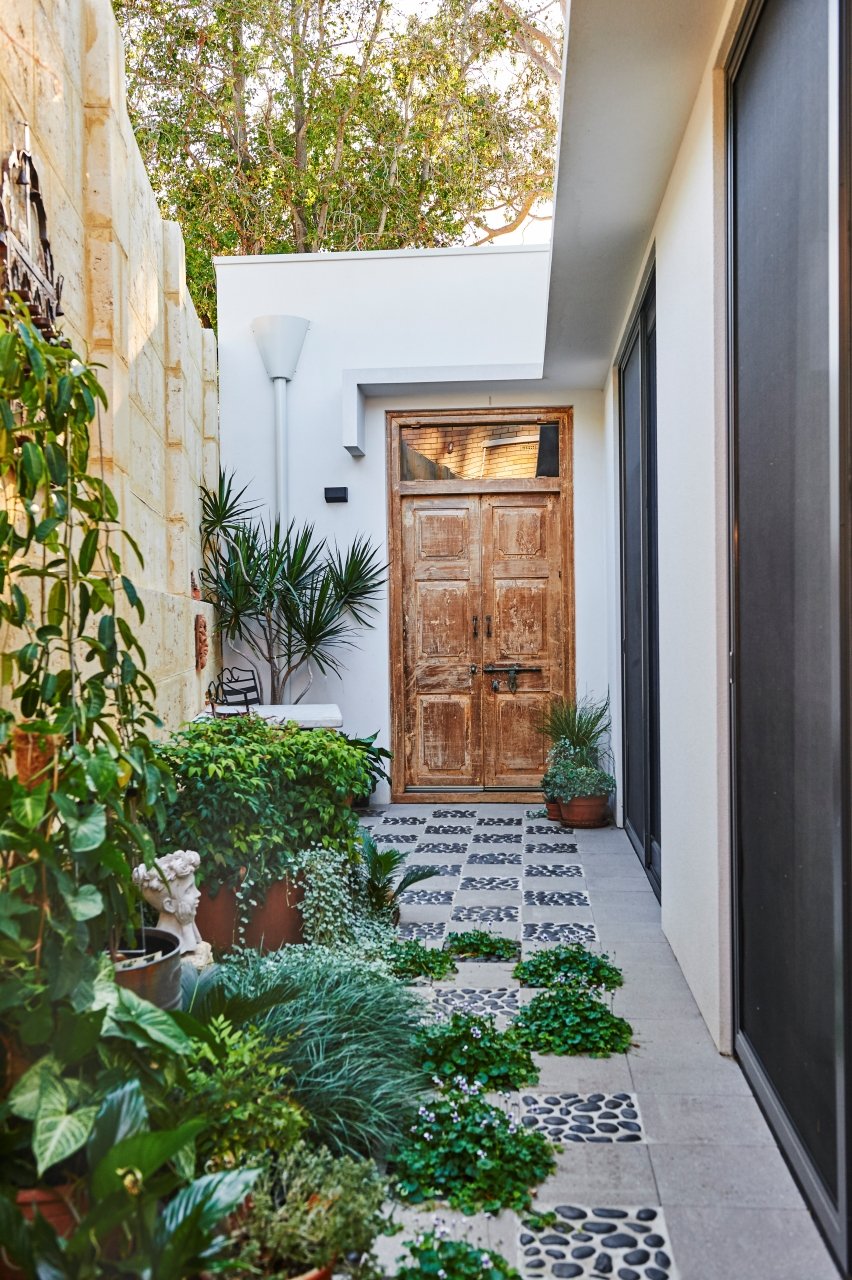
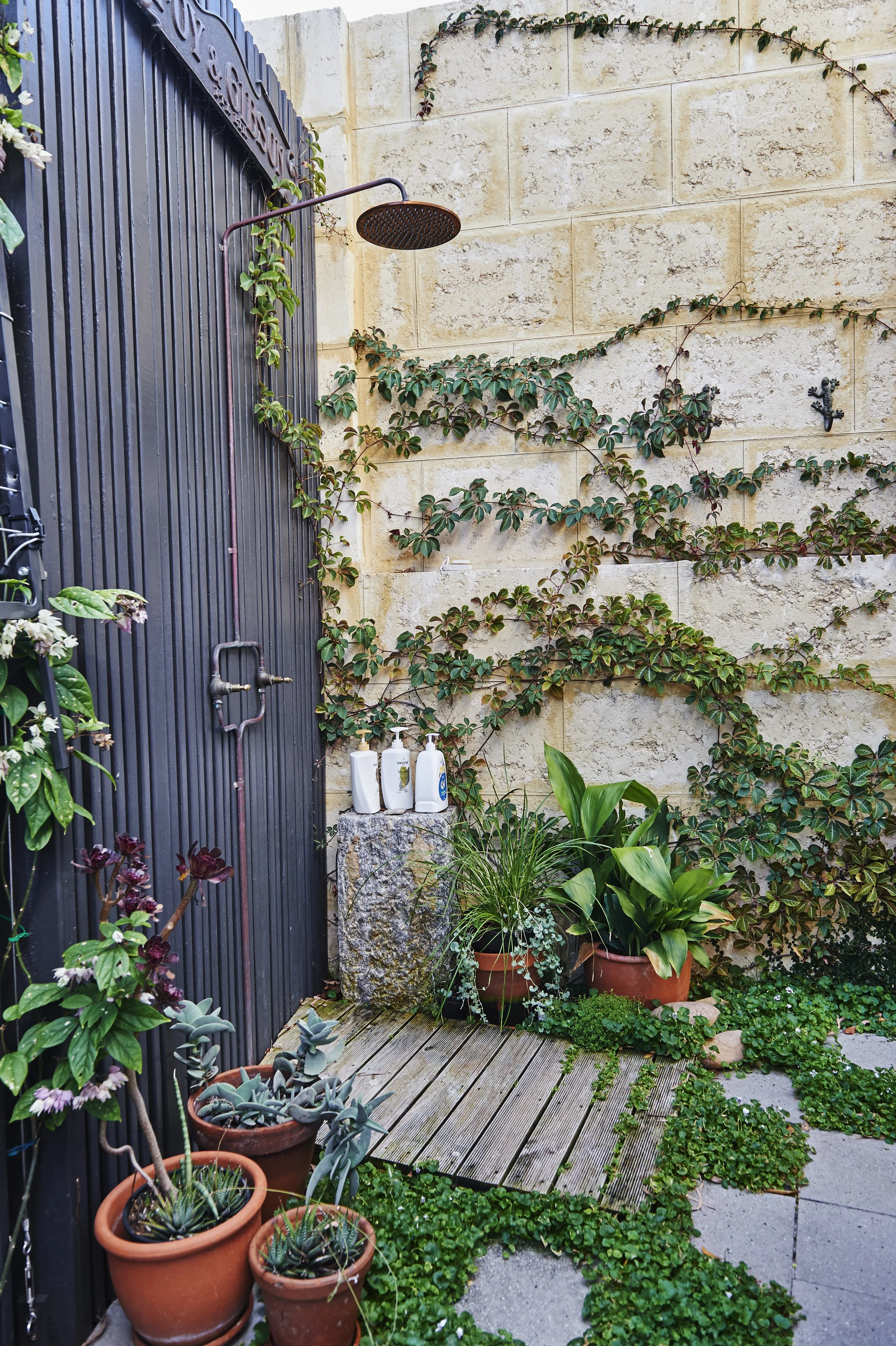
If this isn’t possible, even a single small internal courtyard can create a private sanctuary—like this one at Mount Pleasant that’s private enough for an outdoor shower.
Viewing corridors
Viewing corridors—planned sightlines through a home that are usually designed to avoid obstructions or nearby developments—are also a good idea to consider. At our Salter Point project, an internal courtyard, covered breezeway, strategically placed windows and landscaping work together to minimise overlooking issues from a two-storey house next door, and creates a viewing corridor that makes the home feel secluded.
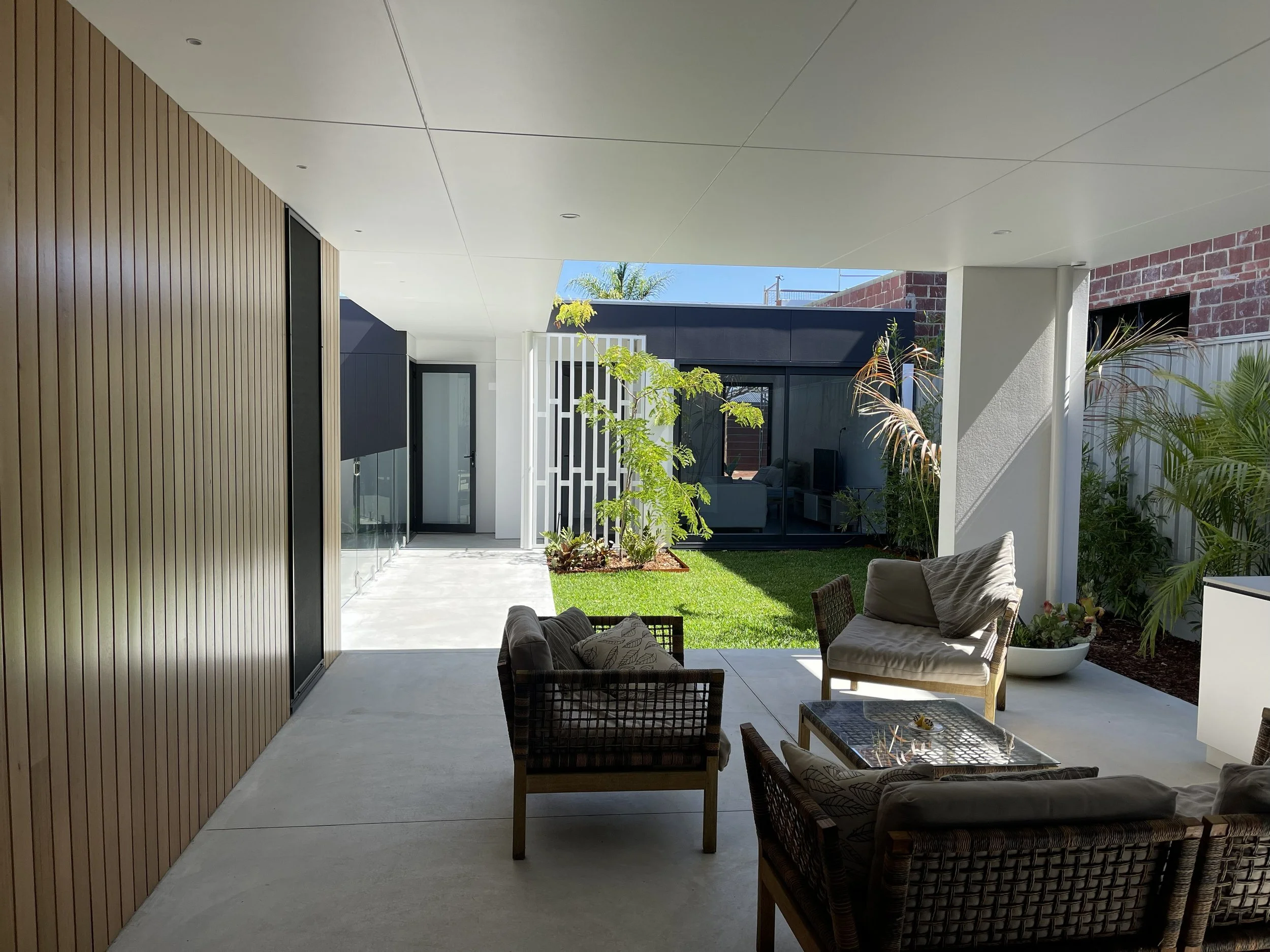
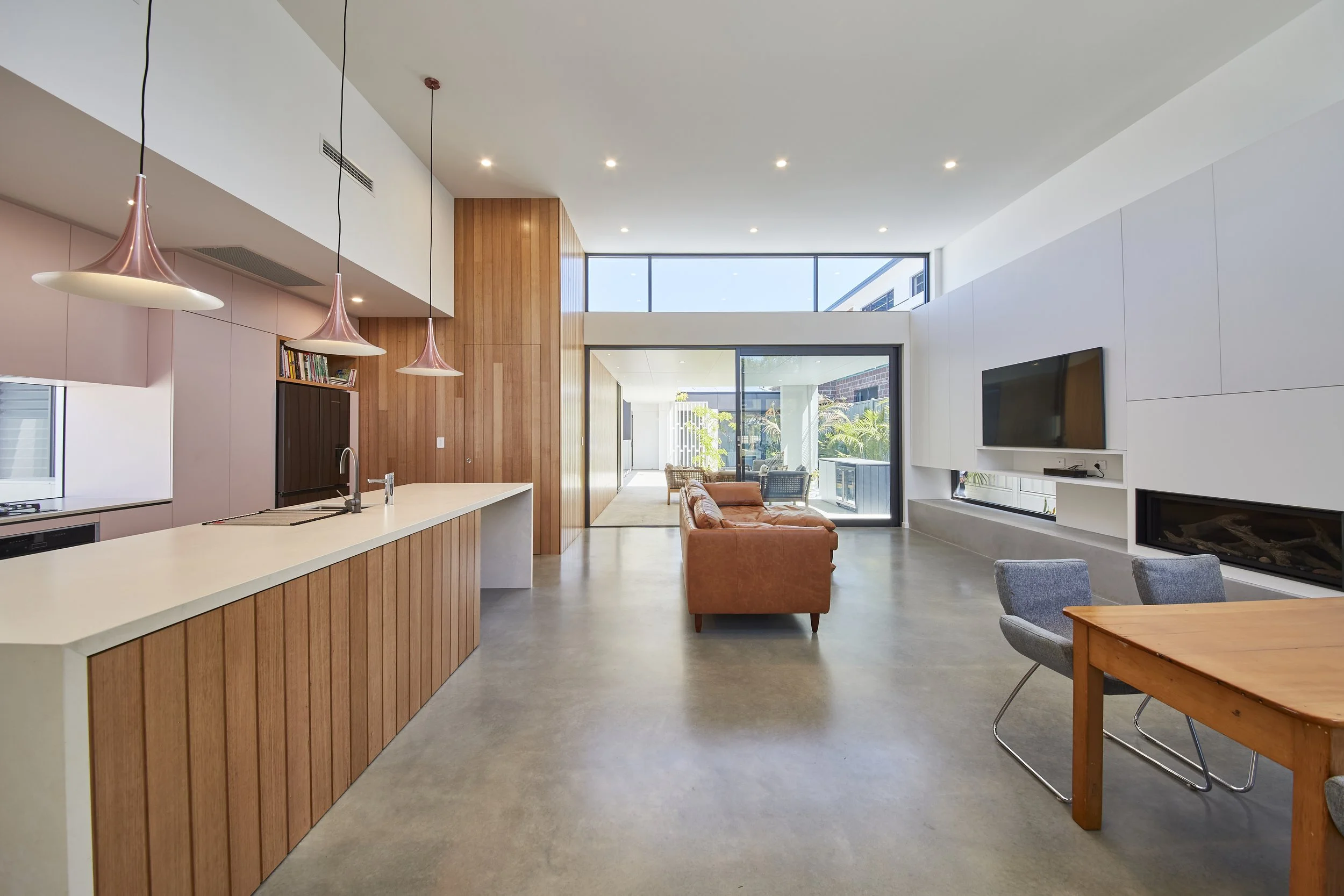
With this clever design, the home is still very bright and spacious.
CONSIDERING SOUND
Within all of this, it’s also important to consider how sound transfer and acoustics also impact privacy. The materials you choose throughout your home, like cladding and window treatments, will all help to block sound, and many brands even sell options specifically designed to reduce sound transfer. Double-glazing on windows that face high-traffic roads or noisy neighbours will be particularly effective.
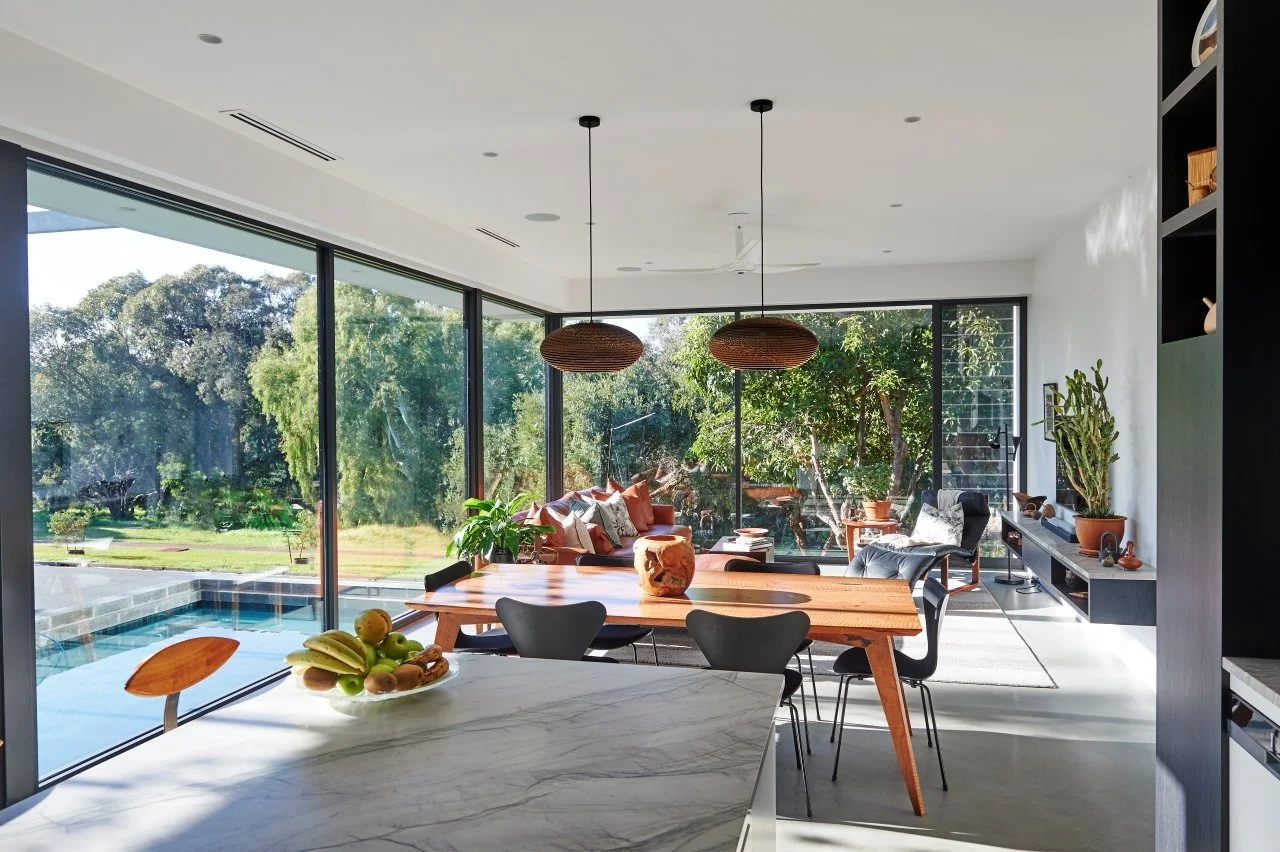
Double-glazing on the road-facing windows at Mount Pleasant.
Your home’s layout will also be important for acoustic privacy in much the same way as it is for visual privacy. By placing main living areas and internal courtyards away from the street, you can use the structure of the house itself as a buffer for noise.
Ultimately, no matter your block, it is possible to design your home to improve privacy. For the most likely chance of success, work with an experienced custom designer and start considering privacy from the very beginning. This way, solutions will feel more intentional, be more effective and can even become a feature of the home. Keen to learn more or want help finding such a designer? Get in touch!