
When looking for a block to build on, it’s usually location and cost that end up being the key deciders. But what if you find a block in your ideal location, only to find out it has a significant slope? Is it still worth buying, or could it cost a whole lot more money and time than it’s worth?
TO BUY OR NOT TO BUY?
If we’re getting technical, a sloping block is simply any site that isn’t flat. In reality, though, it’s only when the fall is more than about three metres that it’s worth thinking about how that slope could impact your design and build. Even then, there’s rarely a reason to avoid a slope unless you’re getting pre-designed plans—for which you’d likely have no choice but to level the site. If you’re planning a custom build, though, the slope will simply become one of the many other factors your designer needs to consider. Depending on the fall, the necessary design solutions, such as split levels or retaining walls, may be more expensive than if you opted for a flat block, but certainly not to the extent that it should be a dealbreaker.
A FEW THINGS TO CHECK BEFORE YOU BUY
A good designer will be able to work with virtually any site, but there are a few things worth taking note of before you buy a sloping block.
Slope degree: Even if you don’t want to level your block, the steeper the slope, the more site preparation and/or costly design solutions you’ll need.
Orientation/slope direction: As with any other block, orientation should be a consideration, but it’s especially worth noting what direction the slope falls towards as this could further impact natural light.
Stormwater drainage: Stormwater drainage will need to be more of a consideration on sloped blocks. Make sure you’re aware of what stormwater solutions are possible and/or required by your council.
Height limits: Similarly, council height restrictions could significantly limit possible design solutions or dictate if you decide to level the block, so be sure to look into these.

At our Banjup project, minimum water table clearances meant we even had to bring in extra soil to infill and raise the land.
Again, all these issues can be worked through with a good designer but may impact the overall design and cost. If you’re struggling to decide, consider engaging your designer or builder before you’ve bought the site. They’ll be happy to have a look at your options and give you the expert advice you need to make an informed decision.
SHOULD YOU LEVEL IT, THOUGH?
If you’re getting pre-designed plans, it’ll undoubtedly be easier to level the block. If you’re going custom, though, there’s usually little difference in the cost between levelling a slope and designing with it. In our opinion, we generally lean away from levelling and try to encourage working with the site instead.
Architectural interest: A slope is a great excuse for your architect to start getting creative with their design. Lean into it and you could get some truly unique design features.
Connection to land: Working with the slope will create a more natural connection to the land, and there’ll be no need for huge disruptive retaining walls.
Smart use of space: A sloping block also makes it relatively easy to lean into space-saving solutions, like a garage or storage space under a cantilevered slab.
If universal access is a concern, there’s still no need to stress. This is still very doable on sloped sites—just make sure you give all the necessary details in your brief, and your designer can help you find the best possible solutions.
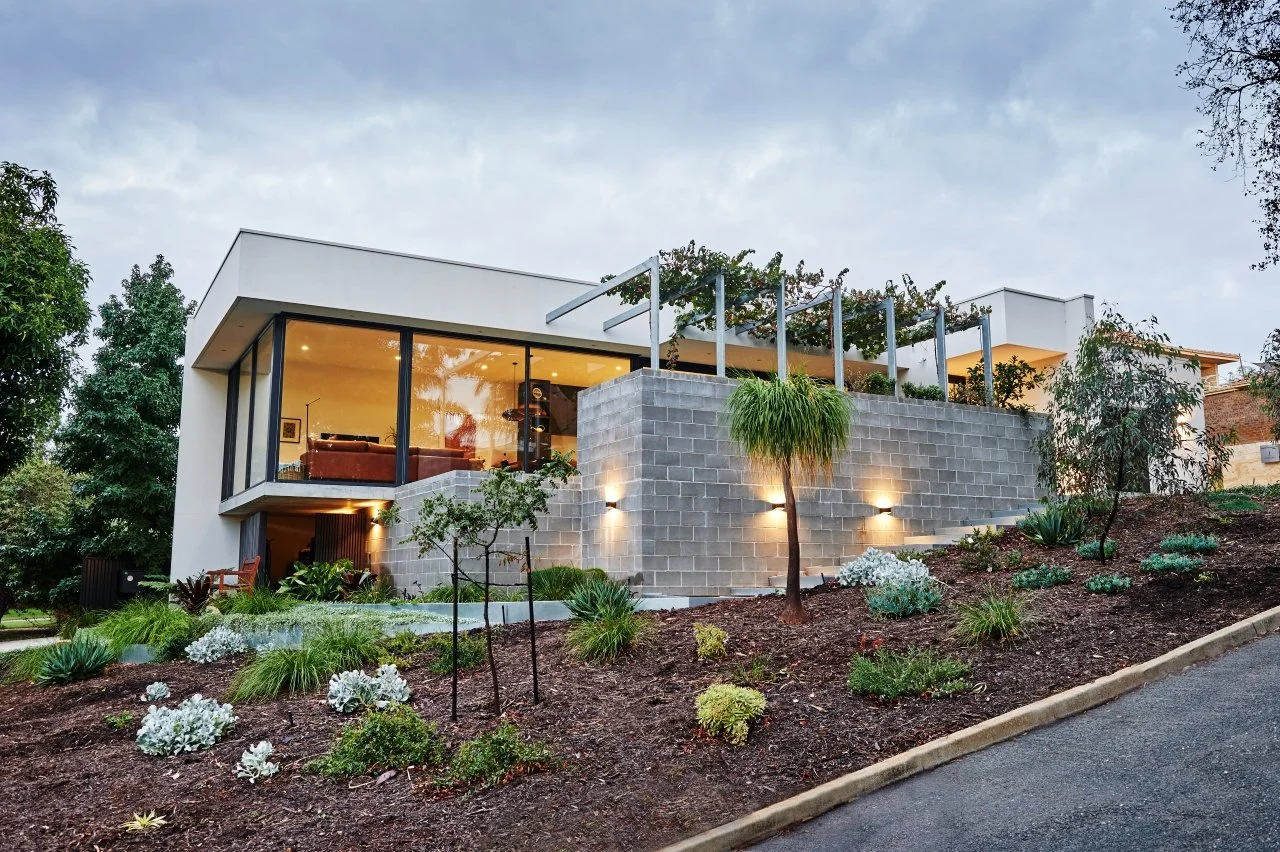
Our Mount Pleasant project, for example, is fully accessible despite a steep block. Retaining walls and a cantilevered slab has kept everything on one level, with flush transitions and even a pool. And the space beneath the pool has even been used for additional storage.


The slope also allowed for the inclusion of a relaxing undercover sitting area.
CHALLENGES
Sloped blocks do, of course, add a bit of complexity to your design, so be prepared for some additional challenges.
Problem solving
With the added variable of a slope, your design and build will likely require a bit more problem solving than usual. This can take time, but if you work with your designer and have patience, we have no doubt it’ll be worth it.

Multiple split levels and stilts at our Gooseberry Hill project results in a unique silhouette that blends beautifully with its national park backdrop.

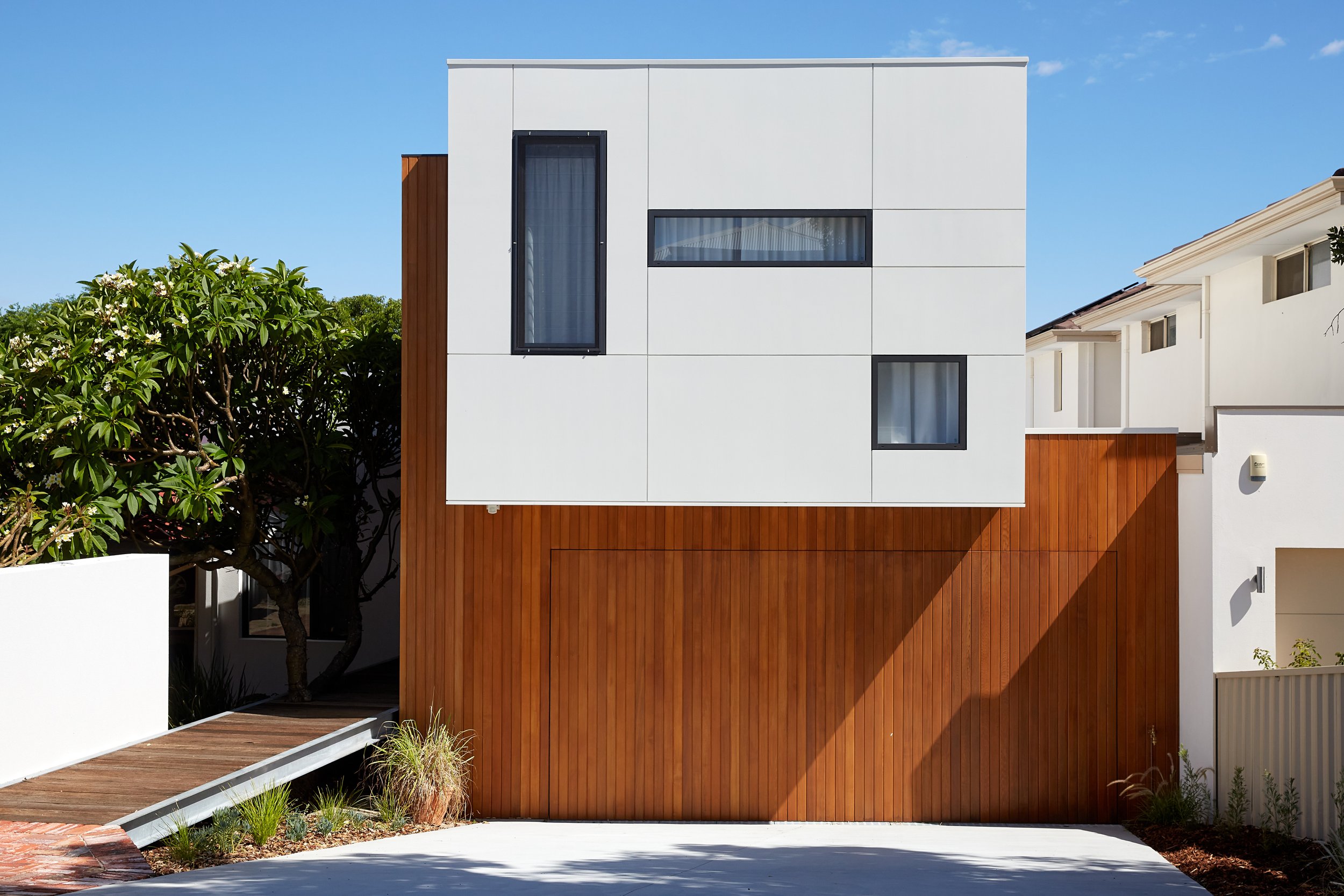
At East Fremantle, a stand-out bridge leads straight to the main entrance from the street, giving the two-storey design a single-storey presence.
Construction at heights
A slope can significantly increase the heights your builders are working at. At Gooseberry Hill and Mount Pleasant, we were often working at heights of 7 to 8 metres (compared to the typical 6.5 metres and below). This adds safety requirements (like scaffolding) and increases the time and cost for jobs, like painting, where a ladder would otherwise be suitable.

Very high scaffolding at our Gooseberry Hill project.
Material handling and access
A slope can make access and material handling significantly more challenging than you’d expect. Outside of the fact that trades will be working on a slope—and probably getting a lot more cardio than usual—delivery drivers will often refuse to drop materials at the bottom of a hill out of fear of getting stuck. Materials may need to be hand-carried, or hoists used much more often than usual.
TRADE SECRETS
Sequencing: Take the time to really think about the sequencing of the build, especially when using scaffolding. There’s nothing worse than pulling scaffolding down only to realise there’s more to work to do at the top.
Materials at height: Choose low-maintenance cladding, like Barestone or Colorbond, at more significant heights. Timber, for example, requires re-coating. Give it a few years and the cost of setting up scaffolding every time can really add up.
Site height: If you’re on a small block, avoid building lower than your neighbour. This can lead to privacy challenges and drainage issues.
STANDOUT DESIGN
At our Regent Street project, a sloped block resulted in three split levels. Street interest was created with a bridge to the front entry, and as you step down into the lowest level, the slope allowed for some stunning 4.4 metre ceilings.

Are you considering a sloped block but not sure you’re ready to take the leap? Get in touch and we’ll be happy to offer some advice.