

For many of us, the concept of self-sufficient, off-grid living is one that sits in the all-or-nothing category, requiring a complete change in lifestyle. This is far from accurate: many of us are already incorporating elements of self-sufficiency into our lives (even a few herbs on your windowsill can count). But if you’re keen to reduce your reliance on the grid—and the bills that come with that—even further, what are the solutions worth integrating into your design? Let’s explore.
RAINWATER
It’s easy to forget what a luxury it is to have water at the twist of a tap, but even easier to forget that you don’t need to be connected to mains water to experience it. As long as you have a roof and space for a rainwater tank, you may be able to harvest a good portion, if not all, of your water.
Rainwater tanks work by capturing the water run-off from your roof. Depending on the desired use, this water can be filtered, treated and then pumped into your house or garden. They can be installed above-ground or in-ground and, relatively cheap upfront, are a very cost-effective way to reduce your water bills long-term. They do, however, require a fair amount of space even for small households.
Key considerations
Roof area: The amount of water you can collect will depend on the size of your roof, so be sure to consider this in your design.
Connections: Rainwater can be connected to feed throughout your home or to only some specific taps. Whether that’s to wash clothes, flush the toilet or water the garden is entirely up to you.
Drinking water: If one of these uses includes drinking, there are additional treatment and maintenance requirements to ensure the stored water remains safe for consumption.
Backup mains connection: To account for dry periods or limited space, it’s a good idea to stay connected to the mains system in case your rainwater tank empties.
First rain: To clear out any dust or debris left on your roof after construction, we recommend flushing your rainwater tank after the first rain.
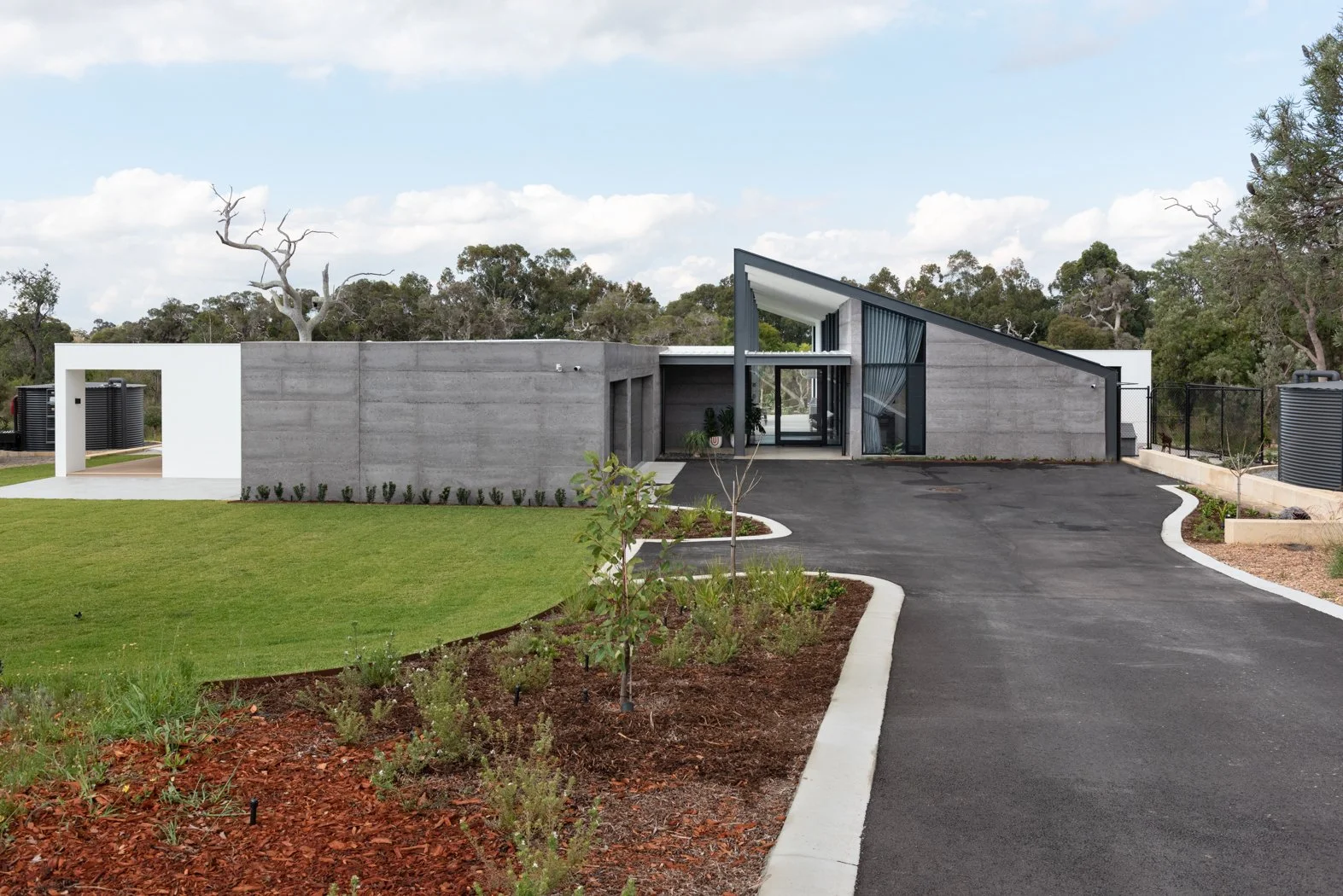
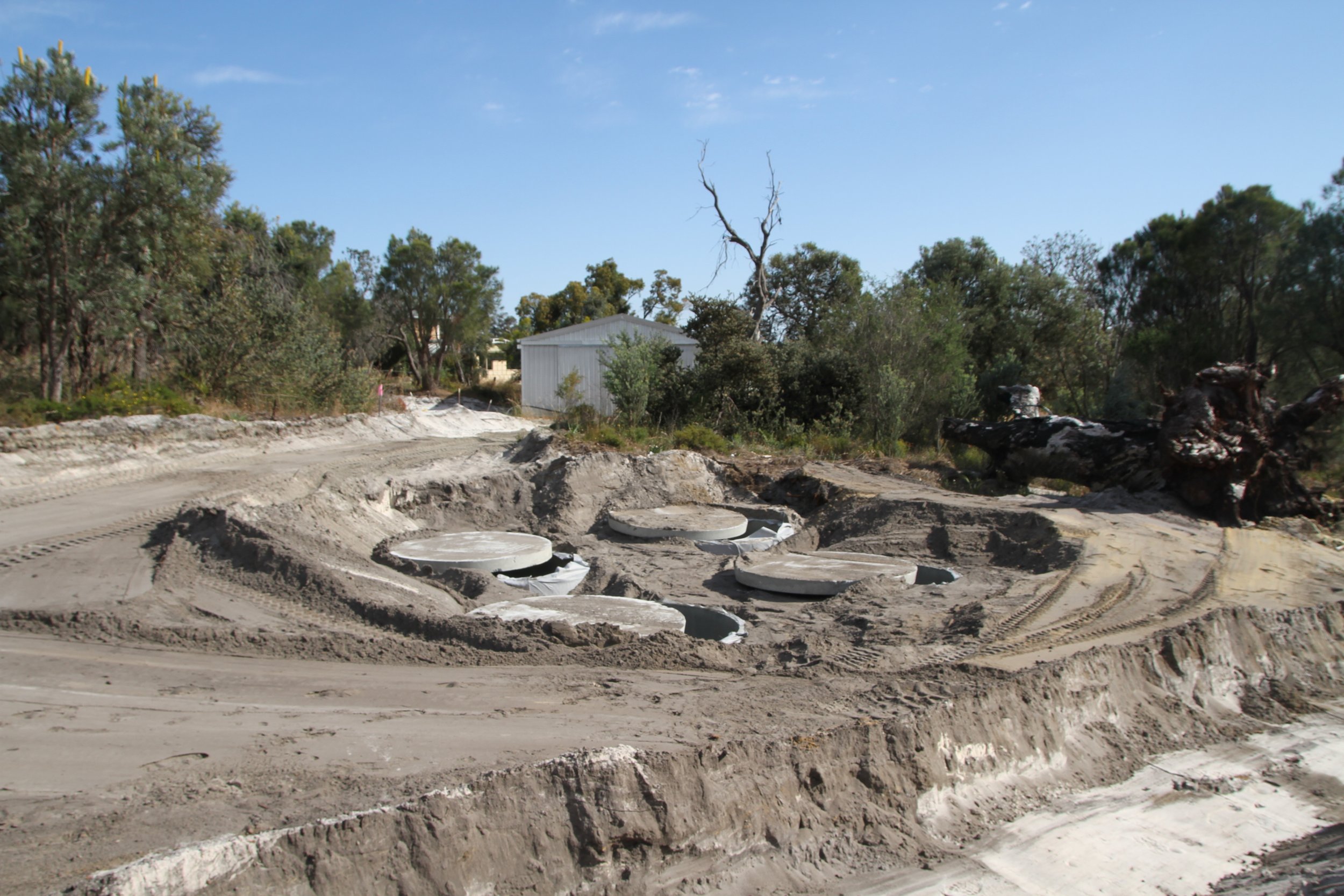
At our Banjup project, where no mains connection is available, the family of five opted for three tanks with a total capacity of 150,000L
GREYWATER SYSTEM
To reduce your water usage even further, it’s also possible to divert some of your wastewater for reuse. Greywater—from your bathroom (excluding the toilet), kitchen, or laundry—can be recycled through a diversion system or a treatment system.
A diversion system temporarily stores the greywater and directs it for re-use in garden irrigation. This is the cheapest option but, importantly, the water will be untreated and health and environmental effects must be considered. Chemical usage (such as washing detergents) must be minimised, the greywater should not be used to water a vegetable garden, and irrigation must be done below the ground to reduce the likelihood of exposure. Additionally, untreated greywater should not be stored for more than 24 hours.
A greywater treatment system can be used in two ways. In its simplest form, it can treat your greywater for safer, more environmentally friendly subground irrigation. Alternatively, it can store,treat and disinfect the collected greywater so it’s suitable for more uses, like above-ground irrigation, flushing the toilet or washing clothes (cold water only). Notably, however, inside use must be approved by the Department of Health for which only one system is currently allowed. An additional pipe network will also be required.
Key considerations
Installation: Both diversion systems and treatment systems can be installed above-ground or in-ground.
Backup mains connection: Greywater systems typically have small holding capacities, so it’s a good idea to remain connected to mains so any unused water can be diverted.
Futureproofing: If you’re not ready to install a system yet, you can still make a future transition easier by including separate grey and blackwater systems up-front. These can both connect back to the mains system but will keep your plumber from needing to dig the trench again if you choose to separate them later.
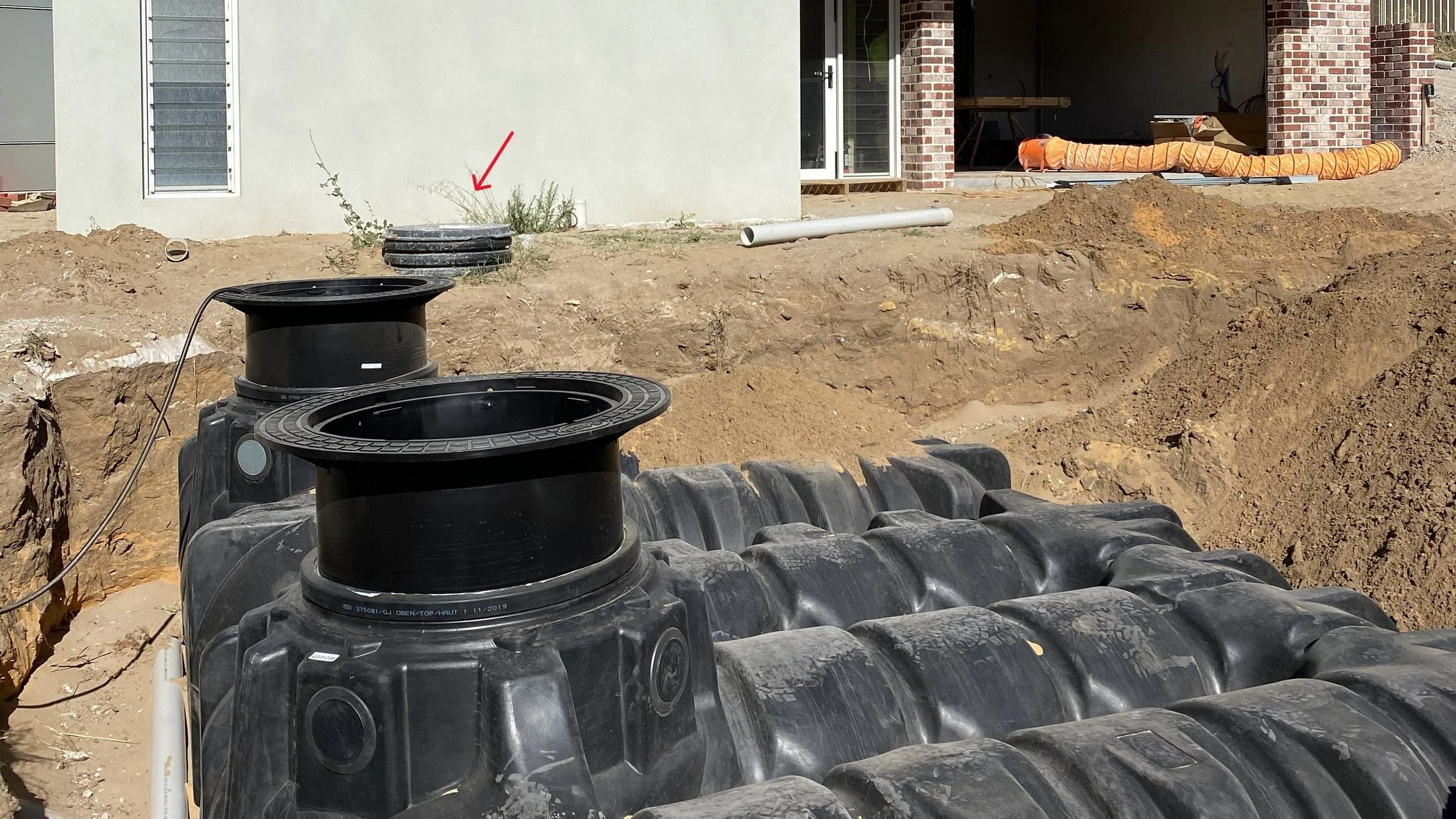
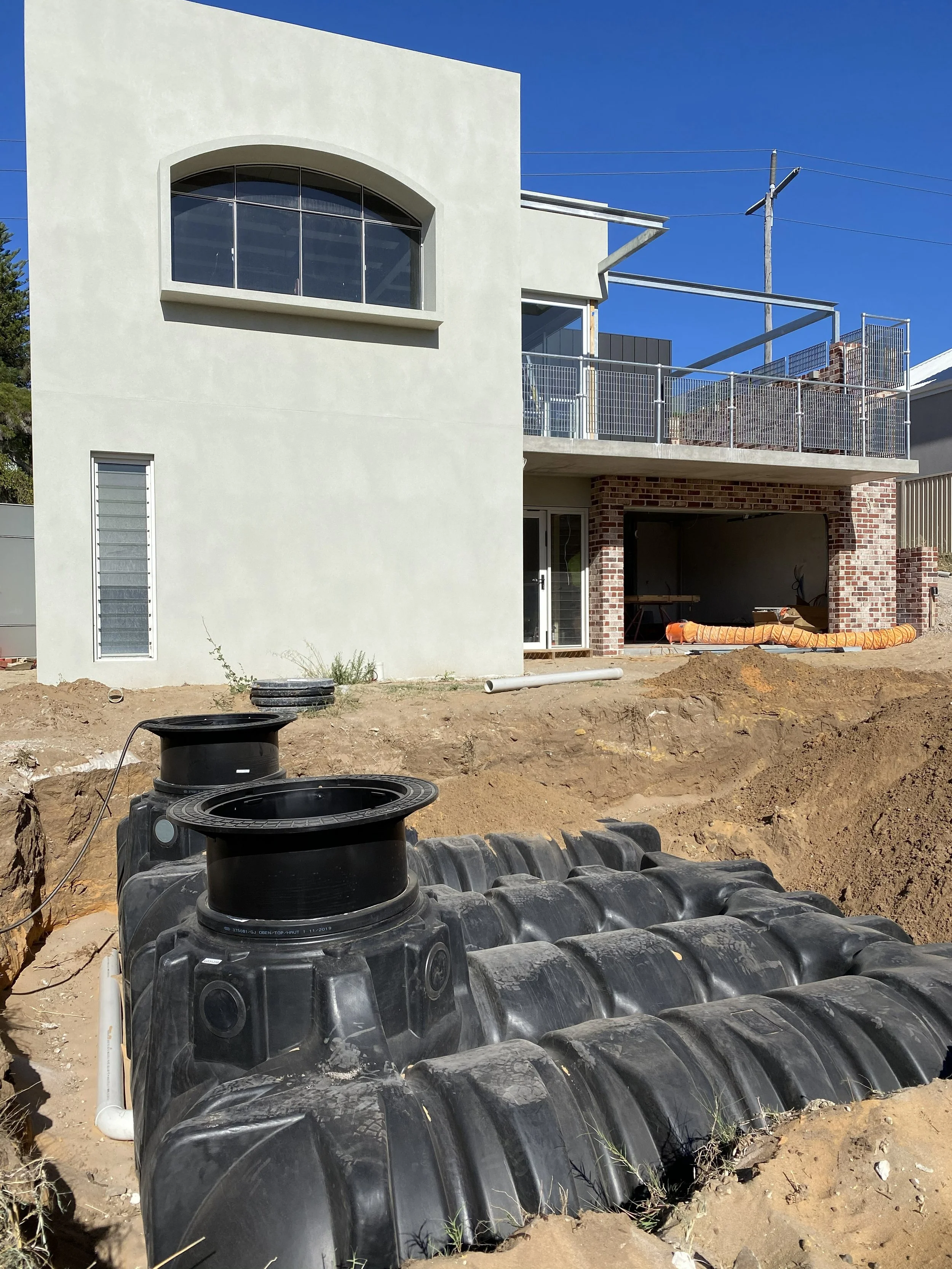
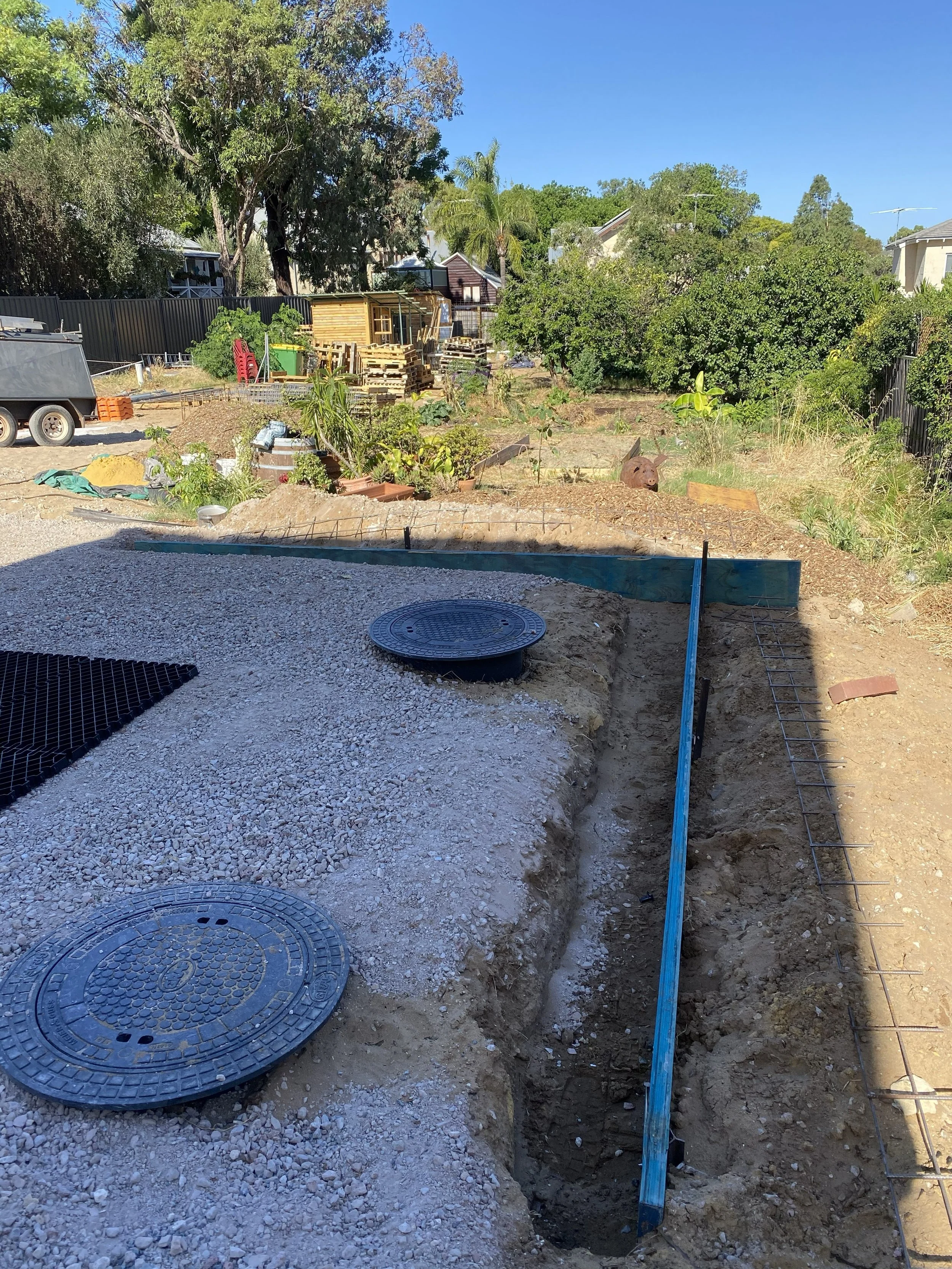
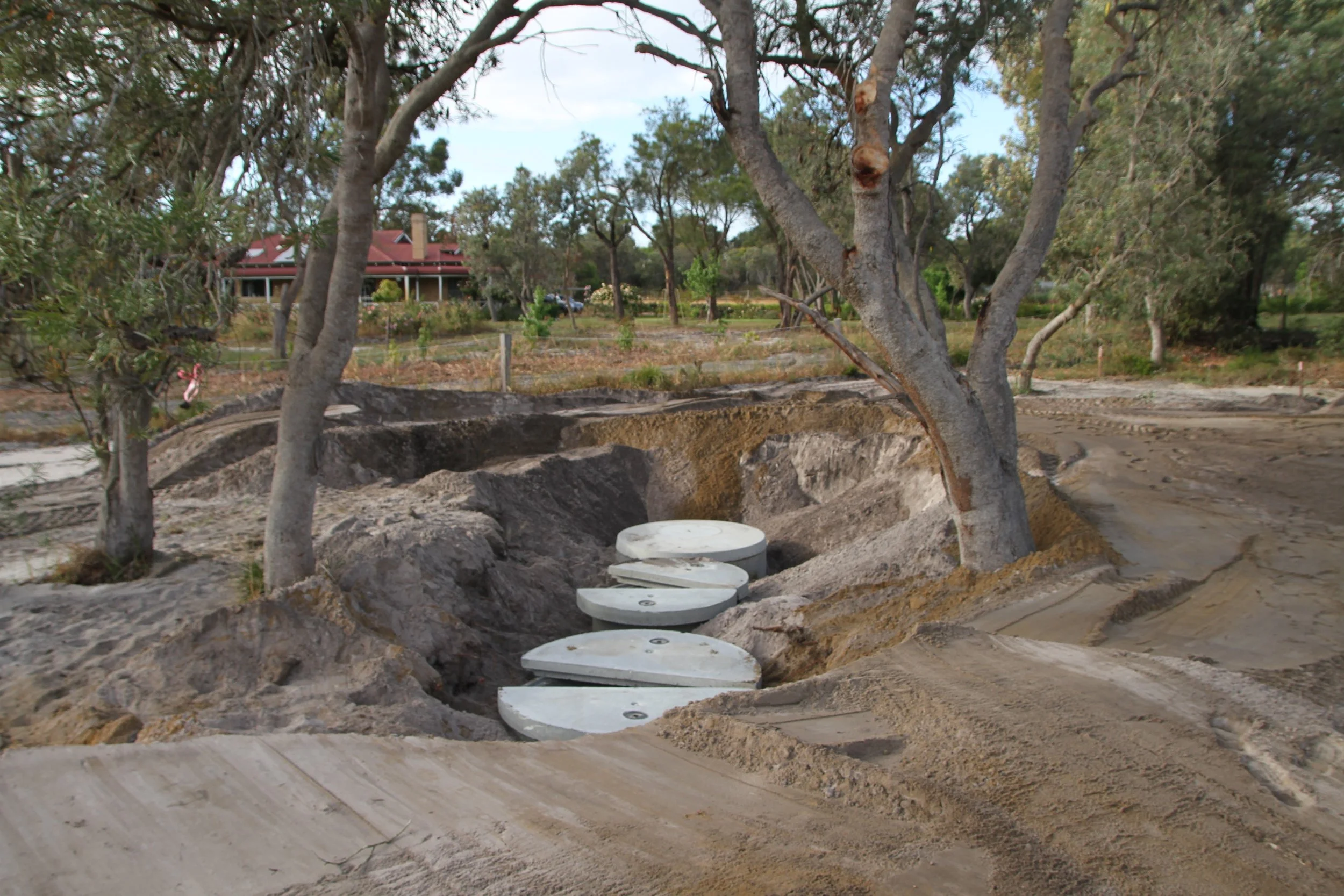
Like rainwater tanks, greywater systems can be fully underground. Here at East Fremantle, its relatively small lid is all that can be seen.
SEWAGE/BLACKWATER MANAGEMENT
It may also be possible to manage your own sewage/blackwater. There are a few ways to do this, but the most common involve an on-site septic system or composting toilet.
On-site septic systems require a septic tank below ground that treats your blackwater. It then flows into a drain field below ground where it’s naturally filtered and treated and safely returns to groundwater. This is cost-effective and relatively simple to install, but requires a lot of space and good soil drainage, making it less suitable for inner-city properties.
Composting toilets require much less space and no water. Waste is held in a container where it decomposes into a compost. This can then be disposed of (according to local regulations), buried or used as fertiliser. Composting toilets are relatively simple to maintain, don’t smell, and are significantly better for the environment than conventional toilets.
If considering your own blackwater management, we recommend consulting a specialist to consider all your options and ensure your specific choice is in line with local regulations.
SOLAR
By far the most popular way to reduce reliance on the grid, we’re now including solar in almost every job. Solar panels capture solar energy and an inverter converts it into the AC energy that home appliances use. It’s better for the environment and a very cost-effective way of reducing electricity bills long-term.
Key considerations
Usage: Everyone’s energy needs are different, so speak with a specialist for guidance on how many solar panels you’ll need and where they should go. If you work during the day, East- and West-facing panels may be ideal as these generate more power in the morning and late afternoon, respectively.
Roof design: The size and orientation of your roof will impact your house’s solar capacity, but if your architect is aware of your solar needs early on, they can increase its capacity through the design.
Battery: To store and use solar power when the sun isn’t shining, you’ll need a battery. If you want to see how you go without one first, we always future proof our builds so it’s easy to add one later.
On-grid or off-grid: Your solar system can be both on- or off-grid. While off-grid options are completely self-sufficient, on-grid options are more affordable, offer the option to use on-grid energy when needed, and may let you feed your excess energy into the grid.
Reduce gas: To make the most of your solar system, opt for electric stoves and heating systems.
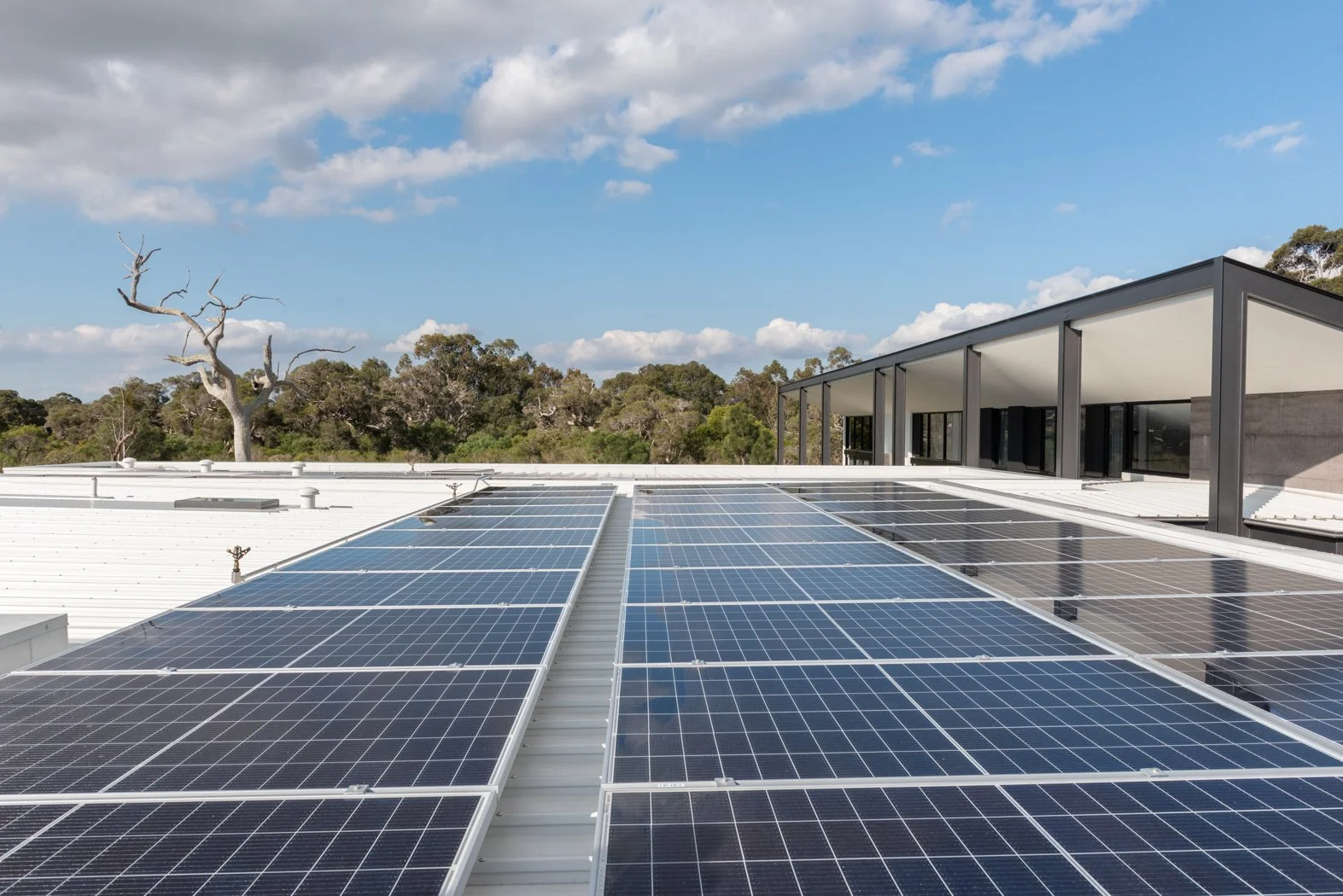
At Banjup, the family opted for 10kW panels and a 10kW battery.
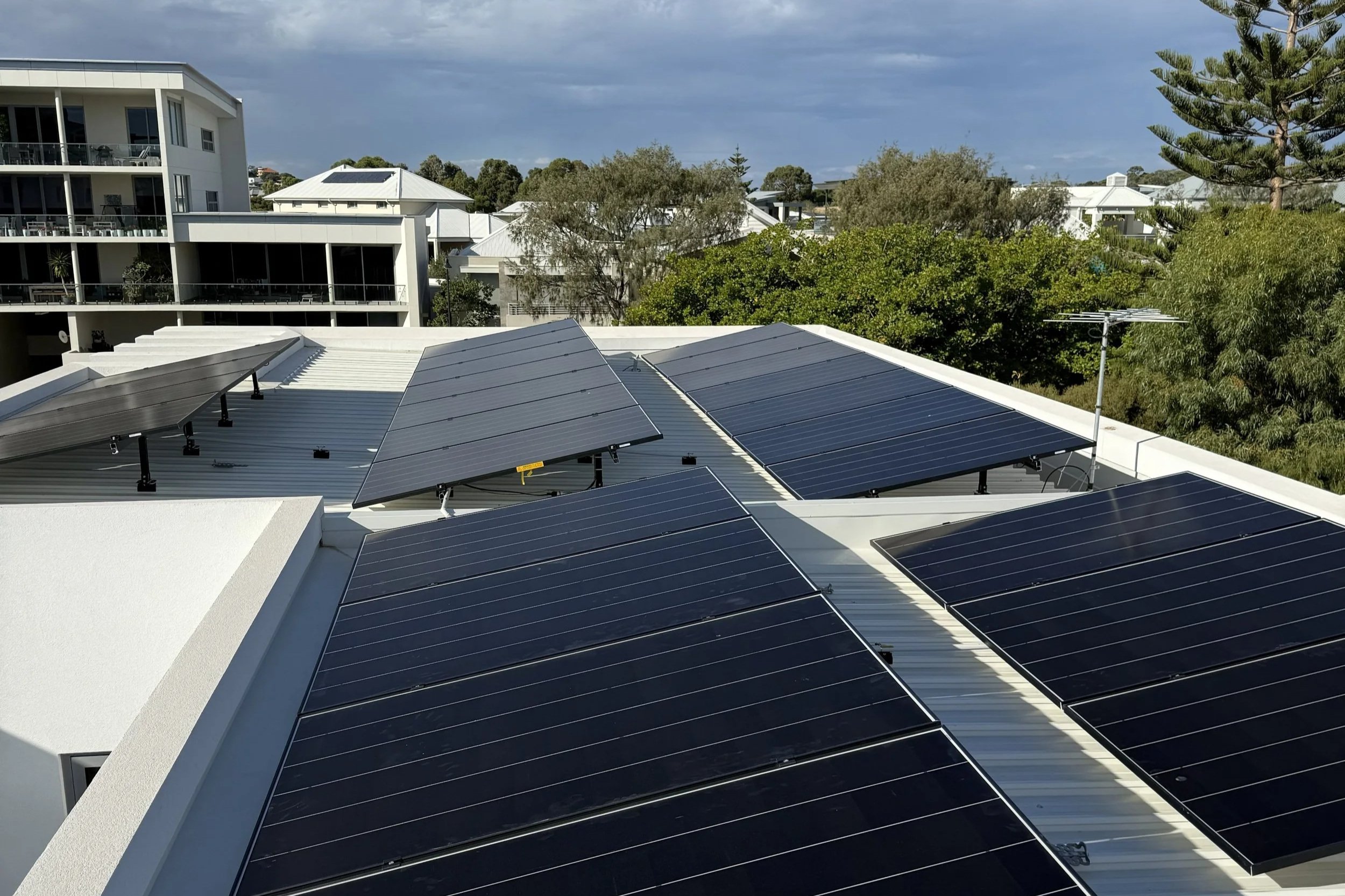
Happy to feed energy back into the grid, our North Coogee clients maximised their solar with 18.6kW of panels and a 40kW battery.
EDIBLE GARDEN
Last, but far from least, is an edible garden. If you have the space, an edible garden can significantly reduce your reliance on groceries—the cost and availability of which are heavily impacted by fuel and global supply chains. It’s also better for the environment, especially if watered with treated greywater. And that’s not even mentioning how much nicer your meals will be with fresh vegetables straight from the garden.
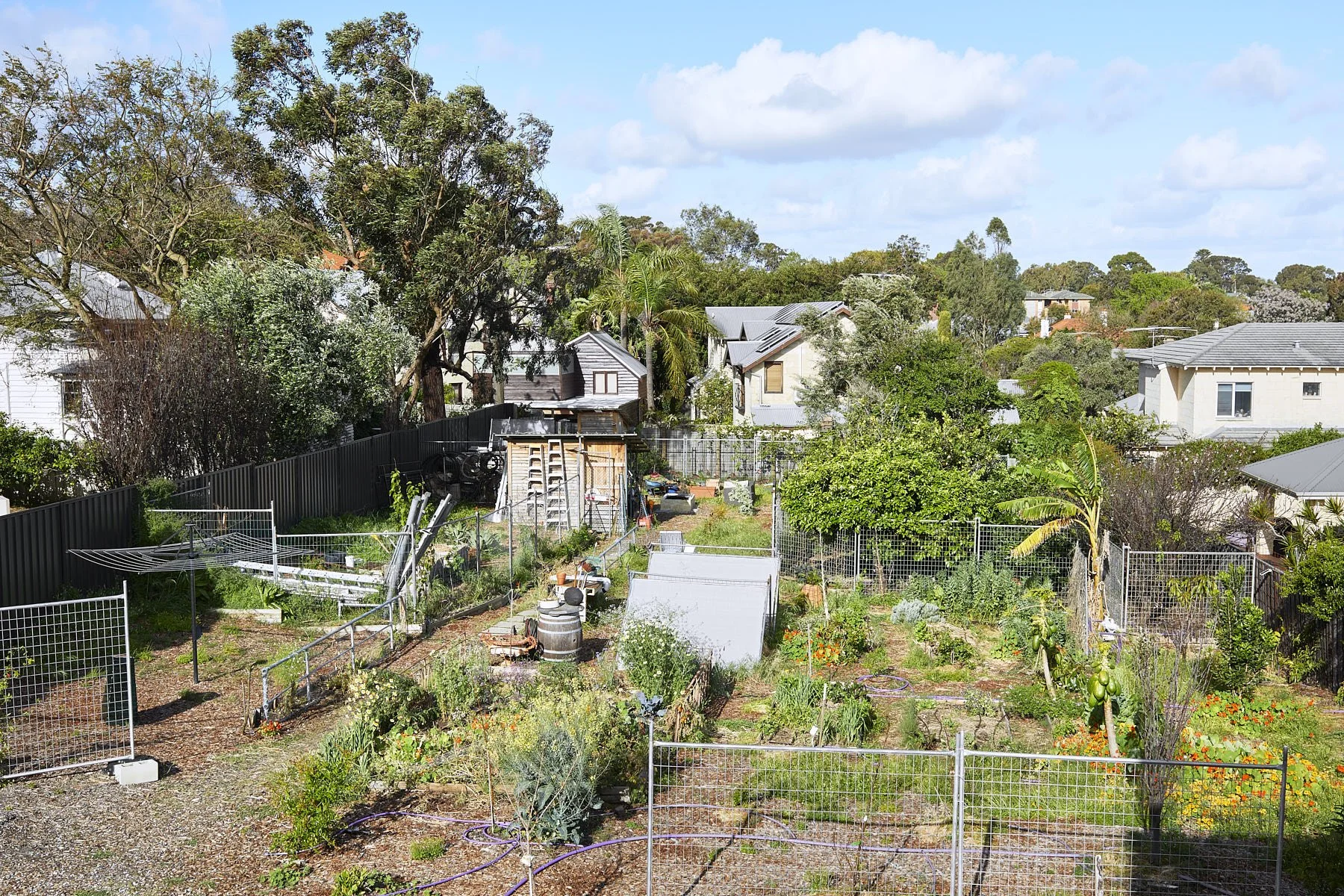
Our East Fremantle clients rely on their garden for most of their food.
Keen to explore how you can integrate self-sufficiency and off-grid living solutions into your design? Get in touch.