
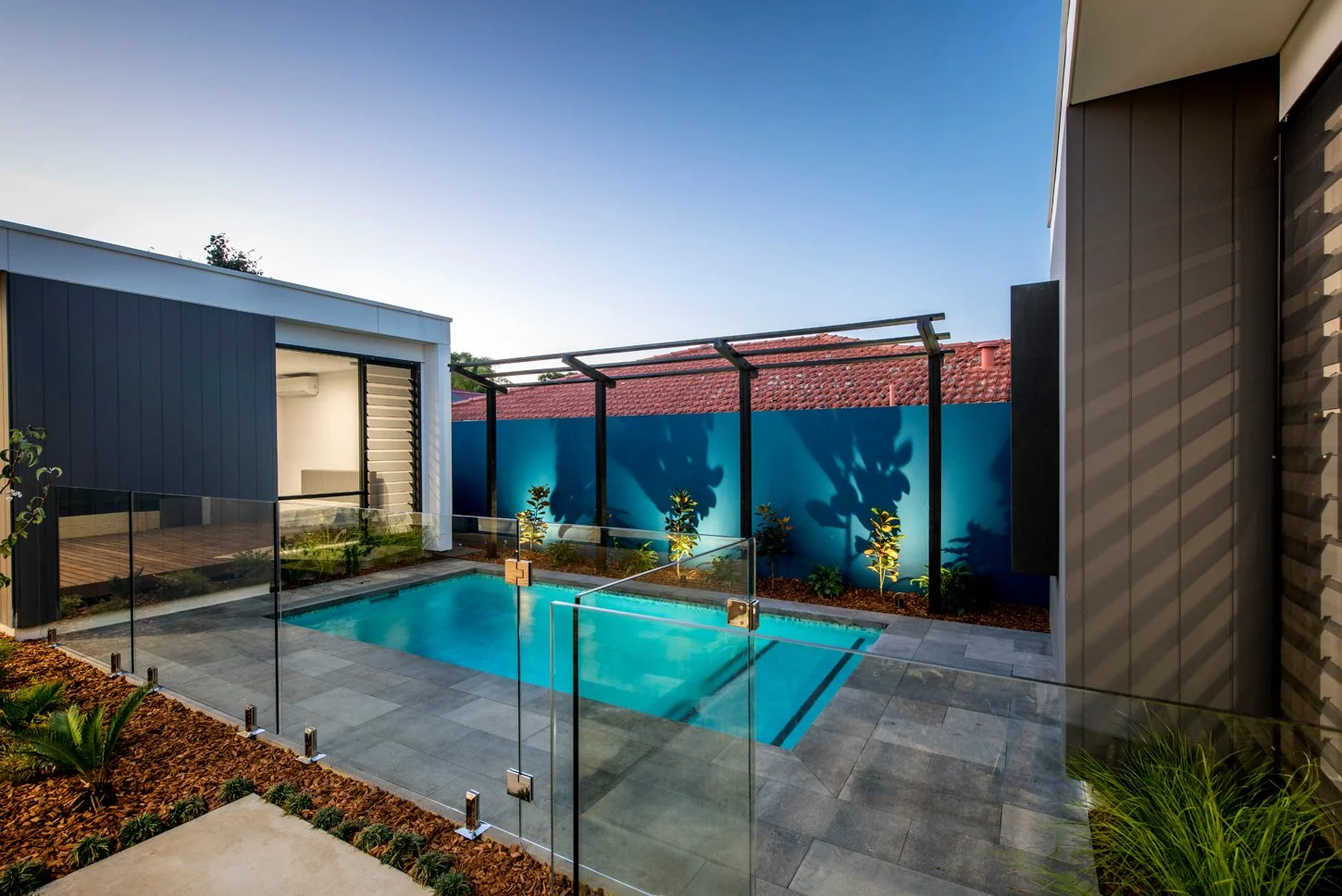
In a city that gets as scorching hot as Perth, a private pool can be a gamechanger. But if you’re able to have one, how do you choose what type is the most suited to your needs? To help you with this decision, let’s take a look at the key differences between the three most common types: concrete, fibreglass and blockwork.
CONCRETE
Concrete pools are one of the most durable, customisable options. They can withstand harsh temperatures and are well suited to temperate climates that see a wide range of weather conditions. They can be placed virtually anywhere, including both above-ground and in-ground, or even against a house. They’re also highly customisable, which allows for seamless integration with the home and landscape design. They can be designed to any size or shape, with the option for additional features like waterfalls, vanishing edges, or creative lighting solutions. A wide variety of interior finishes are also available, including plaster, aggregate and tile.
On the negative side of things, concrete pools do tend to be more expensive and require more maintenance over time. Regular cleaning and more chemicals are needed to prevent algae growth, and resurfacing is needed every 10-20 years as it can be prone to cracks and staining.
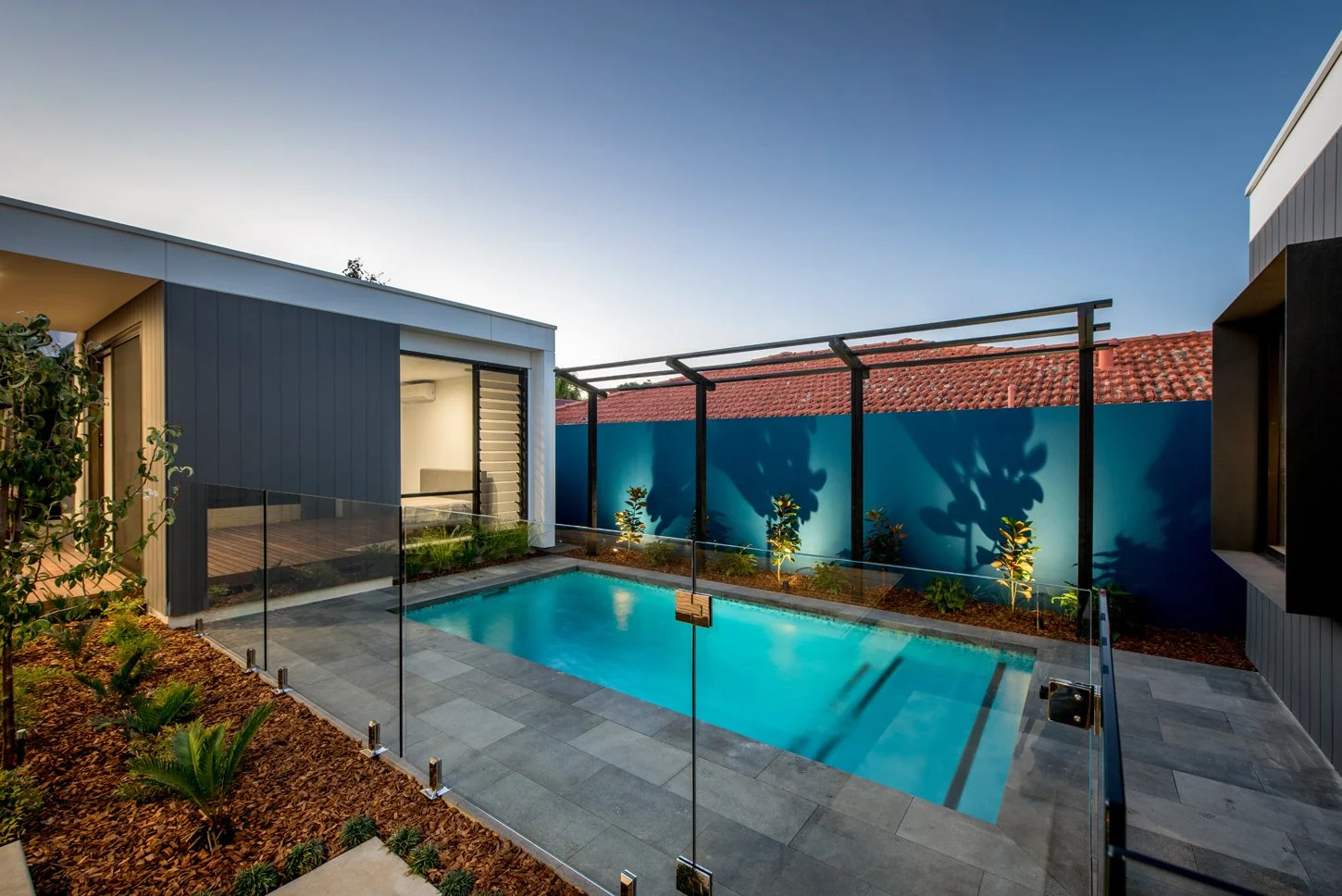
A concrete pool at our Melville project.
Building process
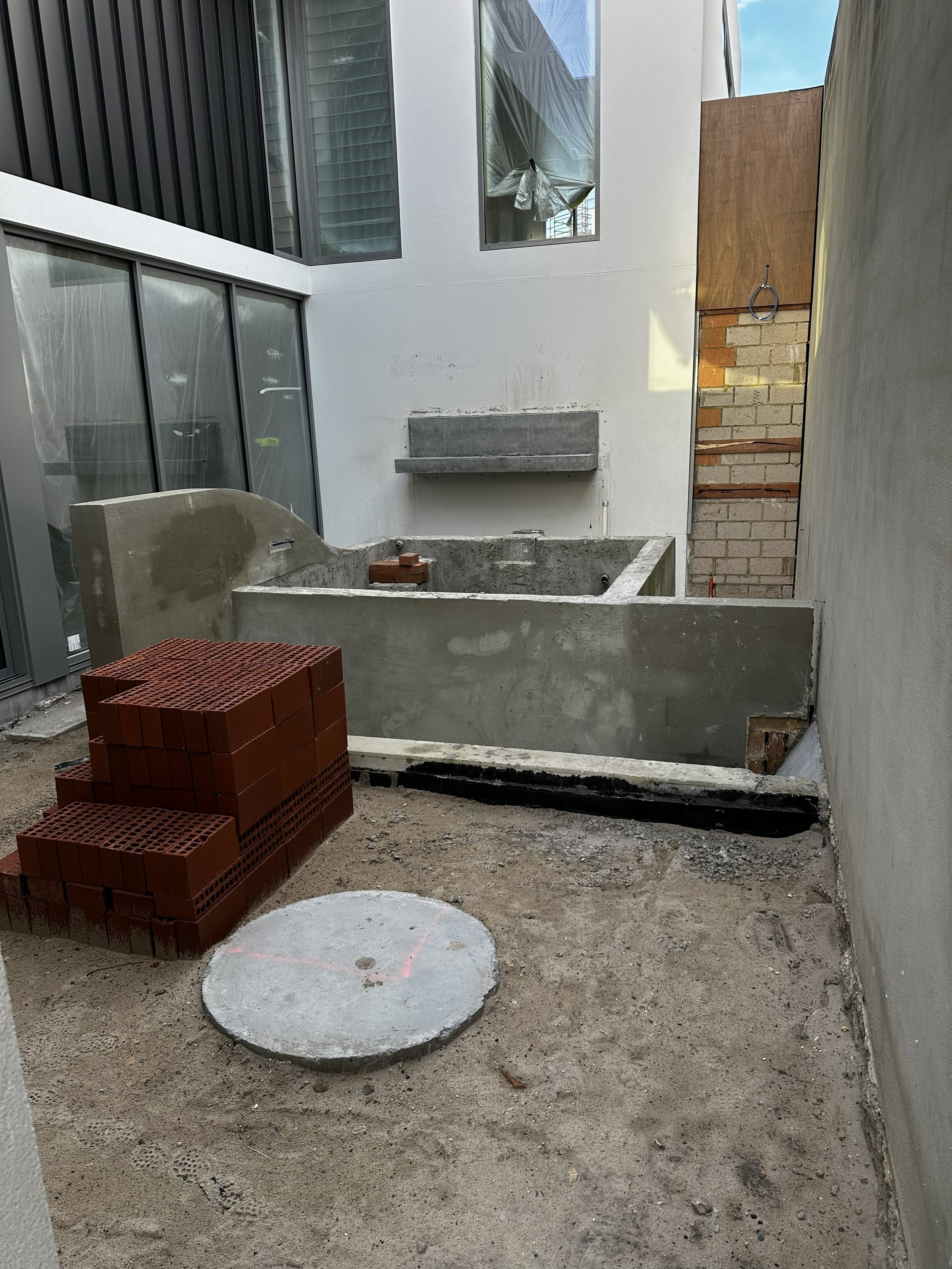
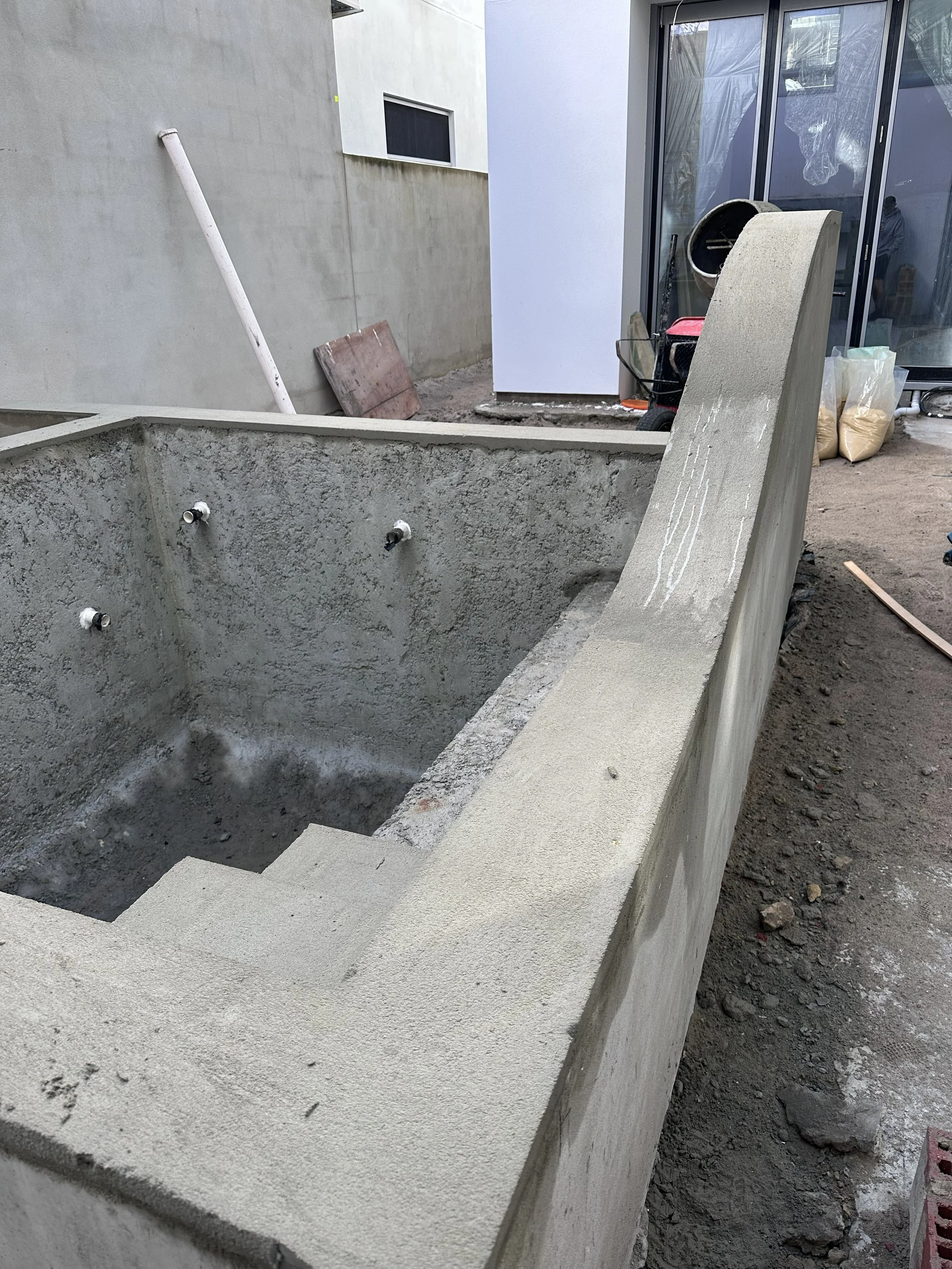
Concrete pools are usually engineered specifically for the site. As such, they usually need to be built on-site, although pre-cast options are available if structural integrity is less of a concern. Construction involves excavating the hole for the pool and building steel formwork that acts as a frame for the concrete. Plumbing and services need to be pre-laid before concrete is sprayed under high pressure and trowelled to form a smooth surface. All of this usually takes a week or two, although the concrete then needs to cure for around thirty days. It’s best to complete this shell at the start of the build when there’s plenty of room on site. The pool can then be covered (with a load-bearing surface for safety) during the rest of construction. The interior finishes, which are more delicate, should be applied at the very end of the build followed by the water.
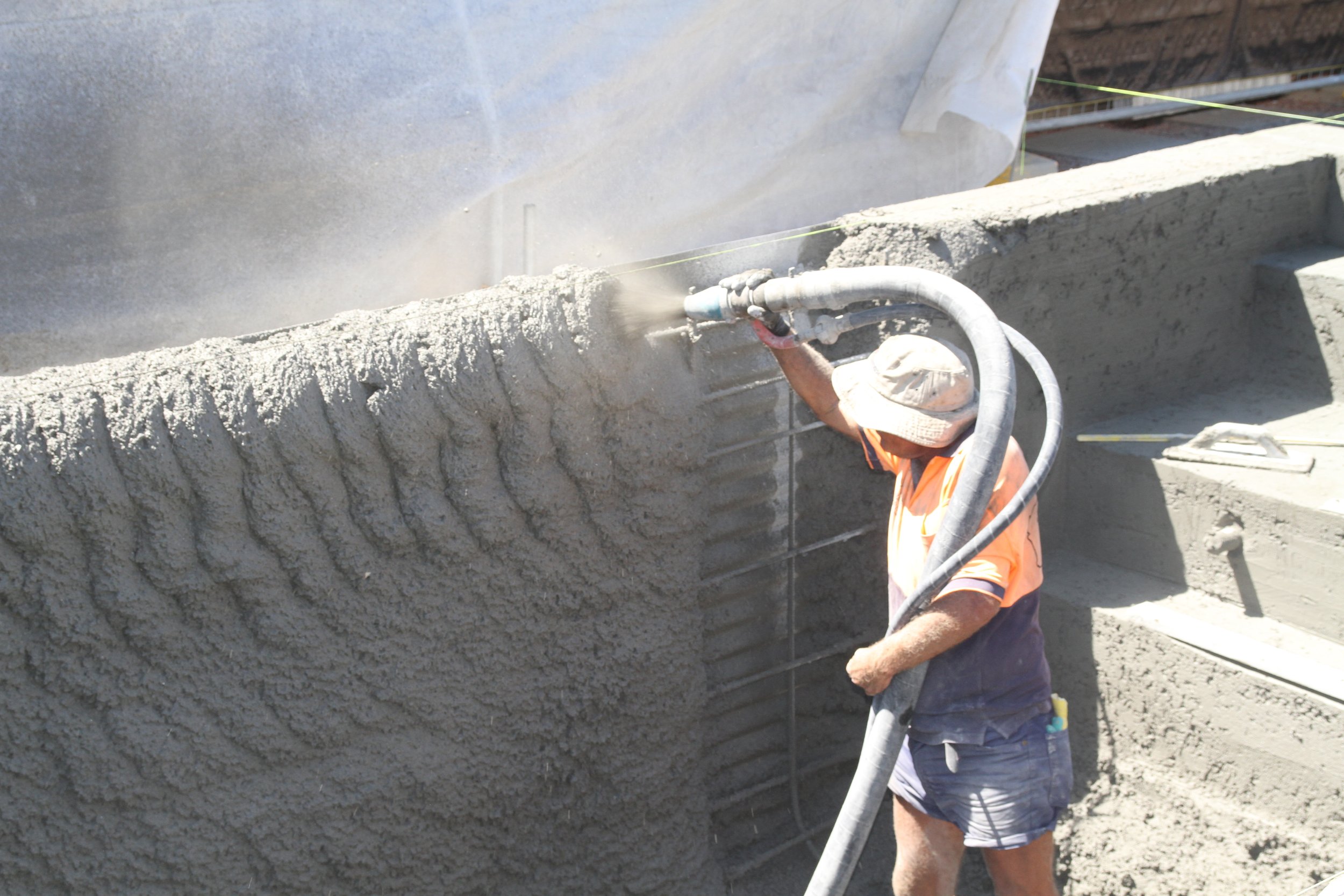
Concrete being sprayed over the formwork.
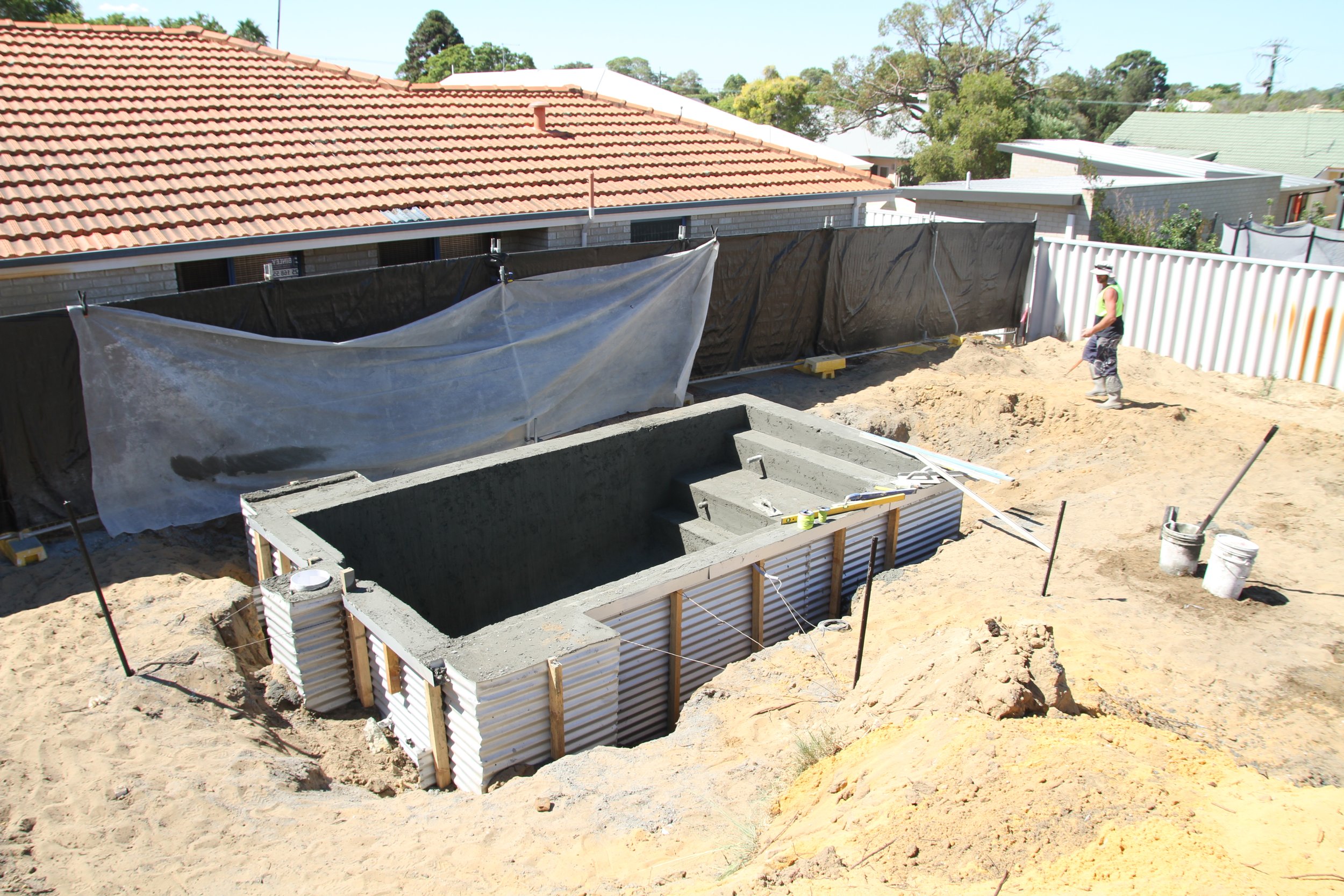
Ready to cure.
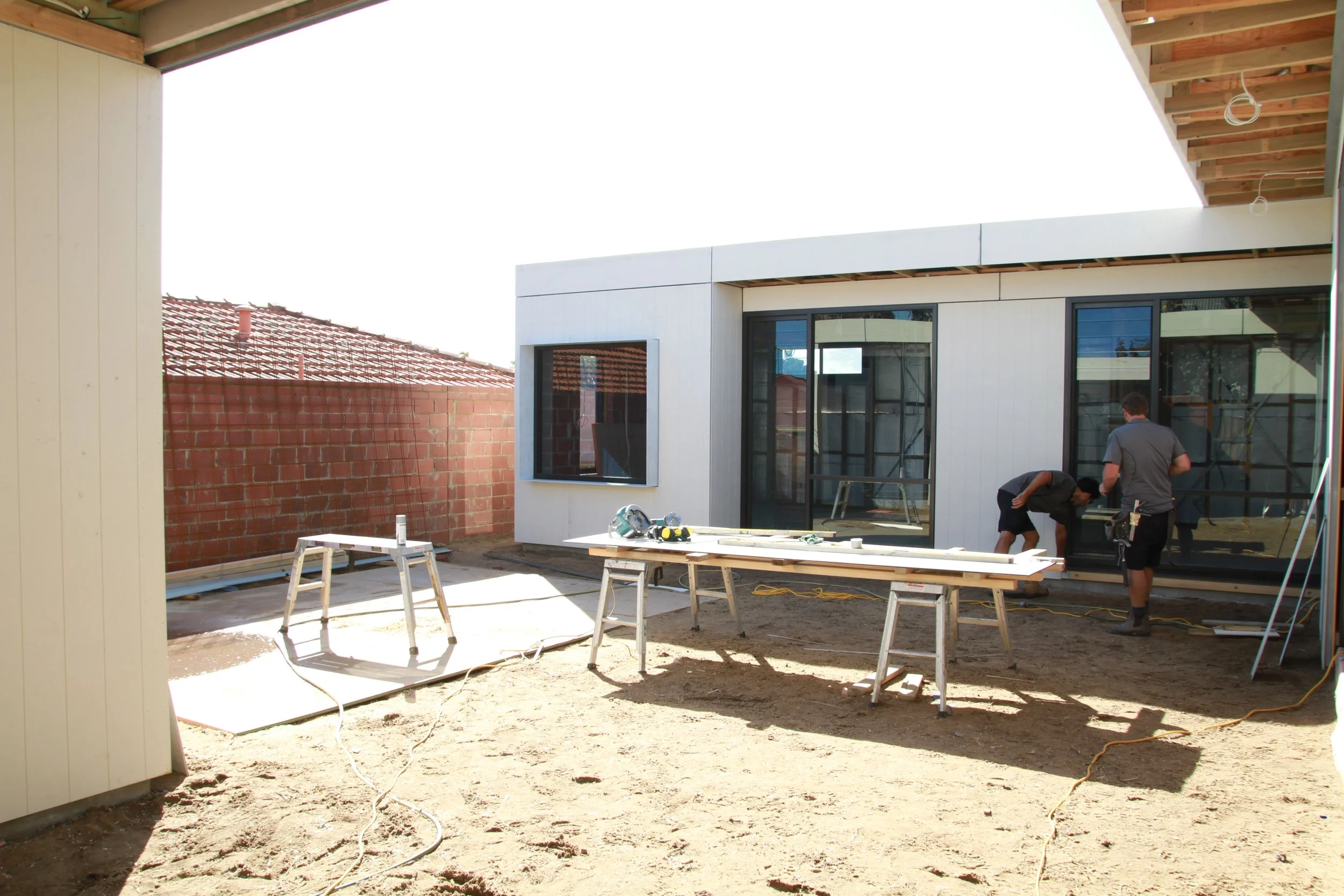
Covered up while the house is constructed.
FIBREGLASS
Fibreglass pools are generally the most affordable option, both upfront and in the long term. They need fewer chemicals and heated options use less energy as they hold heat better. They also need the least amount of maintenance and less frequent cleaning.
The design options for fibreglass pools are, however, significantly more limited and, as such, they can be more difficult to tie-in with the rest of the project. While they come in a variety of shapes and sizes, these are limited to what’s offered by the supplier. They also have very little structural integrity; they can’t be used above-ground and generally need to be installed away from any structures that place extra pressure on the soil—usually a bit further than the pool is in depth. To install one closer to the house, an additional retaining wall will be necessary, which can significantly increase costs.
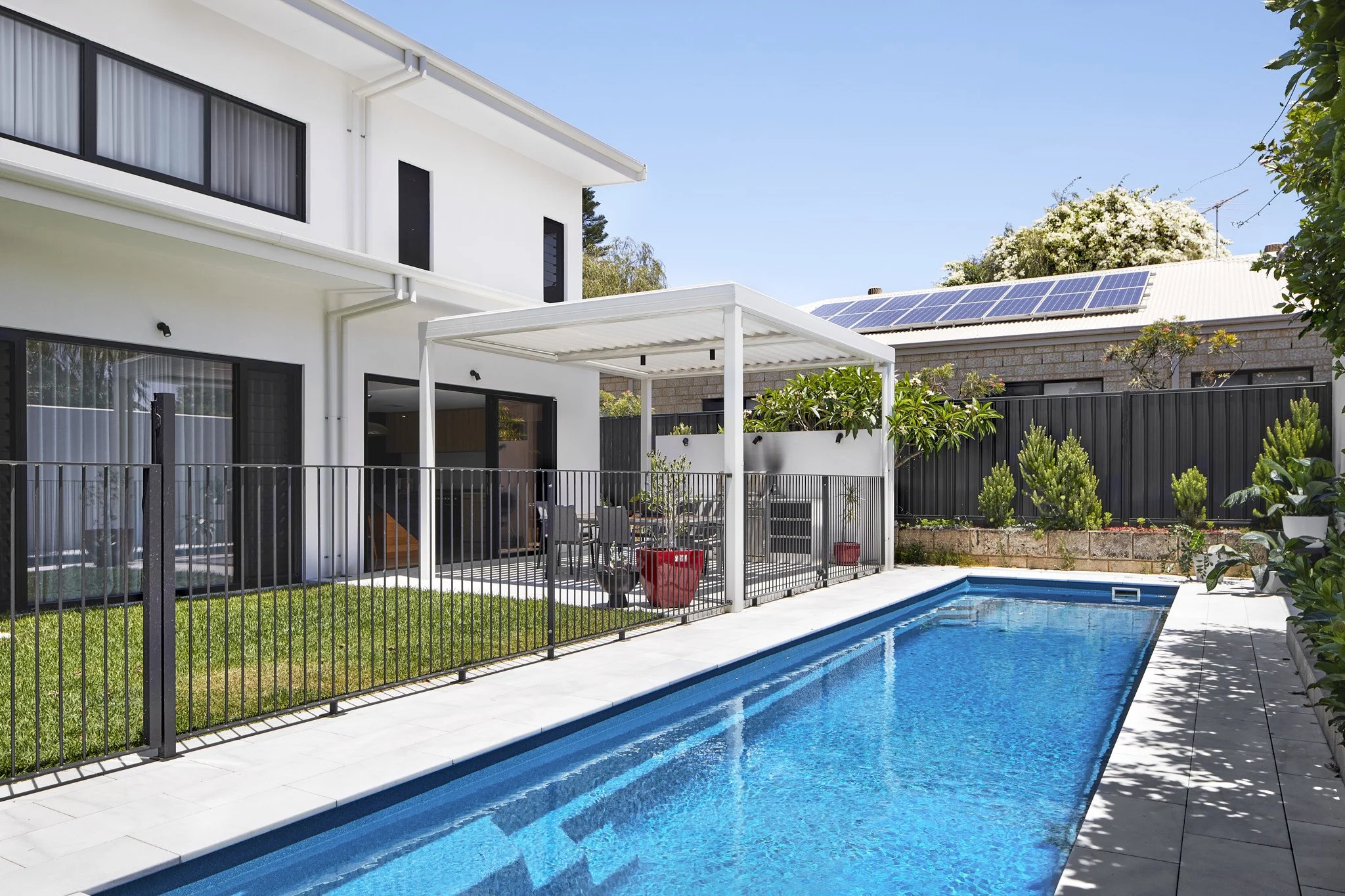
Fibreglass at our Attadale project.
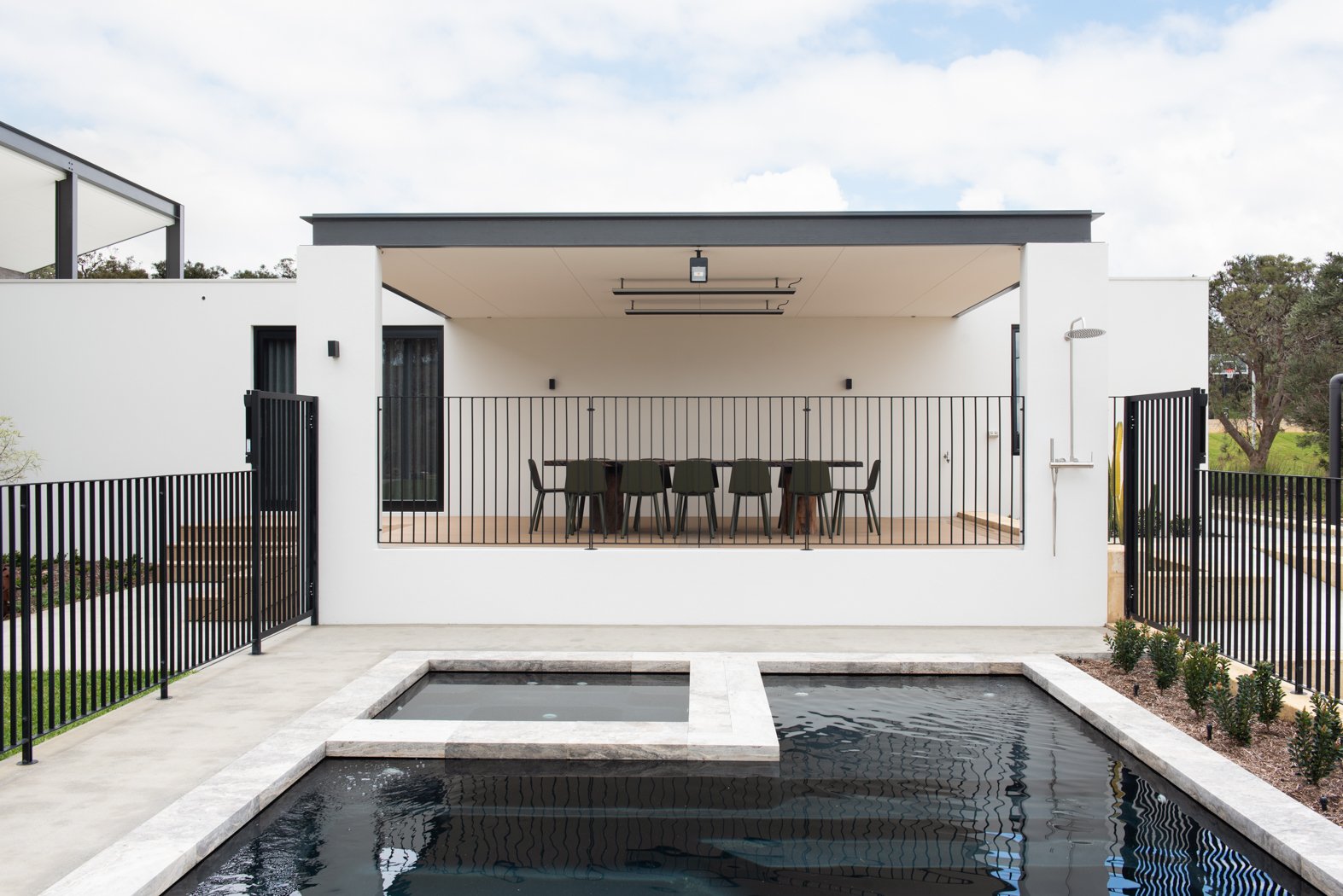
Fibreglass at our Banjup project.
Building process
Pre-made off site, fibreglass pools are very quick to install. A hole, slightly larger than the size of the pool, is excavated and the pool shell placed inside with a crane. The hole is then gradually backfilled at the same time as the pool is filled with water, to ensure it doesn’t collapse. As fibreglass pools are more fragile, they’re best installed at the end of the build, although if there are access issues they can be installed earlier.
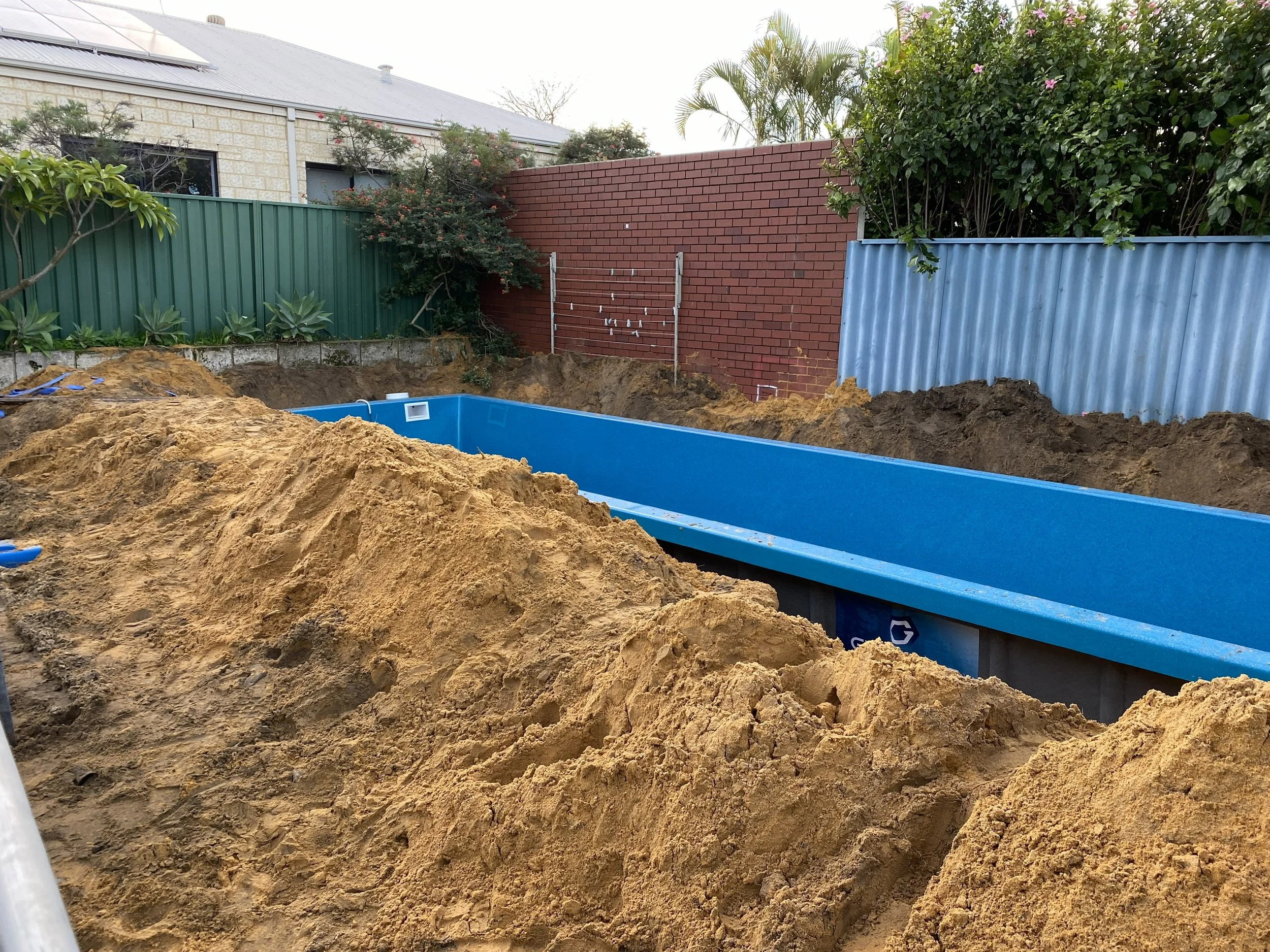
Fibreglass going in at Attadale.
BLOCKWORK
Blockwork pools are built with either bricks or concrete blocks that are filled with concrete for additional reinforcement. These are structural and can be built in-ground, above-ground and next to a house, but do need to be engineered specifically for the site. They can be designed to virtually any shape and size, although curves may be more difficult than with concrete.
While they can be very durable if built correctly, blockwork pools can have more weak points than concrete. This is because they’re made up of many individual blocks that can experience more movement if the foundations aren’t quite right or they’re not assembled properly. As such, blockwork pools are often stabilised with a vinyl liner which can also act as the finish. If stabilisation is less of a concern, they can also be finished with plaster or tile.
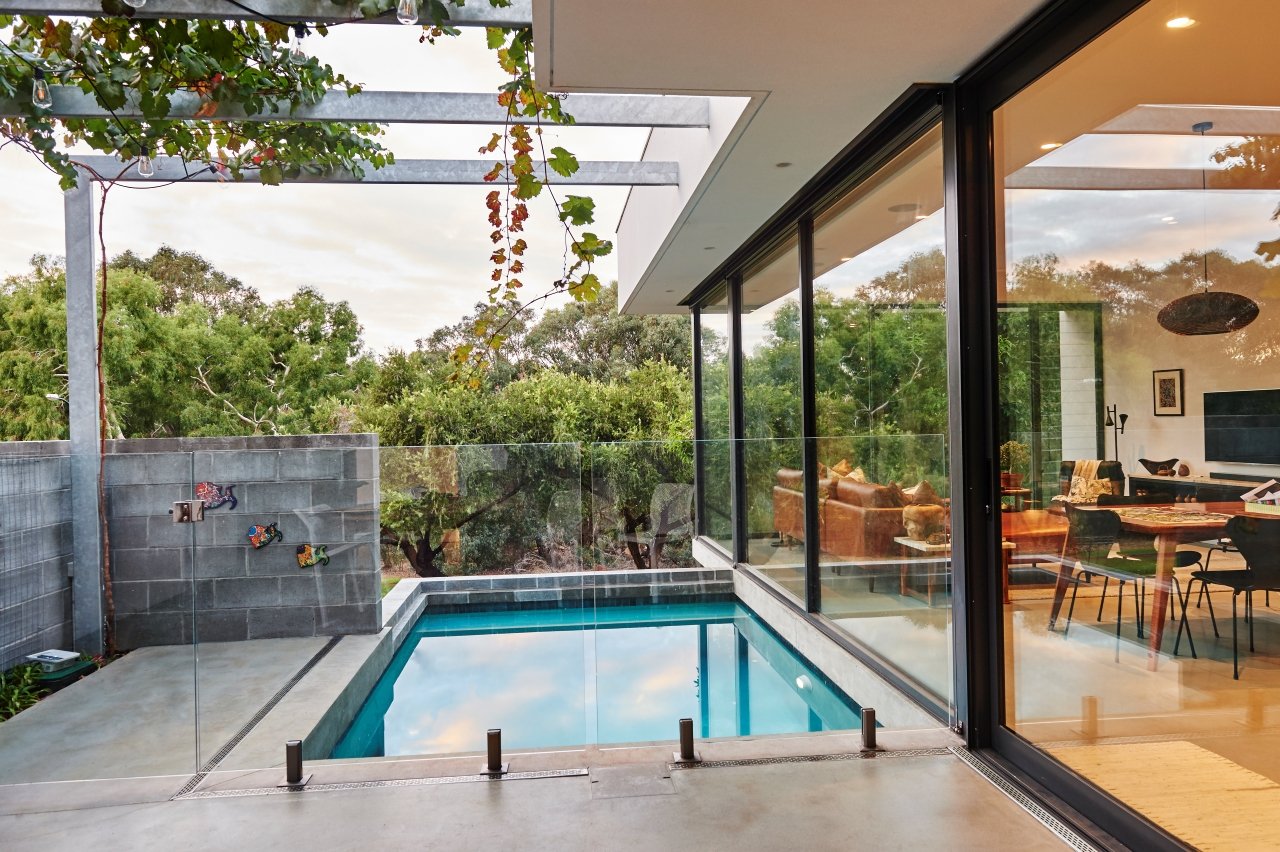
Concrete blockwork at Mount Pleasant.
Building process
Blockwork pools can take a significant amount of time to construct. The hole is excavated and a concrete slab is poured to create the pool floor. Brick or concrete blocks, with holes in the middle, are then built up to create the walls, and more concrete is poured into the holes for reinforcement. Once the concrete has cured, the finish can be applied and the pool filled with water. Like concrete, it’s best to build the shell at the start of the build but wait until the end to apply the finish.
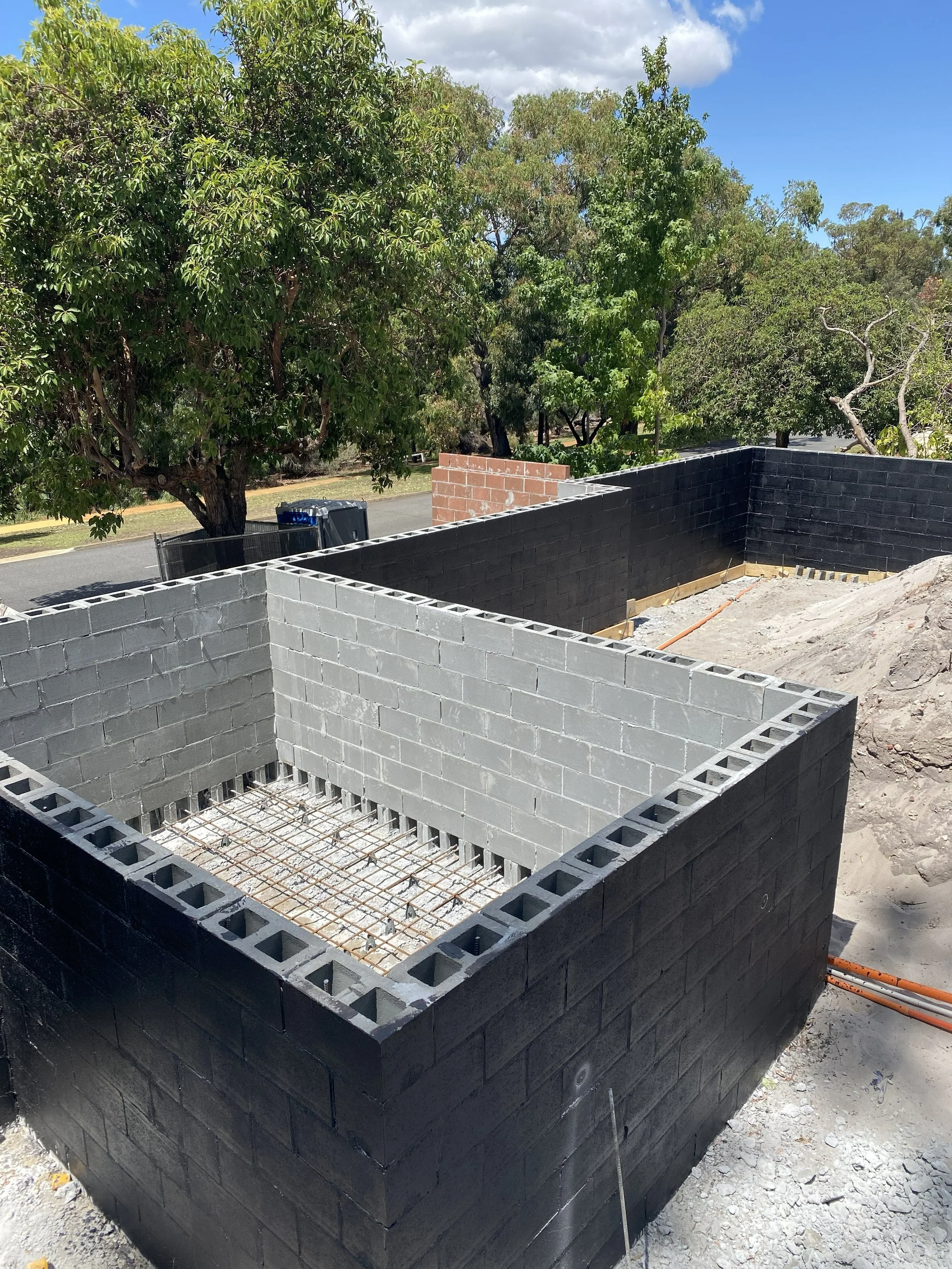
Concrete blockwork under construction at Mount Pleasant.
ADDITIONAL CONSIDERATIONS
Waterproofing
Different types of pools will have different waterproofing requirements. While fibreglass pools are already waterproof, concrete will need additional sealing (at the least) and blockwork will need full waterproofing. Reinforced liquid membranes are generally the best, as they’re more resistant to ground movement and UV, but specific requirements will vary depending on the chosen finish. Learn more about external waterproofing options here.
Retaining
In some cases, your pool may require additional retaining to ensure it doesn’t cave inward from the pressure of surrounding soil or collapse outwards from the pressure of the water. Concrete and blockwork pools rarely require additional retaining as these materials already have enough structural integrity. Fibreglass pools, on the other hand, will need retaining if they sit close to the house or something else that’s placing extra pressure on the surrounding soil. In this situation, mass retaining walls are generally the best, although other types can also be suitable. Learn more about retaining walls here.
It’s also critical to consider if the surrounding soil needs extra support during the excavation for the pool, even if it’s not required for the pool itself. If you’re over-excavating, a temporary retaining wall might be necessary. Alternatively, the soil can be injected with a stabilising binder, such as polyurethane resin or cement grout.
Building regulations
Due to the potential safety risks, pools have some strict regulations that you’ll need to be aware of. These can vary, so always check what’s required in your area, but there are a few of particular note.
Fences: All pools that are more than 300mm deep must have a safety barrier that’s at least 1.2m high. These must have gaps that are less than 100mm wide and self-closing gates that open away from the pool.
Climbing: A non-climbable zone of 900mm is also required around pool safety barriers. This means that no climbable objects, such as furniture and plants, are allowed near the fence. If your pool is near a boundary fence, this also includes anything on your neighbour’s property—in which case you’ll need to build something that blocks access from the neighbour’s side.
Pool covers: In some situations, a pool cover may be a requirement, but even if not it’s a good idea to invest in one. They can prevent debris build-up and significantly reduce evaporation, heating costs, and chemical use.
Want more advice on the best type of pool for your home design? Get in touch!