
INTRODUCTION
It’s not often that we get the opportunity to build with rammed earth. In this Cottesloe project, it’s taking centre stage—exactly as it should and also why we’re dropping in for a progress update a bit earlier than usual. It makes for a bit of a unique build, and we think that seeing the transition from where it is now to the finished product is going to be quite an impressive one.
THE DESIGN
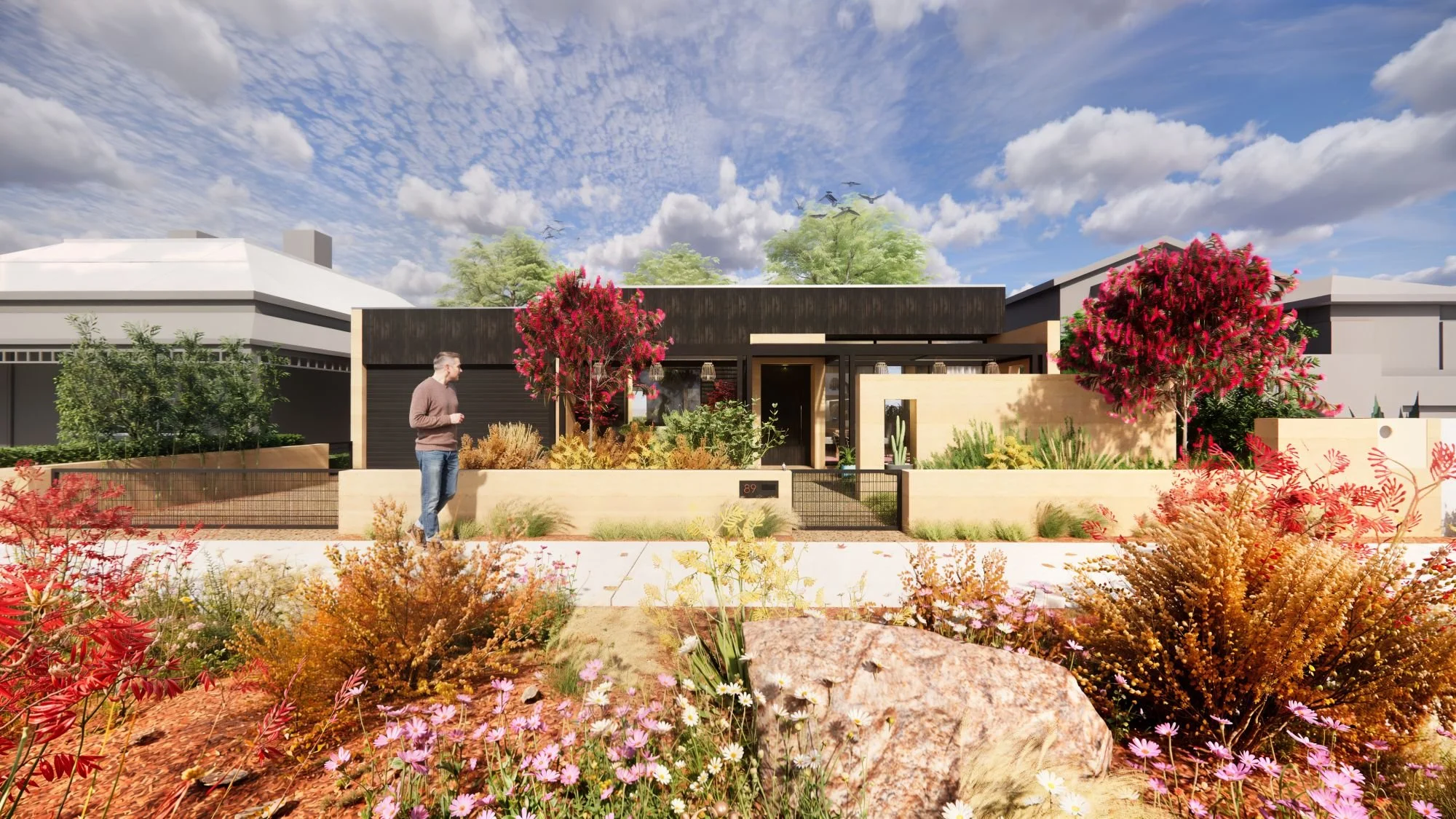
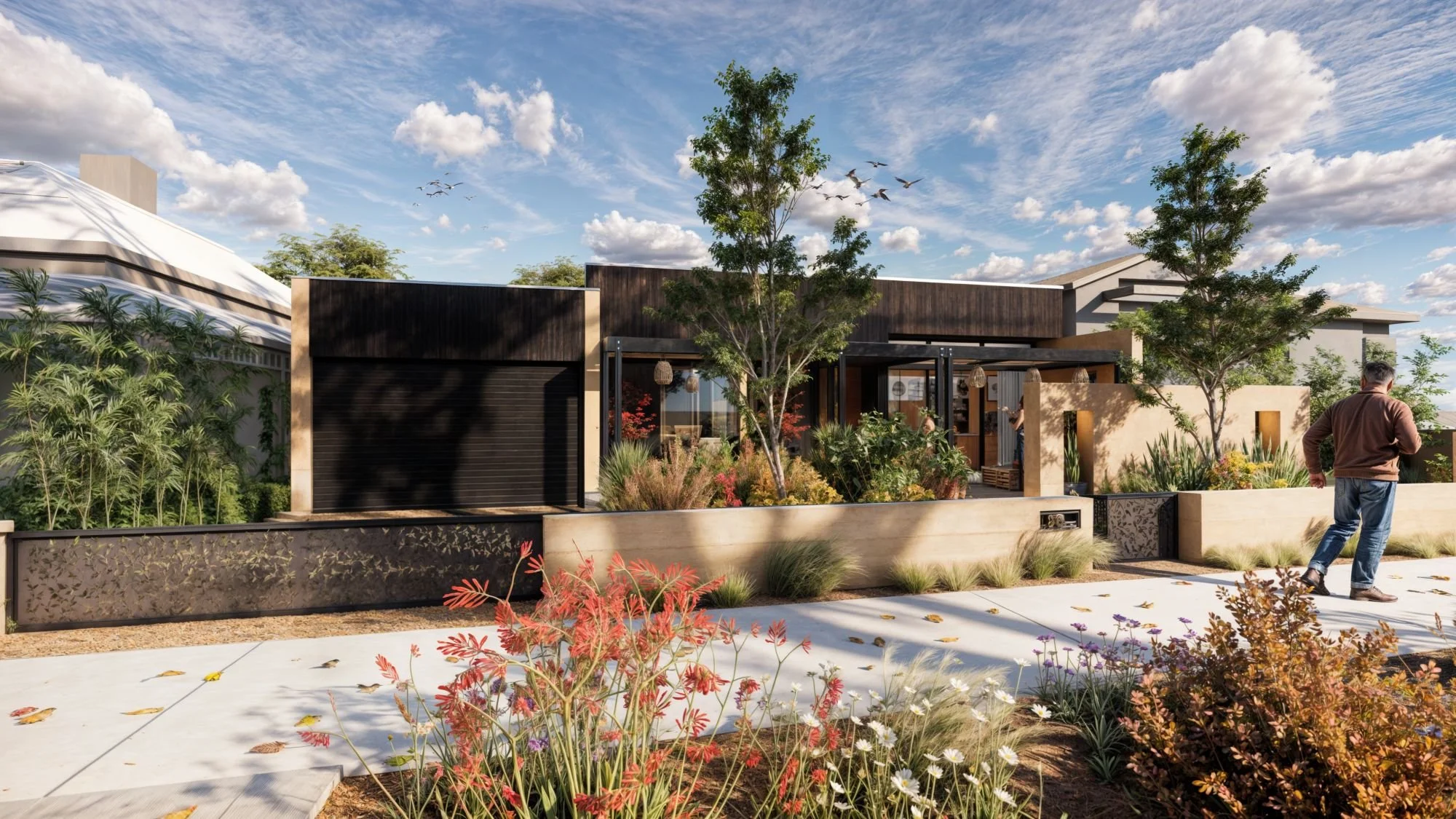
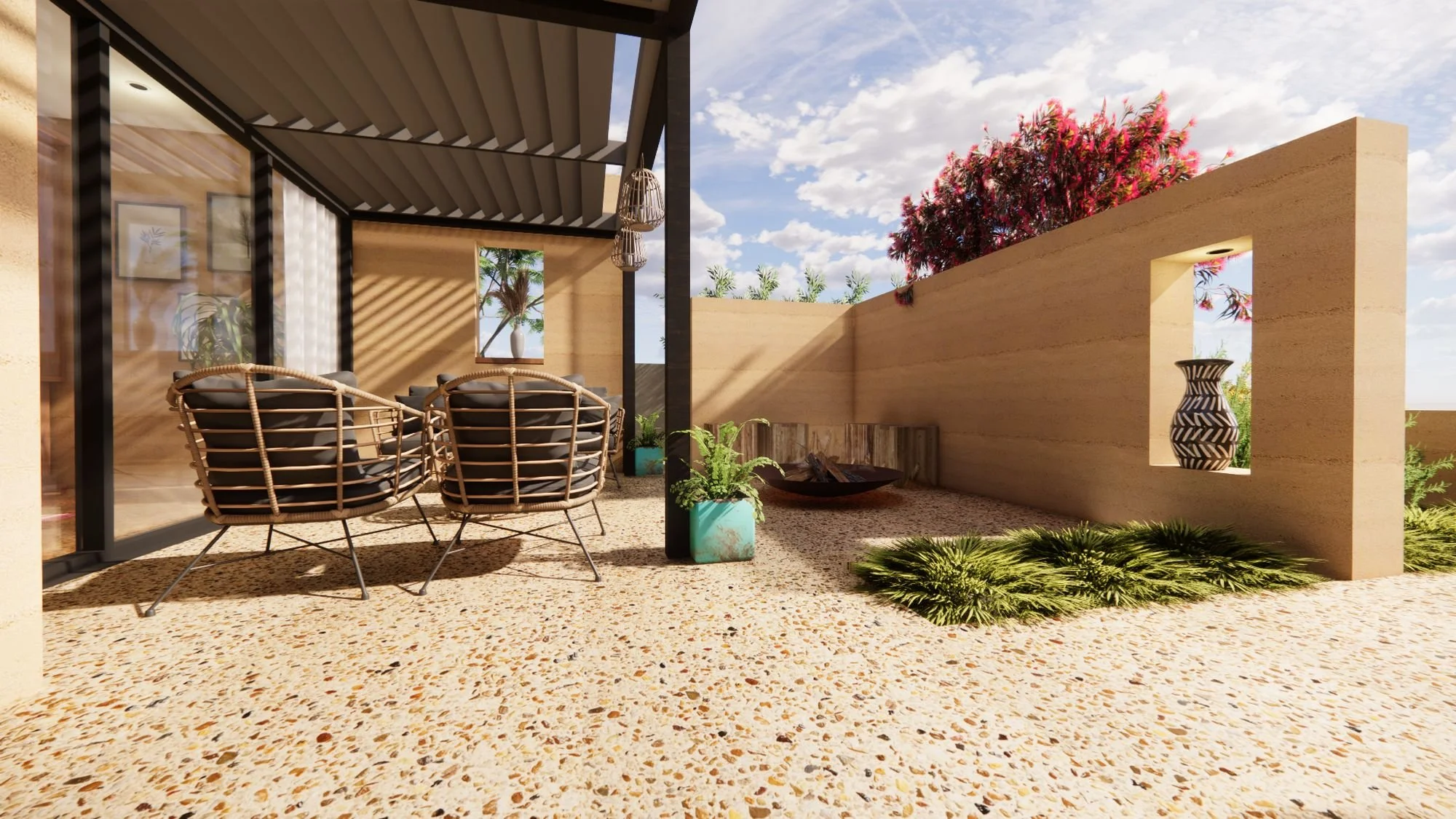
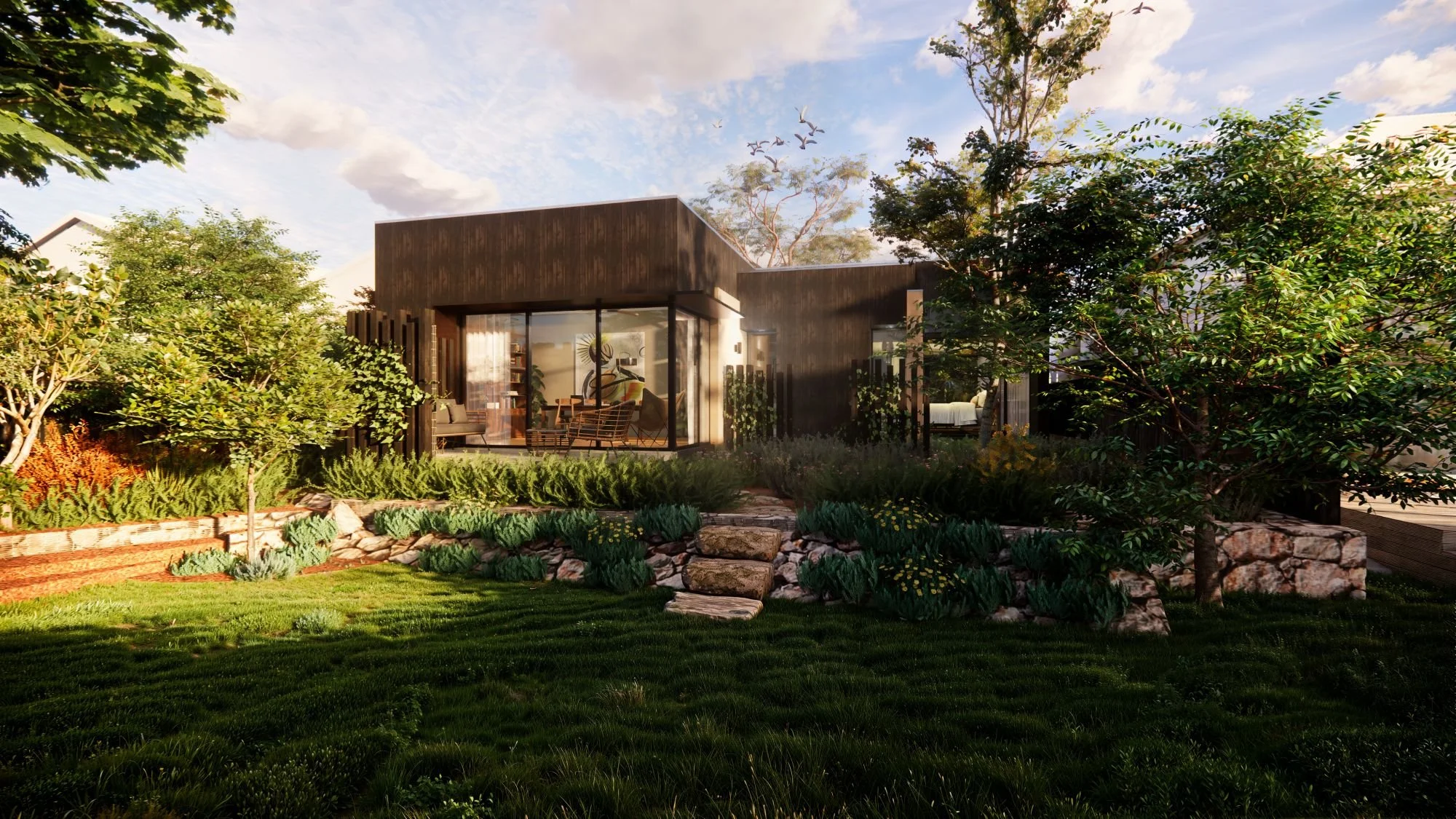
Thanks to a recommendation from one of the client’s friends, this home has been designed by the incredible John Damant from Arcologic. It’s centred around creating spaces where people can gather and spend hours on end—perfect for the client who bought the block to be closer to family and spend more time with the grandkids. Its three beds, two baths and open plan kitchen, living and dining all wrap around a well-sized internal courtyard where they can gather for dinners in the cool summer evenings. Out the back is a large existing garden complete with a mango tree. Materials have been chosen for their minimal maintenance and durability, featuring rammed limestone walls, Vulcan thermally modified timber, and polished concrete floors. The result, a gorgeous low-maintenance home that perfectly balances standout design with organic harmony.
CURRENT PROGRESS
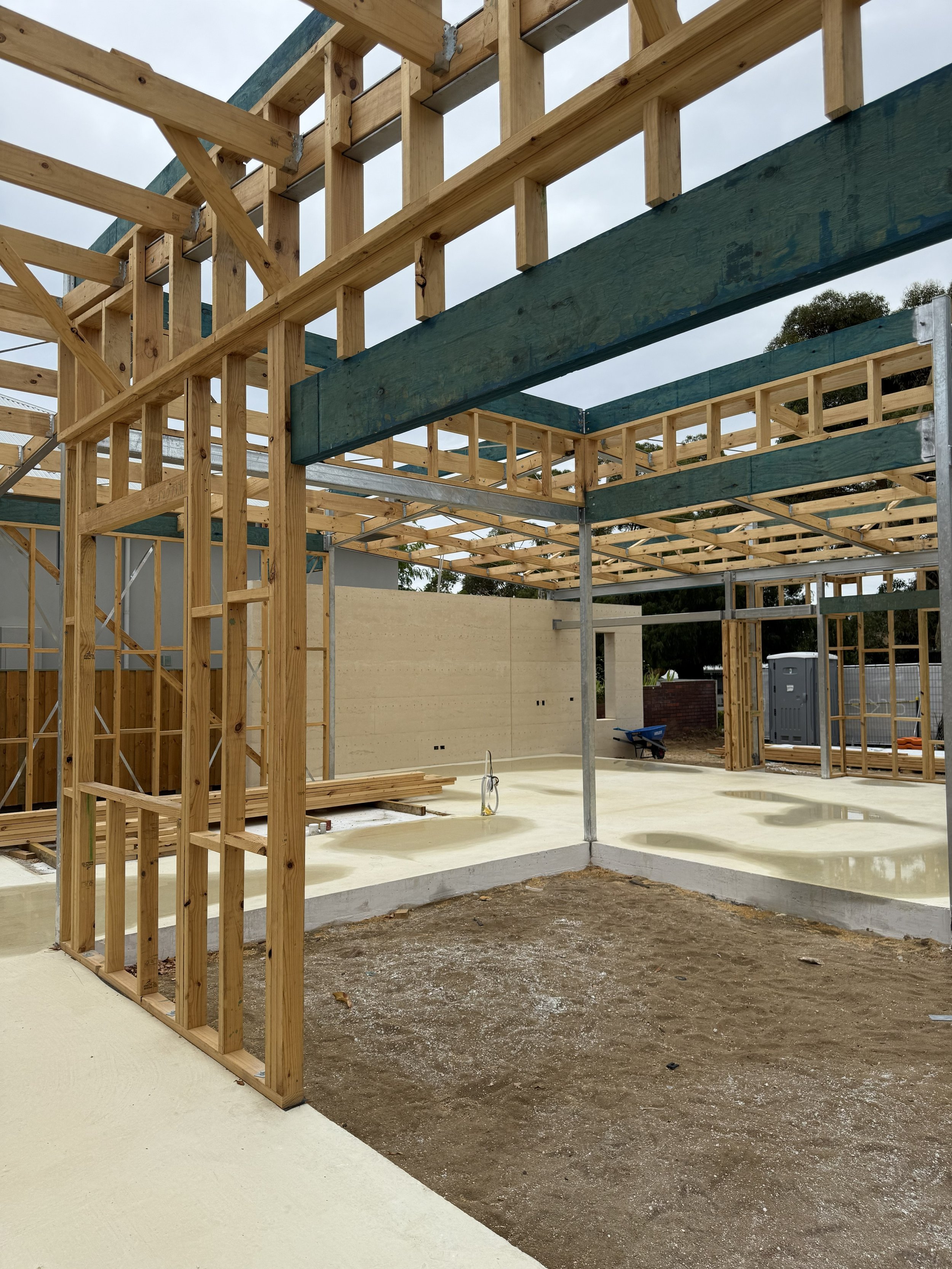
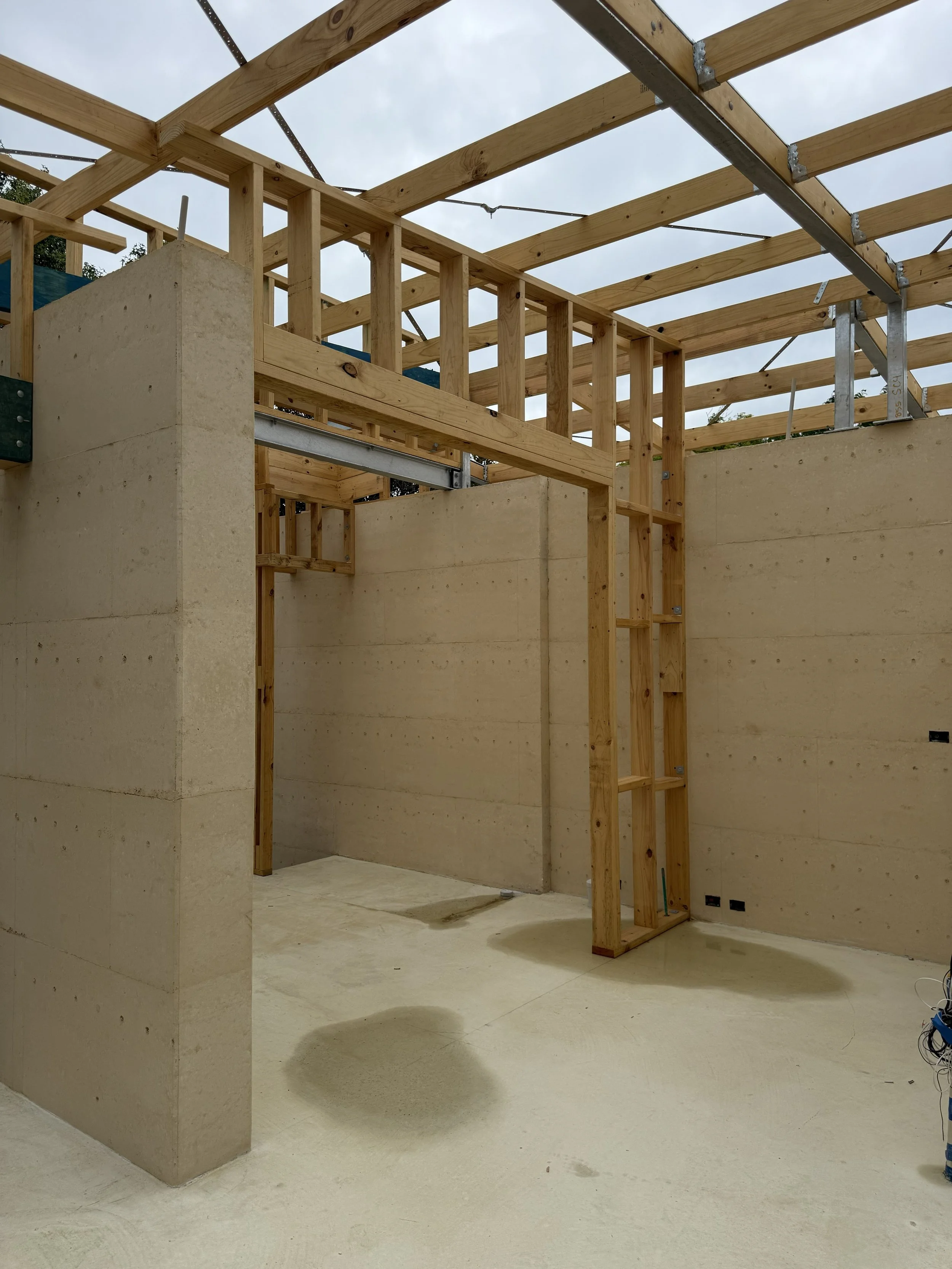
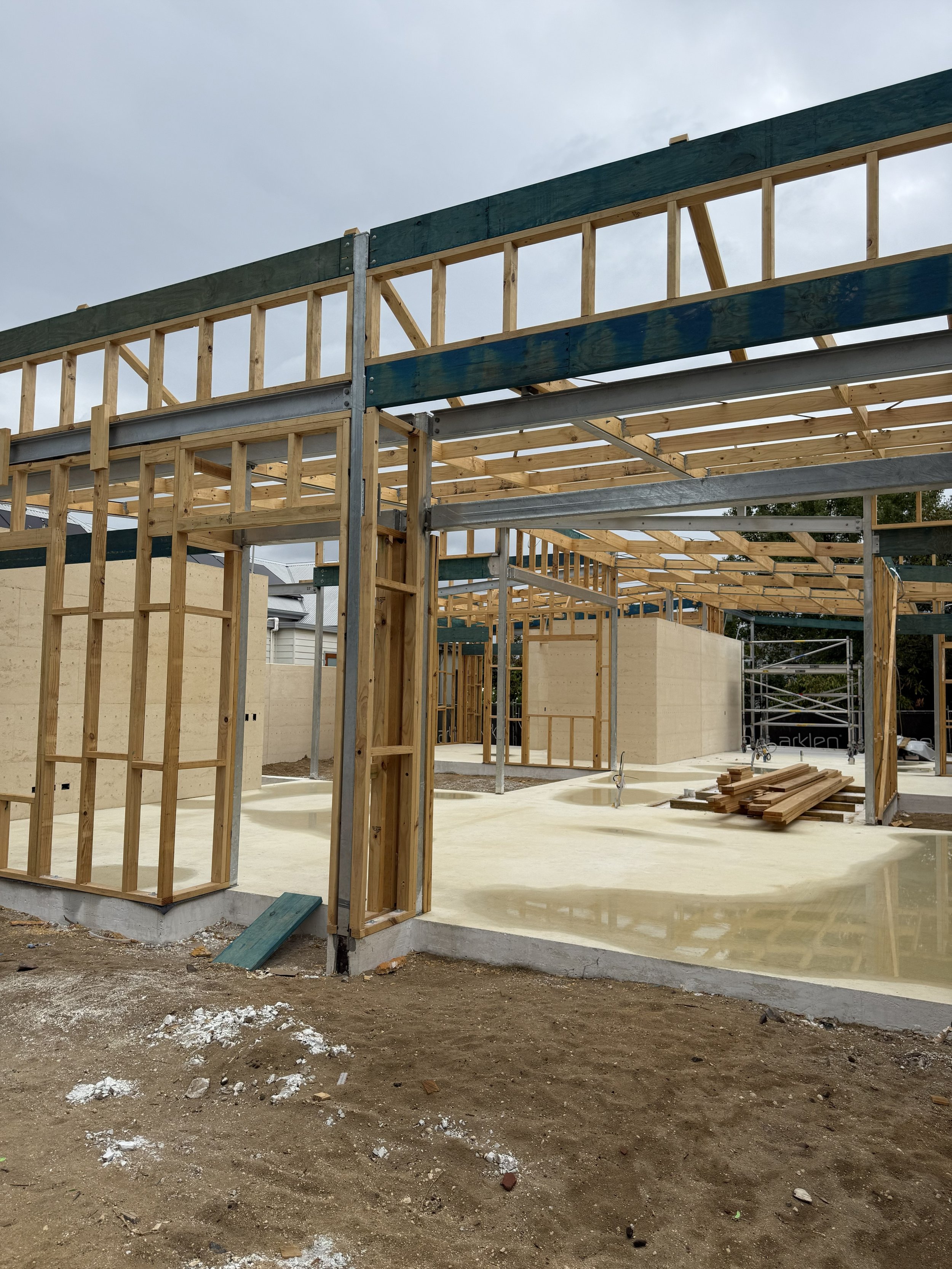
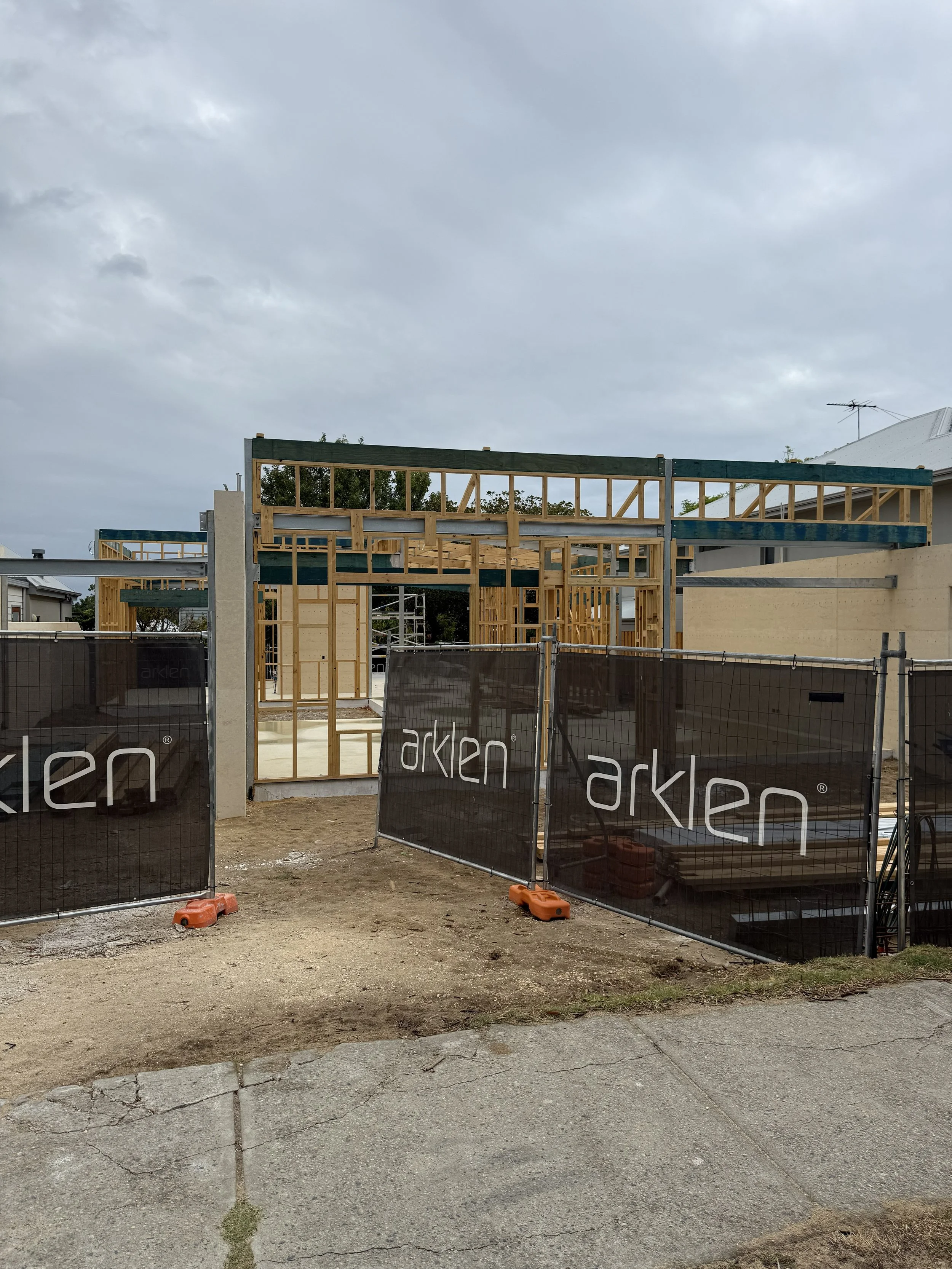
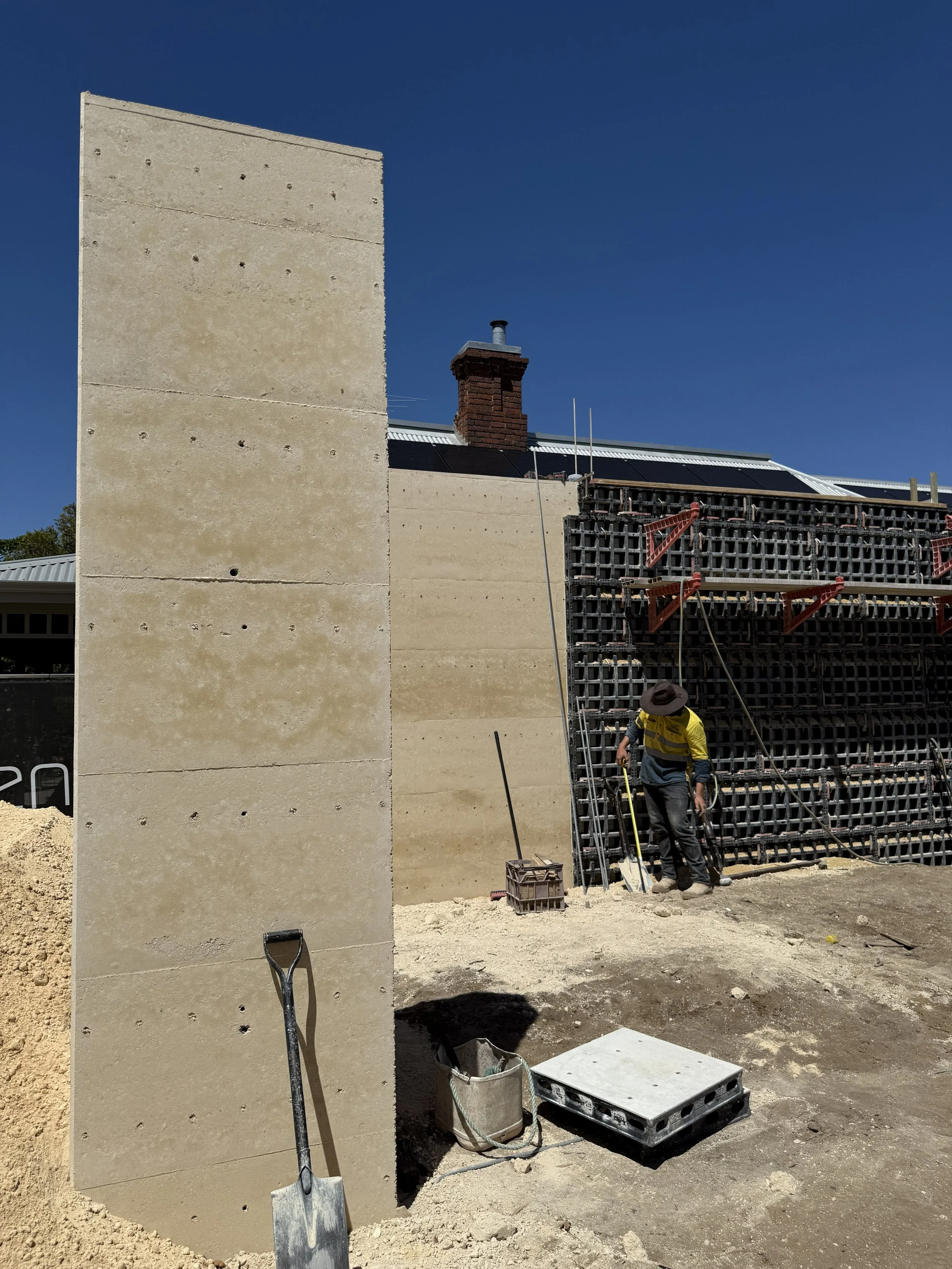
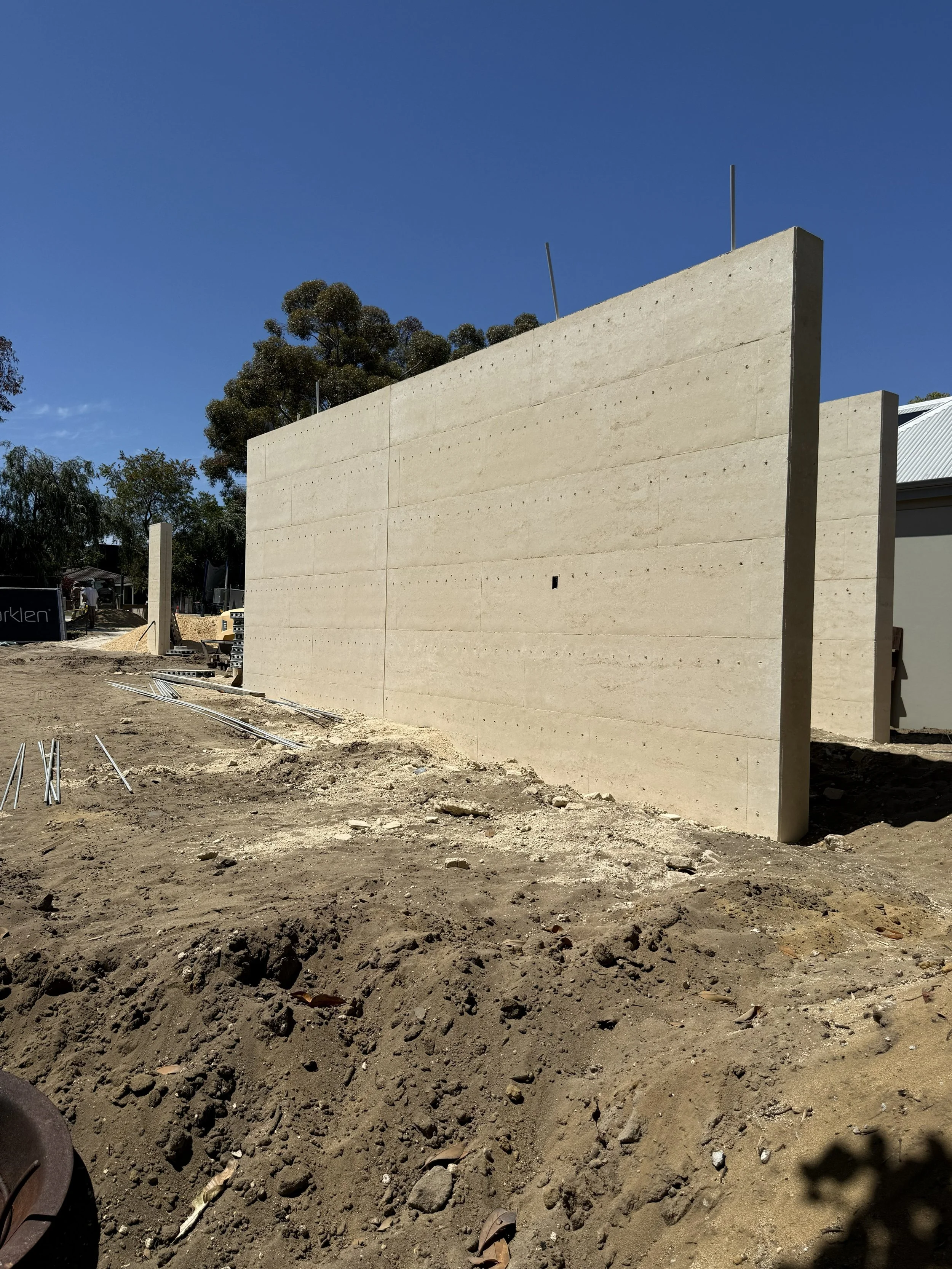
Having only started late last year, we’re still in the very early stages of this project. But with the rammed earth walls, we’re already getting a good insight into how the home will take shape. So far, we’ve demolished the original home, constructed the rammed earth walls, installed the structural steel and poured the concrete slab. Now, with the timber walls and roof framing well underway, we’re virtually halfway to lockup, when the major internal work will be able to begin.
A BIT ON RAMMED EARTH
Rammed earth is a construction technique that involves compacting a mix of raw materials, such as earth, sand, clay and gravel, to create a solid structure. For the most efficient build, it should be one of the first things to be constructed—resulting in some pretty impressive early stages. The main reason for this is to ensure there’s plenty of space for the formwork and scaffolding. The rammed earth also requires a fair bit of time to cure—usually from a month to six weeks—so the earlier this is done the better.
The material itself is pretty incredible, though. If recycled or locally sourced, it can be one of the most sustainable material options available. It’s also very durable and has the potential to last centuries with little to no maintenance. And, to top it off, its high thermal mass also makes it excellent at stabilising temperatures to reduce the need for electric heating and cooling. This, along with the Vulcan timber, has played a significant role in helping this home achieve a 7.9-star NatHERS rating.
If you’re keen to learn more about rammed earth, check out our deep-dive blog from early last year.
WHAT’S TO COME
Once we’ve finished with the wall and roof framing, our next steps will be to construct the internal brickwork and roof cover. We’ll then be able to start the external cladding and waterproofing ready for lockup. From there, we’ll still have quite a lot of work to do, with the electrical additions, plastering, and all the fixes and finishes to go. Closer to the end we’ll do the front fence, which will also be made of rammed earth. To ensure the colour of this fence remains consistent with the rest of the house, we’ve stored a portion of the original rammed earth mixture in our workshop.
Ultimately, there’s still a long way to go, but we’re already very excited about where it’s all going. We might bring you back for another look a bit later down the line, otherwise we look forward to updating you with the project spotlight as soon as we can! As always, if you’re looking for a builder or have any questions, feel free to get in touch.