

Window coverings can have a huge impact on home design. Aesthetically, they have the ability to completely transform a room, while functionally they can play an important role in privacy, light control and insulation. Planning your window coverings involves a lot more than simply choosing your preferred style, though. To ensure a smooth construction process that allows you to get the results you want, there are some important things to consider.
BLINDS, CURTAINS OR BOTH
Before getting into the technical side of things, let’s first have a quick look at some of the different window covering options.
Blinds
Blinds, such as venetian, vertical and roller blinds, generally offer a more sleek, modern design aesthetic. They’re more durable, easy to clean, and resistant to moths and moisture, making them ideal for kitchens and bathrooms. Venetian and vertical blinds are particularly good for light control, with slats that can be adjusted to filter light as much or as little as desired. In living rooms, or spaces with uninterrupted views, roller blinds are the most common choice as they can be recessed into the ceiling to disappear completely when not in use.
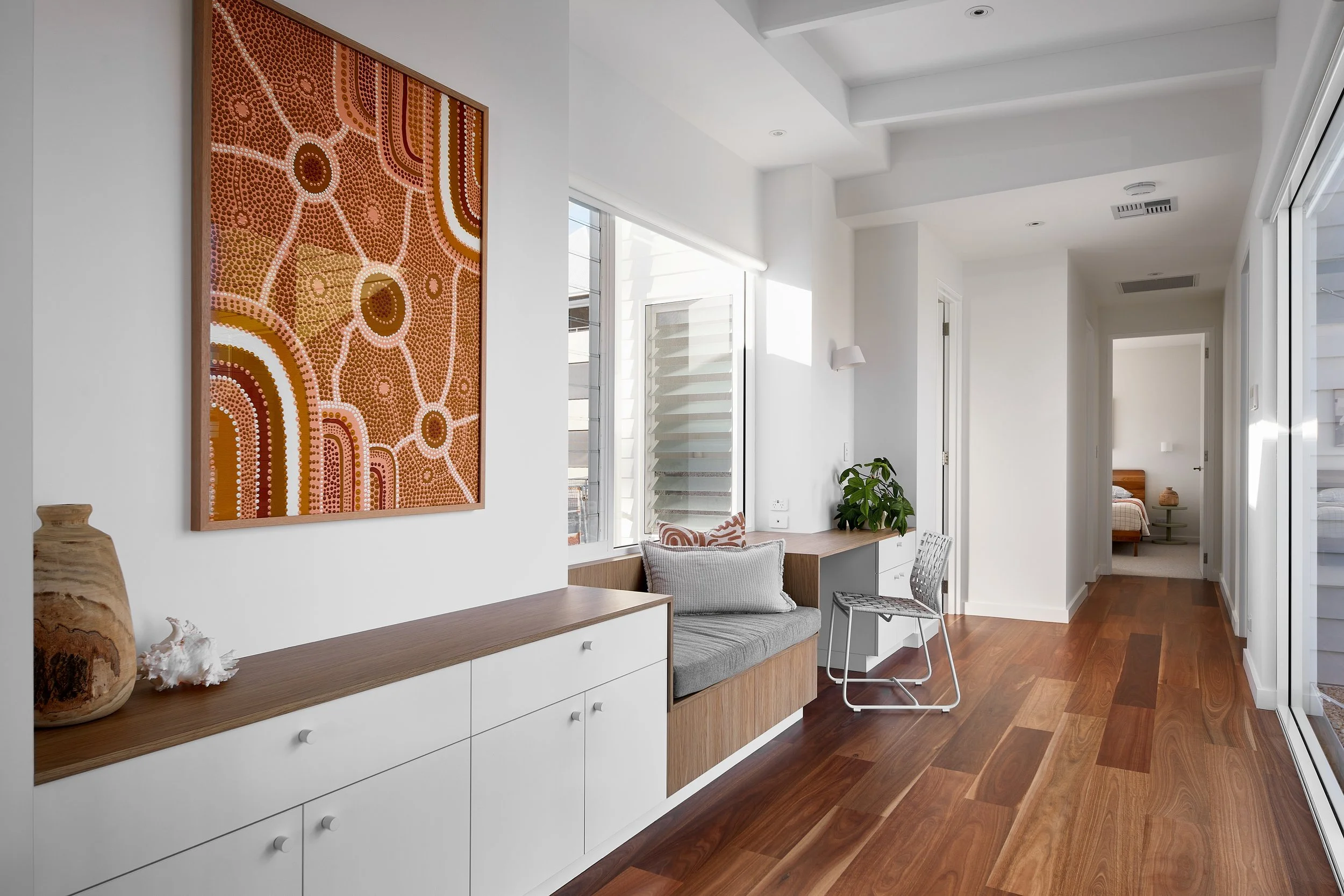
Roller blinds at our Mandurah project.
Curtains
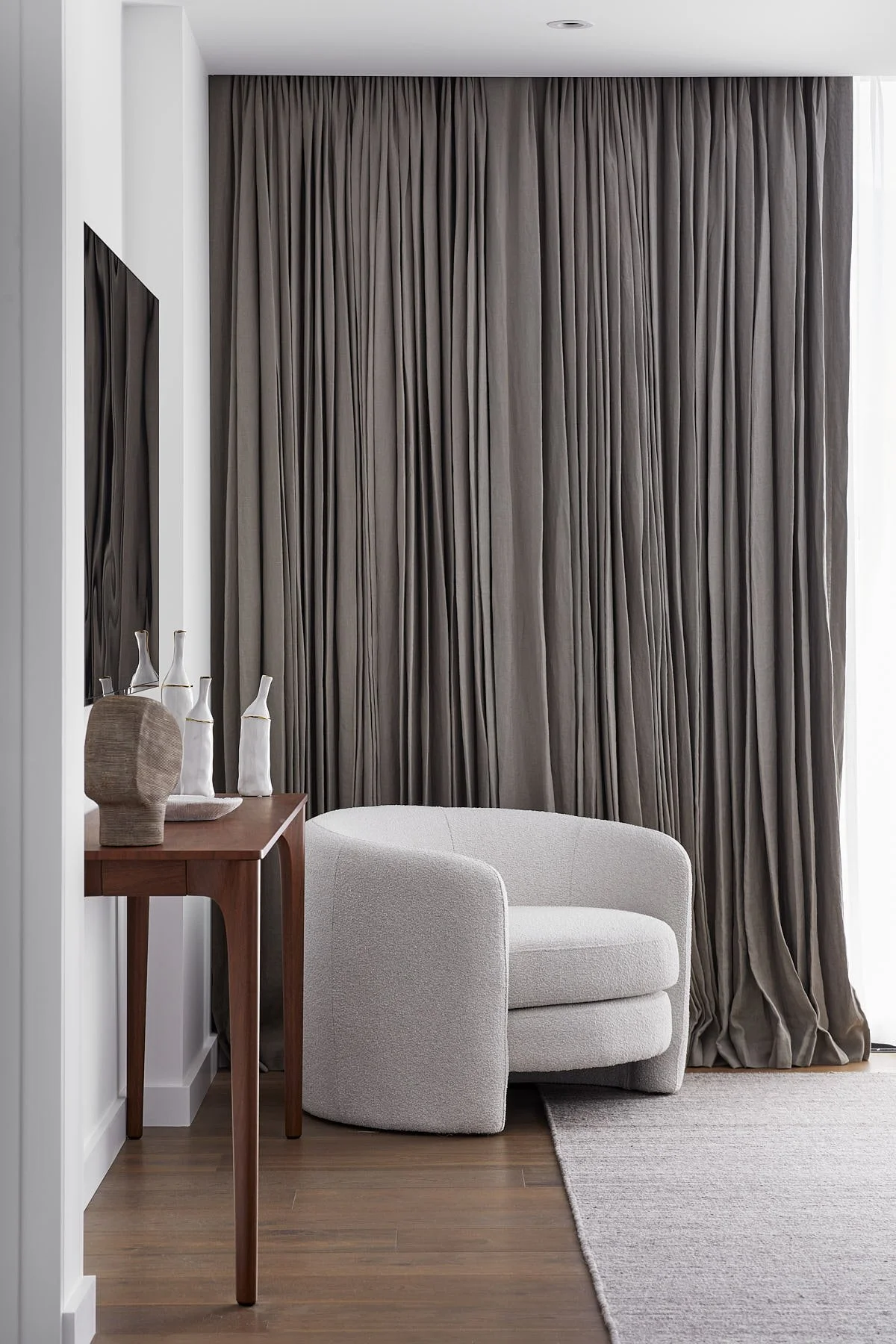
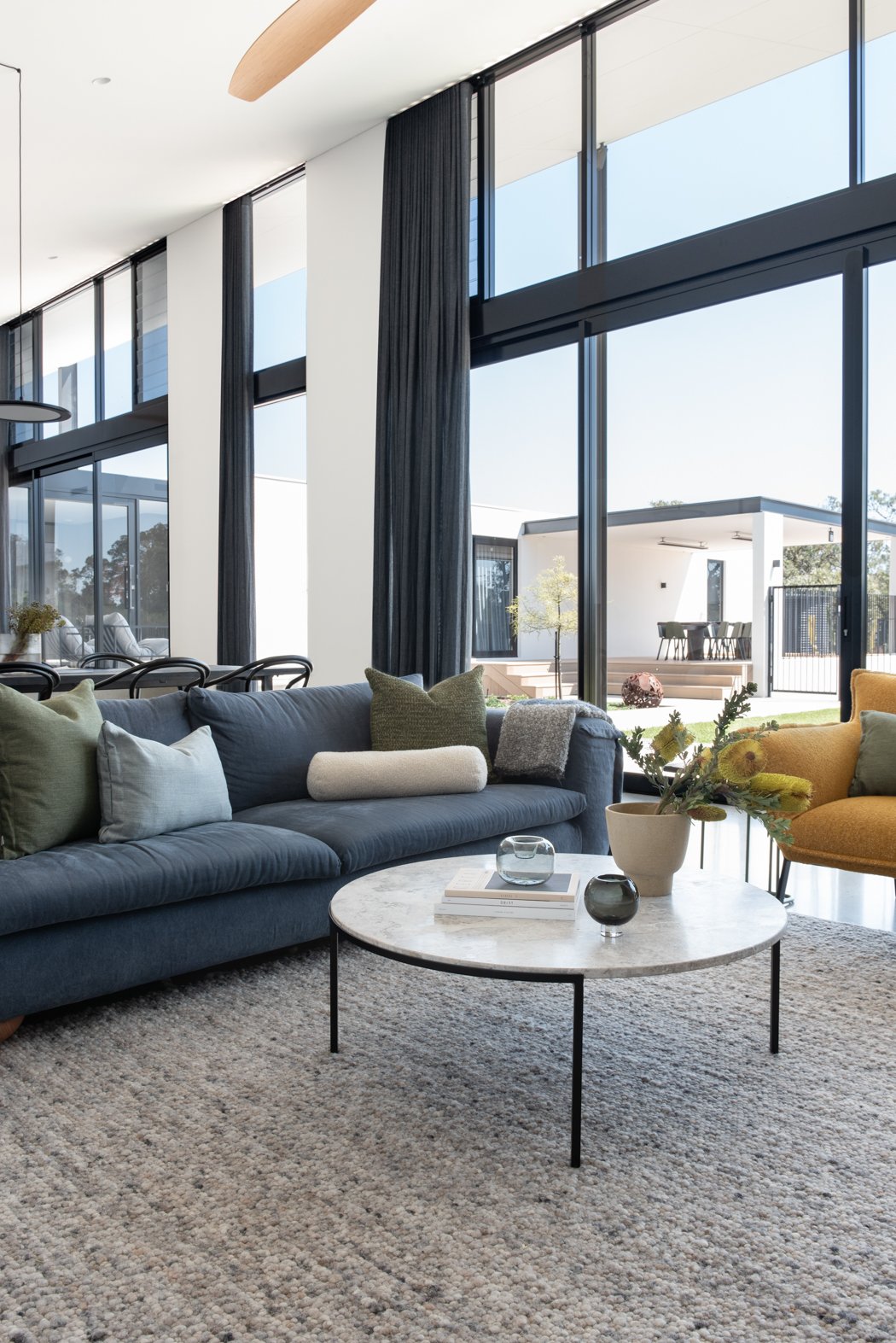
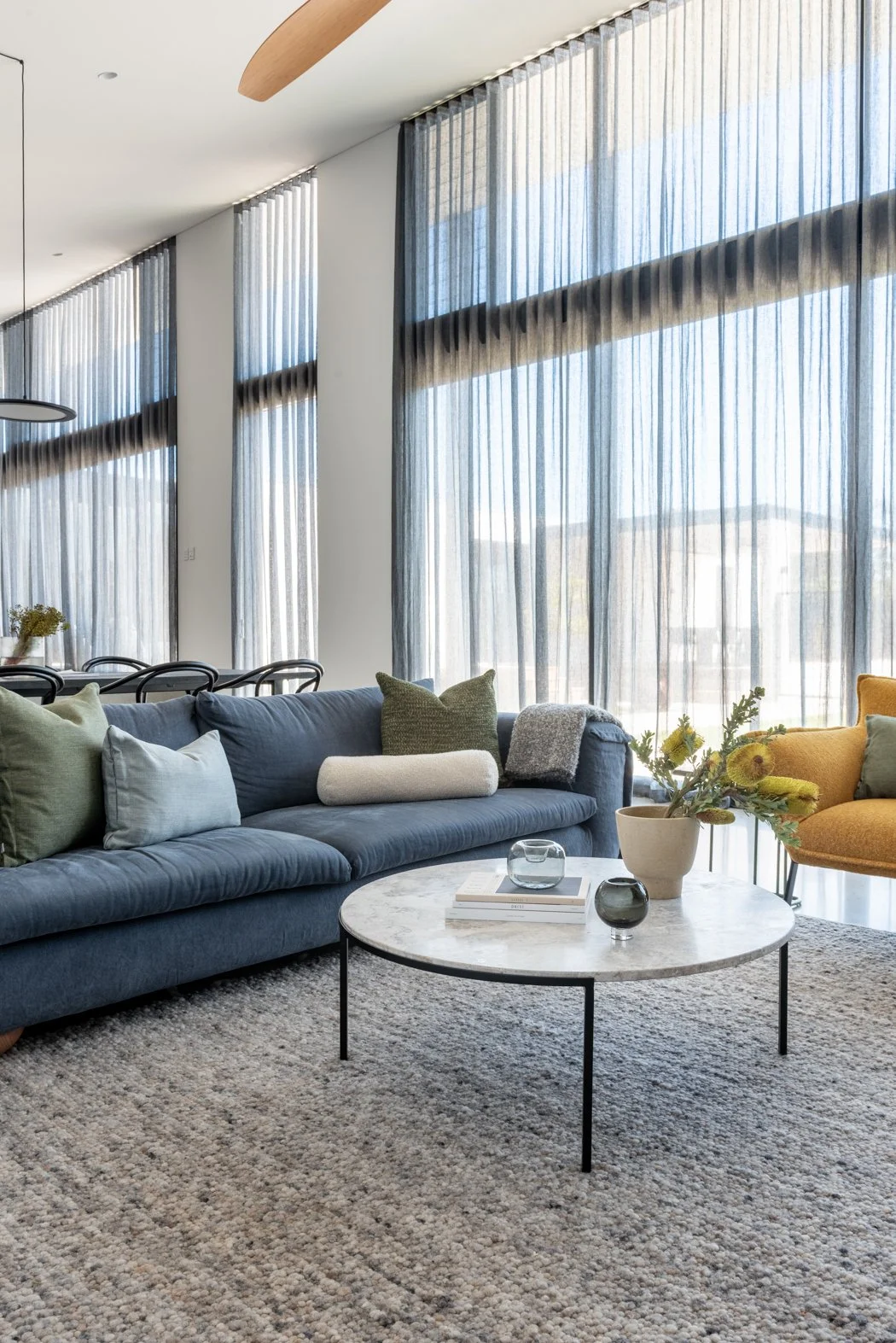
Curtains can be both elegant or cosy, making them a common choice for both bedrooms and living rooms. They can either filter or completely block out light depending on your choice of sheer or blackout styles. Thick or thermal-lined curtains can also be quite effective insulators, blocking heat in summer and retaining heat in winter. Similarly, heavy fabrics can also help minimise noise from outside.
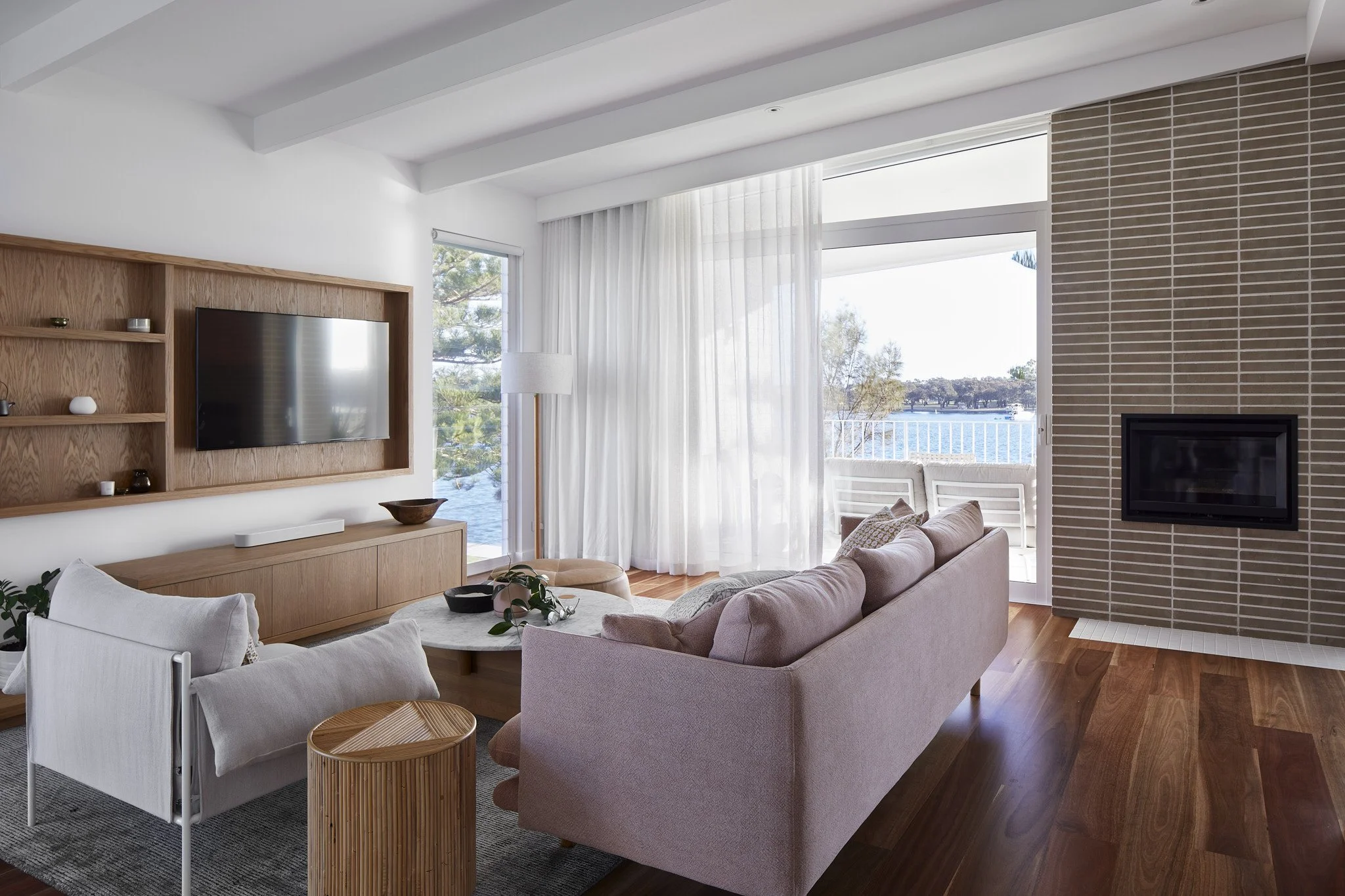
Sheer curtains at our Mandurah project.
Both
There’s no need to choose one or the other, though. On some windows, like those in living spaces or bedrooms, many of our clients opt for both—often choosing blackout roller blinds and sheer curtains. This is a great way to ensure effective light control and balance modern design with a cosy atmosphere.
EXTERNAL VS INTERNAL BLINDS
It’s also worth considering whether you want internal or external blinds. Both provide very similar benefits, although outdoor blinds are significantly better at heat protection as they block the sun before it hits your windows. They will, however, experience a lot more wear and tear, and require more maintenance.
At one of our Mount Pleasant projects, our clients initially opted for indoor blackout blinds and sheer curtains. After their first summer, though, they quickly realised that these weren’t cutting it for the west-facing windows. These have since been fitted with external blinds which have proved very effective.
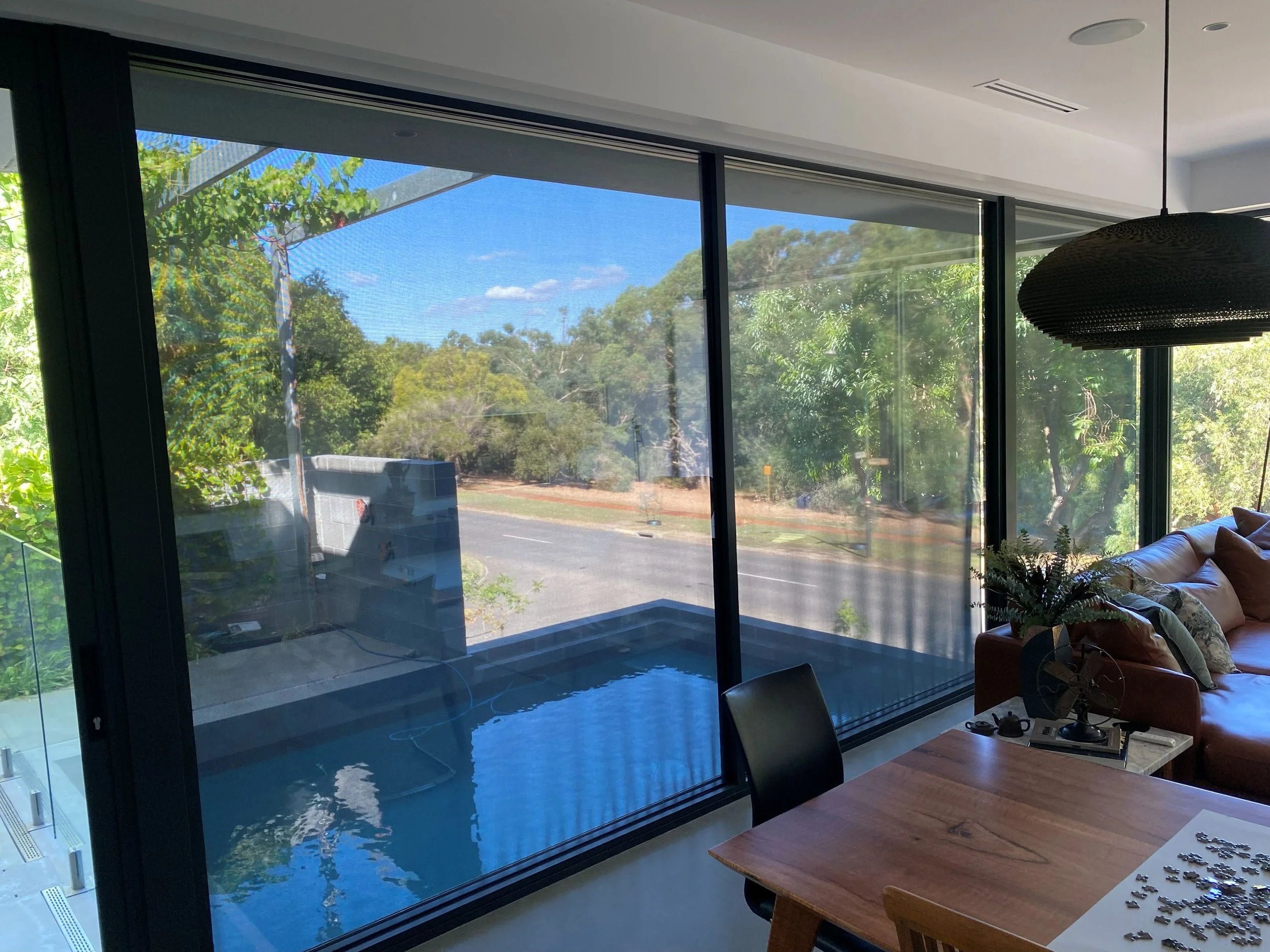
Primarily for sun protection, they still allow for views outside.

Recessed into the soffits, you’d have no idea they exist when they’re not down.
ATTACHMENT TYPE
One of the most important decisions you’ll need to make, especially for external blinds, is how you would like them to be attached to your wall or ceiling.
Recessed pelmets
The most common, seamless, solution is to recess the tracks into the ceiling so they’re hidden from sight. There are, however, a few important things to keep in mind. Most notably, early planning is needed to ensure there are no structural elements blocking access into the ceiling cavity. If you have a suspended slab, in which the ceiling cavities are typically much smaller, an engineer will likely need to be involved. Recessed designs will also limit the changes that can be made in future, as the recesses are framed to size. If, say, you initially choose to have curtains, there won’t be space in the cavity to add blinds a few years down the line—but leaving room for both can also look very odd.
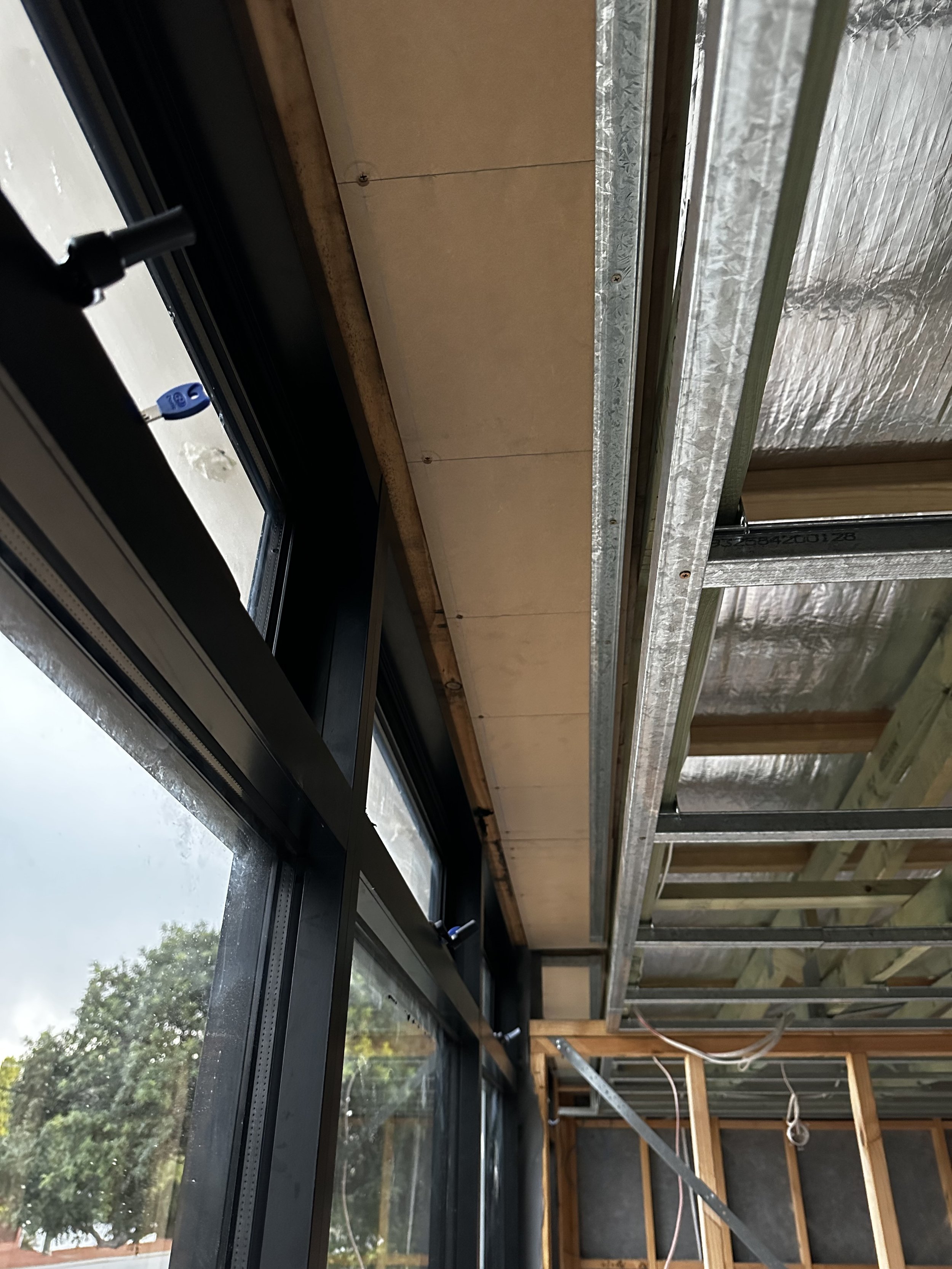
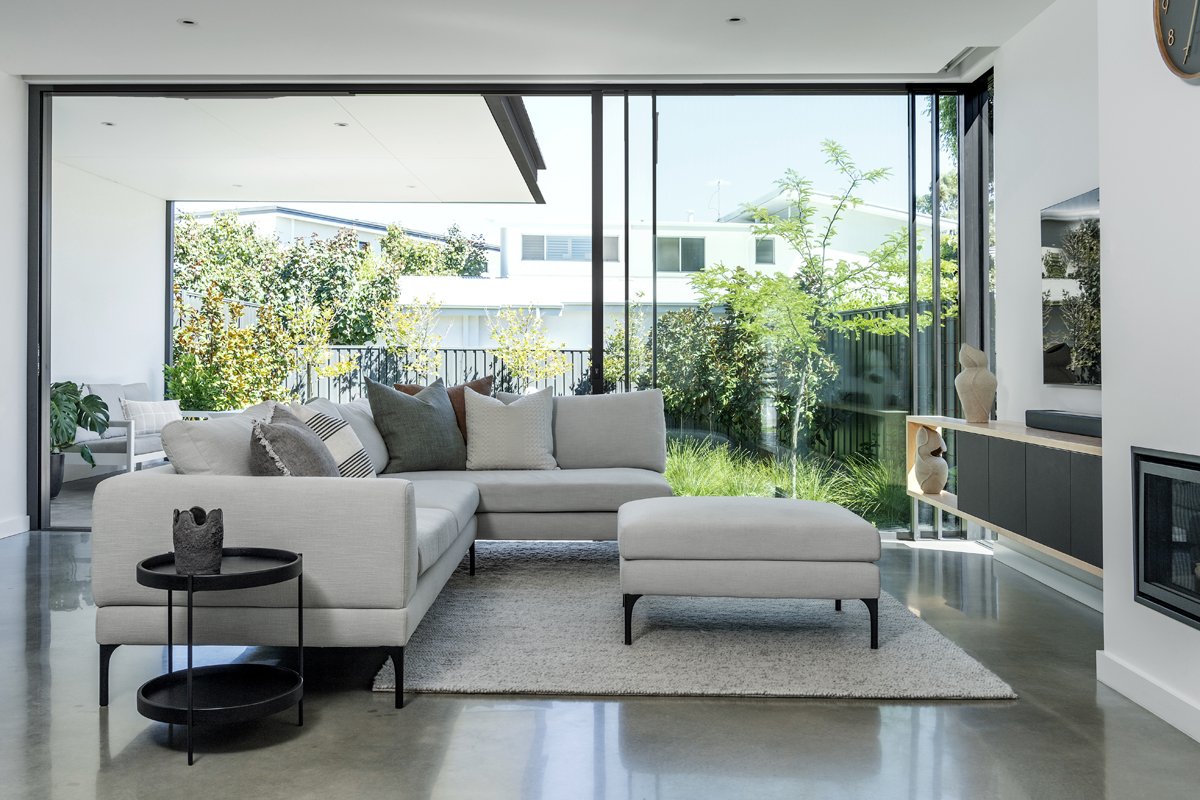
A recessed design at Ardross ensures the blinds don’t disrupt the floor-to-ceiling glazing when not in use.
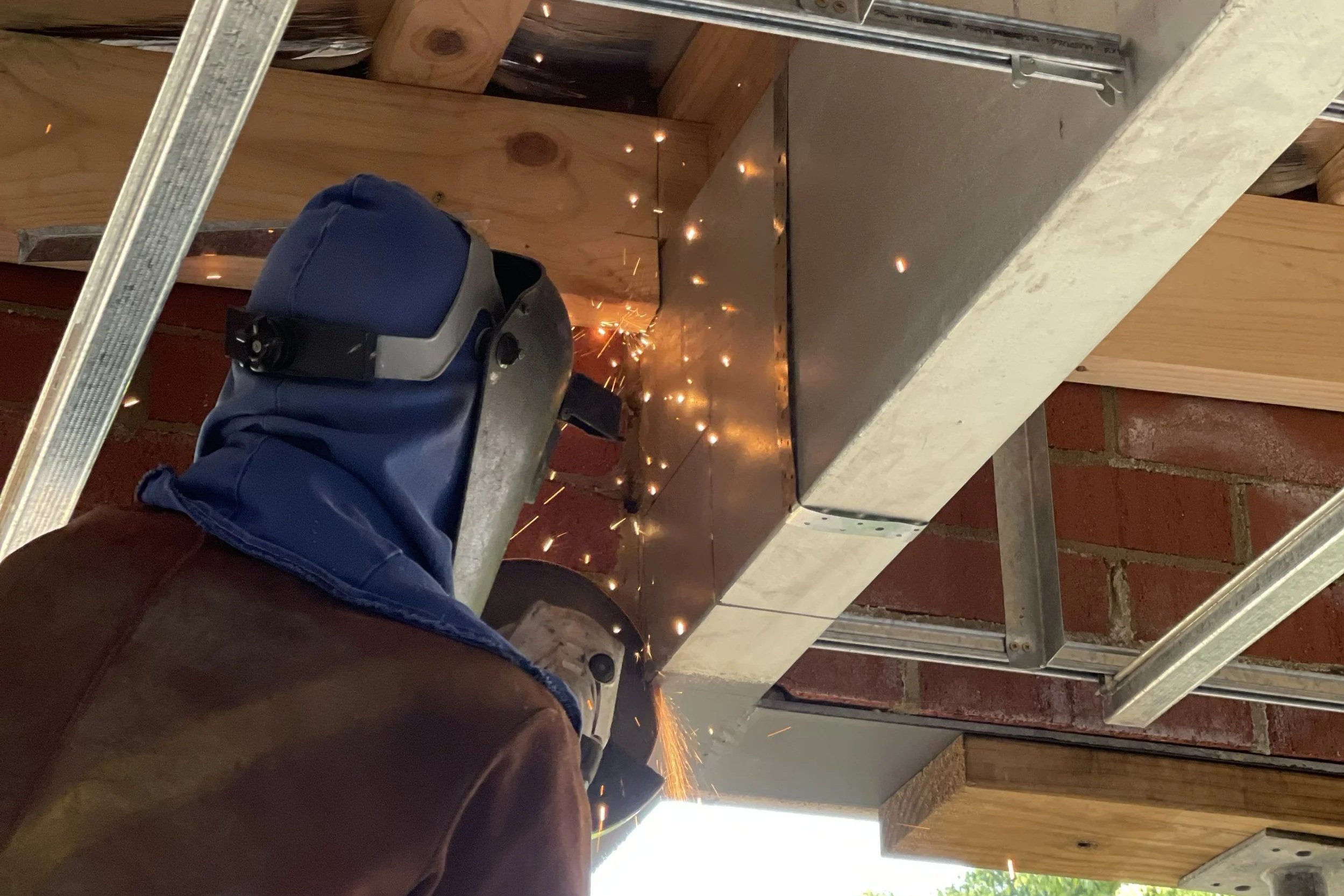
Chosen later in the build, it required retrospective adjustments to remove and adjust structural elements, with engineer involvement.
Slimline tacks and box pelmets
Where recessed options aren’t possible, slimline tracks or boxed pelmets offer good alternatives. Slimline tracks are narrow, surface mounted tracks that remain visible, but are still a minimalist solution. A boxed pelmet, on the other hand, is a decorative board built across the top of a window to conceal the fixtures—although this makes them less ideal for floor-to-ceiling glazing.
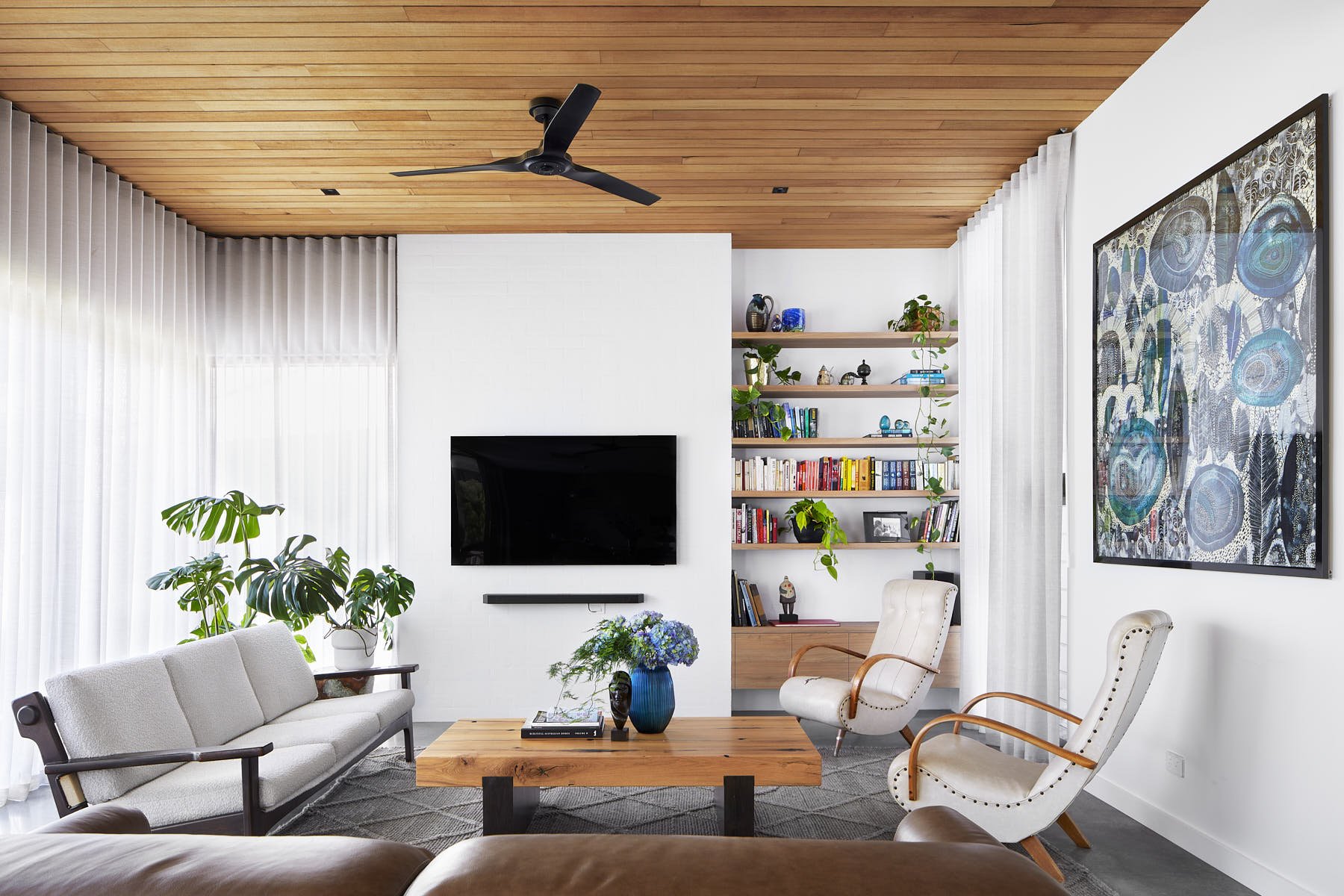
Wall mounted tracks/rods
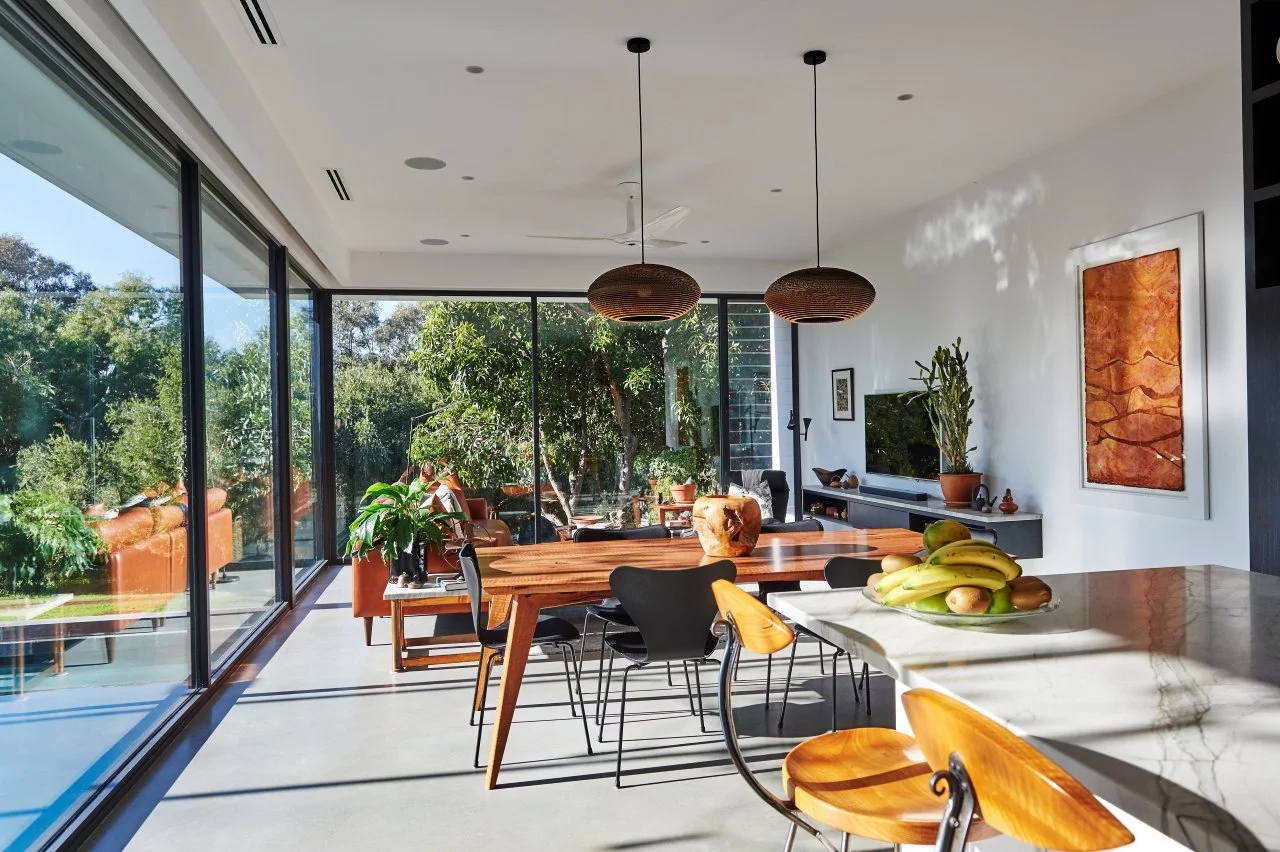
Wall-mounted tracks or rods can be a good option for standard windows and homes with more traditional designs. They remain visible and curtains will often include a decorative rod. They’re particularly good when you want to avoid interrupting ceiling features like cornices or mouldings. Roller blinds can, however, be difficult to integrate as they remain visible even when not in use.
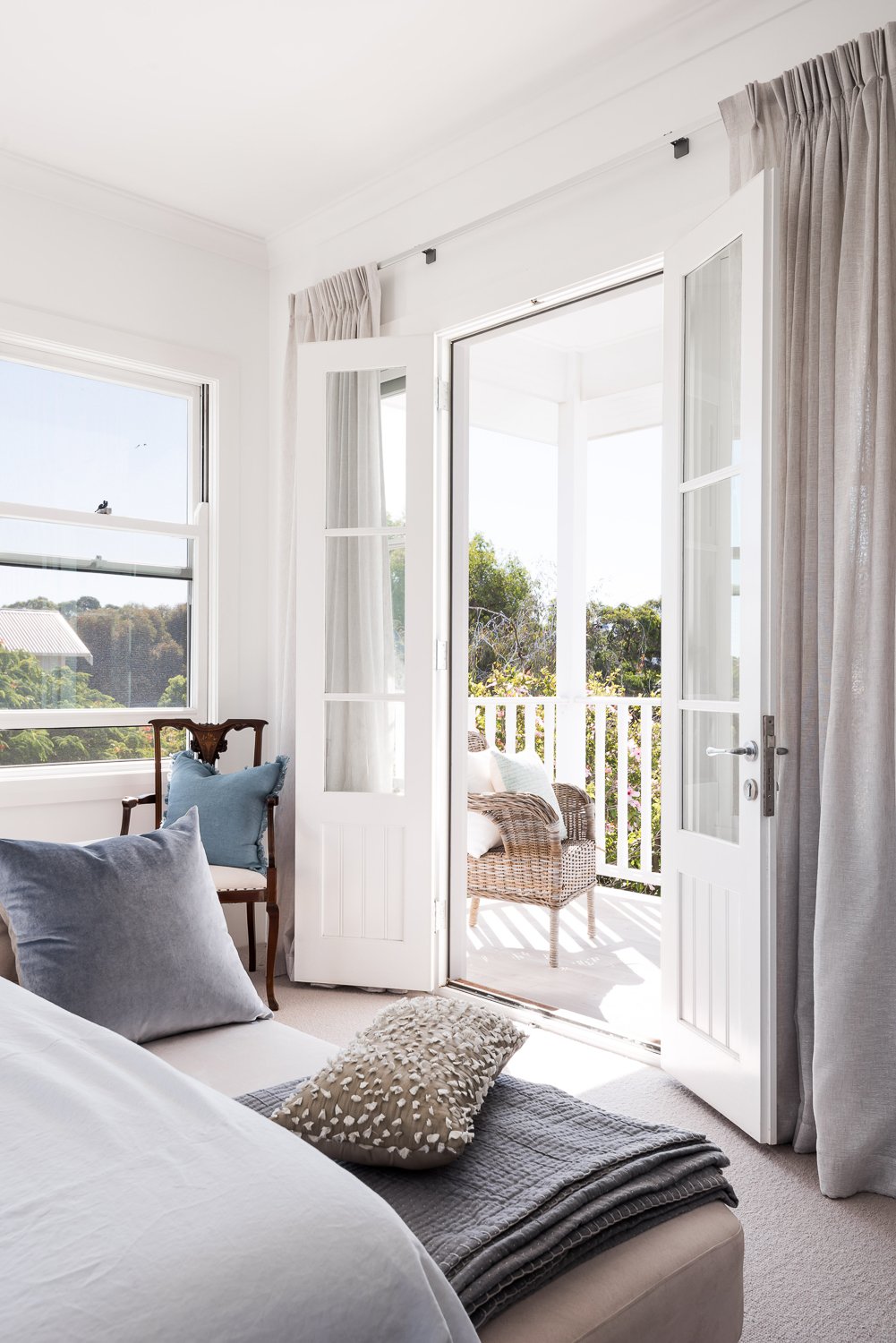
Wall mounted tracks balance traditional and contemporary design at Swanbourne.
MOTORISATION / SMART FEATURES
Motorisation and smart features can be a great way to reduce hassle and improve efficiency, especially automated options with sun, wind and rain sensors. This can be implemented for both blinds and curtains, although early consideration is important. Wiring requirements are usually specific to different systems and need to be installed early in the build before plastering. It’s also important to carefully consider the power source and which side of your blinds the cables should be attached.
ADDITIONAL CONSIDERATIONS
Solid soffits: To improve longevity and reduce sagging, blinds and curtains should be fixed to solid soffits, like MDF or hardwood timber, instead of gyprock. These can then be painted to blend with the ceiling.
Curtain spacing: If possible, curtains should be wider than the windows to ensure they don’t continue blocking it when open. This is especially important for louvre windows designed to provide ventilation.
Window height: Keep in mind that roller blinds won’t be suitable for very high windows as the roller would need to be very large. In this situation, blackout curtains will likely be the best option.
EARLY PLANNING
Ultimately, the main concept we want to emphasise is that window coverings should be considered early in your design. Many selections, like motorisation or recessed designs, can be very difficult (and costly) to retrofit. Ordering product samples early can also ensure a higher level of precision during the build. At our North Coogee project, for example, we were able to use a section of the tracks to ensure the dimensions were accurate when installing the external cladding, long before the blinds were actually installed. This was especially important due to the modular nature of the external cladding, which would have been significantly more difficult to adjust at a later stage had the measurements been incorrect.
As always, if you have any questions or would like to consider Arklen for your custom home build, don’t hesitate to get it touch.